Parabens in Cosmetics: What They Are and Why People Avoid Them
Parabens are among the most widely used preservatives in personal care. Here is what they are, why they drew concern, and how regulators weigh the evidence.

Key takeaways
- Parabens are synthetic preservatives that keep water based products from growing mold and bacteria.
- Some parabens can weakly mimic estrogen in lab studies, which is the main reason people avoid them.
- The FDA has not found that parabens as currently used harm health, while the EU has banned several and limited others.
- Look for any ingredient ending in "paraben" on the label, and remember that paraben free does not automatically mean preservative free.
Few ingredient names are as recognizable as parabens. Many shoppers have seen "paraben free" printed on a lotion bottle long before they knew what a paraben actually was. That label exists because parabens became a symbol of a larger question: what happens when we apply small amounts of preservative chemicals to our skin every day for decades? The honest answer is more nuanced than either side of the debate tends to admit, and it is worth understanding before you decide what belongs in your bathroom.
What are parabens?
Parabens are a family of synthetic preservatives, chemically known as esters of para-hydroxybenzoic acid. They have been used since the 1920s and became popular because they are inexpensive, stable, effective at low concentrations, and active against a broad range of mold, yeast, and bacteria.
Preservation matters. Any product that contains water, such as lotion, shampoo, liquid soap, or cream foundation, can grow microbes once it is opened and touched. A contaminated product can cause skin infections or eye infections, so preservatives do a real job. The debate is not about whether products should be safe from microbes. It is about which preservatives people are comfortable using every day.
Where parabens show up
Parabens appear most often in water based, leave-on products, because those give microbes the most opportunity to grow. Common places include:
- Body lotions, face creams, and eye creams
- Liquid foundation, concealer, and mascara
- Shampoos, conditioners, and styling products
- Liquid hand soaps and body washes
- Sunscreens and after-sun gels
- Some foods and medicines, where they are also used as preservatives
Names to look for on the label
The good news is that parabens are easy to spot. On an ingredient list they nearly always end in "paraben." The most common are:
- Methylparaben and ethylparaben, the shorter chain parabens
- Propylparaben and butylparaben, the longer chain parabens
- Isobutylparaben, isopropylparaben, and benzylparaben, which are now banned in the European Union
You may also see them as sodium salts, such as sodium methylparaben. If you want to learn to decode the rest of the list, our guide on how to read a cosmetic ingredient label walks through the INCI naming system step by step.
Why parabens became controversial
The concern centers on hormones. In laboratory and animal studies, parabens can bind weakly to estrogen receptors. Their activity is far weaker than the body's own estrogen, and the longer chain parabens (propyl and butyl) tend to show stronger activity than the shorter chain ones (methyl and ethyl).
Public attention grew in 2004 when a small UK study reported finding parabens in samples of breast tumor tissue. That study did not show that parabens caused cancer, and it did not compare tumor tissue with healthy tissue, but it prompted questions that researchers have continued to explore. Biomonitoring by the US Centers for Disease Control and Prevention has since shown that parabens are detectable in the urine of a large share of Americans, which tells us exposure is common. It does not, on its own, tell us exposure is harmful.
This is where the difference between hazard and risk is useful. A hazard is a property of a substance, such as weak estrogen-like activity in a lab dish. Risk depends on how much reaches your body, how often, and what it actually does at that level. Much of the paraben debate lives in the gap between those two ideas. If you want a broader primer, our article on endocrine disruptors in personal care explains why low dose, long term exposure is hard to study.
What regulators say
United States
The US Food and Drug Administration does not have special rules for parabens in cosmetics. The agency has stated that it does not have information showing that parabens as they are used in cosmetics have an effect on human health, and it continues to review new data. The Cosmetic Ingredient Review, an industry funded expert panel, has repeatedly concluded that parabens are safe at the levels used in cosmetics.
Some states have gone further. California's Toxic-Free Cosmetics Act prohibits isobutylparaben and isopropylparaben, along with a list of other ingredients, in cosmetics sold in the state beginning in 2025.
European Union
The EU has taken a more cautious approach. In 2014 it banned five parabens (isopropyl, isobutyl, phenyl, benzyl, and pentyl) from cosmetics, largely because manufacturers did not supply enough safety data. It also lowered the permitted concentration of propylparaben and butylparaben and prohibited them in leave-on products designed for the diaper area of children under three. Methylparaben and ethylparaben remain permitted within set limits. Denmark had earlier restricted propyl and butyl parabens in products for young children.
In short, regulators broadly agree that methyl and ethyl parabens are low concern at permitted levels, while the evidence on the longer chain parabens has led to tighter limits in some places. This is a good example of why US and EU cosmetic rules so often differ.
Who may want to be most careful
- Pregnant and breastfeeding people who prefer to limit exposure to hormone active substances where it is easy to do so. Our guide to clean beauty during pregnancy covers this in more depth.
- Parents of babies and toddlers, since young children have a higher skin surface to body weight ratio and the EU specifically restricts some parabens in products for the diaper area.
- People with sensitive or broken skin. Parabens are considered relatively uncommon allergens, but contact dermatitis can occur, especially when products are used on damaged skin.
If you have a specific health condition or concern, a doctor or dermatologist can help you weigh what matters most for you.
How to spot and avoid parabens
- Scan for the suffix. Any word ending in "paraben" is one.
- Read beyond the front label. "Paraben free" claims are common, but the ingredient list is what counts.
- Check the replacement. Many products swapped parabens for other synthetic preservatives. Some of those, such as methylisothiazolinone or formaldehyde releasing preservatives, cause more skin reactions than parabens ever did. Others, like phenoxyethanol, come with their own tradeoffs.
- Choose low water or waterless formats. Bar soaps, balms, and pure oil blends contain little or no free water, so they generally need far less preservation.
That last point is the simplest one. Many of the products that rely on parabens are built on water. Remove the water and much of the preservation problem goes away.
A simpler approach at Lucky Lady Ranch
At Lucky Lady Ranch we prefer to solve the preservation question by design rather than by chemistry. Our cold process Body Bar is made from saponified plant oils, and the soap making process leaves a firm, low moisture bar. Our Body Balm is a blend of unrefined shea butter, organic beeswax, vitamin E, and essential oils with no added water. Because these products are anhydrous or nearly so, we do not need to add parabens or the synthetic preservatives that often replace them.
That does not make parabens a villain in every bottle. It simply means we think the gentlest choice is the one that does not need them in the first place. What you leave out matters as much as what you put in, and keeping things simple is often the calmest path to healthy looking skin.
From the ranch
Made in small batches, without the ingredients discussed above.
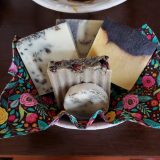 Body BarA true cold process soap for gentle, everyday cleansing.
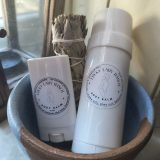 Body BalmUnrefined shea and organic beeswax for hard working skin.
Questions people ask
Are parabens bad for your skin?
For most people parabens do not cause skin irritation, and they are considered relatively uncommon allergens. The main concern people have is not irritation but their weak estrogen-like activity in lab studies, which is still being researched.
Do parabens cause breast cancer?
No study has shown that parabens cause breast cancer. A 2004 study found parabens in breast tumor tissue, but it was not designed to show cause and effect. Researchers continue to study long term, low level exposure.
Is methylparaben safer than propylparaben?
Shorter chain parabens such as methylparaben generally show weaker estrogen-like activity than longer chain ones such as propylparaben. The EU still permits methylparaben at set levels while restricting propylparaben more tightly.
Does paraben free mean preservative free?
No. Most paraben free water based products use another preservative instead. Check the ingredient list to see what replaced the parabens, since some substitutes are more irritating.
Why do products need preservatives at all?
Any product that contains water can grow bacteria, yeast, and mold once opened. Preservatives prevent contamination. Waterless products such as bar soap, balms, and oil blends need much less preservation.
Sources and further reading
- US Food and Drug Administration (FDA), Parabens in Cosmetics
- European Commission, Commission Regulation (EU) No 358/2014 amending Annexes II and V to Regulation (EC) No 1223/2009 on cosmetic products
- Scientific Committee on Consumer Safety (SCCS), Opinion on Parabens
- US Centers for Disease Control and Prevention (CDC), National Report on Human Exposure to Environmental Chemicals: Parabens
- Darbre PD et al., study of parabens in human breast tumor tissue, Journal of Applied Toxicology (2004)
- California Assembly Bill 2762, Toxic-Free Cosmetics Act (2020)
This guide is for general education and is not medical advice. If you have a skin condition, allergy, or are pregnant or nursing, talk with your doctor or a board certified dermatologist about the products that are right for you.


