PFAS "Forever Chemicals" in Makeup and Personal Care
PFAS are added to some long wear and waterproof cosmetics for their slip and staying power. Here is what they are, why they persist, and how to read past them on a label.

Key takeaways
- PFAS are a large family of fluorinated chemicals prized for repelling water and oil, and they break down extremely slowly.
- Studies have found signs of fluorine, a marker of PFAS, in many waterproof mascaras, long wear lipsticks and foundations.
- Look for ingredients containing "fluoro" or "PTFE" on the label, though some PFAS may not be listed at all.
- Several US states now restrict intentionally added PFAS in cosmetics, and the FDA has been directed to study their use.
Waterproof mascara that survives a summer afternoon, liquid lipstick that will not budge through dinner, foundation that stays matte for twelve hours. Those performance claims are often the work of clever chemistry, and sometimes that chemistry includes PFAS, a group of compounds nicknamed "forever chemicals" because they barely break down in nature or in the body.
PFAS have been in the news mostly for drinking water and nonstick pans. Fewer people know they can also show up in makeup and personal care products. Here is a calm look at what they are, what research and regulators say, and how to keep them off your skin if you choose to.
What Are PFAS?
PFAS stands for per- and polyfluoroalkyl substances. It is not a single chemical but a family of thousands of synthetic compounds built around chains of carbon bonded to fluorine. The carbon to fluorine bond is one of the strongest in chemistry, which is exactly why these substances are so useful and so persistent. They repel water, resist oil, and spread smoothly, and very little in the environment can pull them apart.
In cosmetics, those properties translate into products that glide on evenly, resist sweat and tears, and stay put. Some PFAS are added on purpose for that reason. Others may arrive as impurities in raw materials or leach from packaging.
Where PFAS Show Up in Personal Care
The product types most often associated with PFAS share a theme: long wear and water resistance. They include:
- Waterproof mascara and eyeliner
- Long wear and liquid lipsticks
- Foundations and concealers, especially those marketed as long lasting
- Pressed powders and some shaving creams and lotions
- Dental floss and some nail products
A 2021 study led by researchers at the University of Notre Dame screened more than 200 cosmetics sold in the US and Canada for total fluorine, a marker that suggests PFAS. About half showed high fluorine levels, with waterproof mascara, liquid lipstick and foundation among the most likely to test high. Importantly, many of those products did not list any PFAS on the label, which suggests that label reading alone will not catch everything.
PFAS Names to Recognize on a Label
When PFAS are intentionally added, they usually carry "fluoro" somewhere in the name. Common examples include:
- PTFE (polytetrafluoroethylene), the same family of material used on nonstick pans
- Perfluorononyl dimethicone
- Perfluorodecalin and perfluorohexane
- Polyperfluoromethylisopropyl ether
- C9-15 fluoroalcohol phosphate
- Octafluoropentyl methacrylate
A simple habit helps: scan the ingredient list for "fluoro" or "PTFE." If you are new to reading labels, our guide on how to read a cosmetic ingredient label walks through the order and naming conventions.
What Research and Regulators Say
Most of the health research on PFAS focuses on a few well studied members of the family, particularly PFOA and PFOS, and on exposure through drinking water, food and industrial sources. The US Environmental Protection Agency (EPA) and the National Institute of Environmental Health Sciences (NIEHS) describe links between certain PFAS and effects such as changes in cholesterol levels, reduced vaccine response in children, thyroid effects, lower birth weight, and increased risk of some cancers, including kidney and testicular cancer. In 2023, the International Agency for Research on Cancer (IARC) classified PFOA as carcinogenic to humans and PFOS as possibly carcinogenic.
It is fair to point out what we do not know. The PFAS used in cosmetics are often different compounds from PFOA and PFOS, and there is little research on how much passes through skin from makeup. Some PFAS used in cosmetics, such as PTFE, are large polymers that are generally thought to be less readily absorbed. The concern is partly about the impurities and breakdown products that can come along with them, partly about exposure through the eyes and lips where products are easily ingested, and partly about the sheer persistence of these chemicals once they wash down the drain.
Where the Rules Stand
The Modernization of Cosmetics Regulation Act of 2022, known as MoCRA, directed the FDA to assess the use of PFAS in cosmetics and the scientific evidence on their safety. States have moved faster. California, Maryland, Minnesota, Washington and others have passed laws restricting intentionally added PFAS in cosmetics, with the earliest taking effect in 2025. In Europe, regulators are considering a broad restriction covering most PFAS uses, which reflects a wider trend explained in our piece on US vs EU cosmetic rules.
Who Should Be Most Careful
Because PFAS accumulate over time and come from many sources, the people who may want to reduce cosmetic exposure most are those already carrying a heavier load from elsewhere, or who are at sensitive life stages:
- People who are pregnant, trying to conceive, or breastfeeding, since some PFAS cross the placenta and appear in breast milk (see our guide to clean beauty during pregnancy)
- Anyone who wears long wear lip or eye makeup daily, since those areas are close to the mouth and eyes
- Communities near PFAS contaminated water sources
- Professional makeup artists who handle these products all day
If you have specific health concerns about PFAS exposure, your doctor can talk through testing and context for your situation.
How to Spot and Avoid PFAS
Since labels do not always tell the full story, think in layers:
- Read for fluorine. Skip anything with "fluoro" or "PTFE" in the ingredient list.
- Question extreme performance claims. "Waterproof," "transfer proof," and "24 hour wear" are not proof of PFAS, but they are where these chemicals most often turn up.
- Look for brands that state they are PFAS free and, ideally, that test for it rather than only checking the formula.
- Simplify the routine. Fewer products mean fewer chances for exposure. Our step by step non toxic daily routine can help you decide what to keep.
- Remember related ingredients. PFAS sometimes travel with other slick, film forming ingredients like cyclic silicones, which raise their own environmental questions.
It also helps to know that PFAS in cosmetics are only one piece of overall exposure. Filtering drinking water where PFAS are a known problem and replacing scratched nonstick cookware may make a bigger difference than any single makeup swap. Still, personal care is one area where you have direct, daily control.
Leaving Forever Chemicals Out
At Lucky Lady Ranch, we think the products you use every day should not have to outlast you. Our balms and oils get their slip from plant butters and oils, not fluorinated polymers. A Lip Love lip balm made from shea, cocoa butter and beeswax will wear off as you eat and drink, and we see that as a feature: what you put on your lips should be something you would be comfortable swallowing. For a soft glow without a synthetic film, our Beauty Oil uses jojoba, rosehip and prickly pear seed oils that skin knows how to use.
No single swap makes a routine perfect, and you do not have to change everything at once. Start with the products that sit on your lips and around your eyes, read for "fluoro," and let the rest follow at your own pace.
From the ranch
Made in small batches, without the ingredients discussed above.
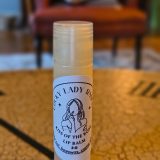 Lip BalmLip Love: our beauty oil blend with shea, cocoa butter and beeswax.
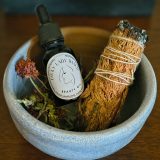 Beauty OilSeven plant oils for a soft, dewy, healthy looking face.
Questions people ask
Does waterproof mascara contain PFAS?
Some does. Testing has found high fluorine levels, a marker of PFAS, in a large share of waterproof mascaras. Not every waterproof formula uses PFAS, so check the label for "fluoro" or "PTFE" and look for brands that state they test for PFAS.
How can I tell if my makeup has PFAS?
Scan the ingredient list for any name containing "fluoro" or the abbreviation PTFE. Be aware that PFAS can also enter products as unlisted impurities, so a brand's own PFAS testing is more reliable than the label alone.
Can PFAS be absorbed through the skin?
Research on skin absorption of PFAS from cosmetics is limited, and it varies by compound. Lip and eye products add the possibility of ingestion and contact with the eyes, which is one reason many people start their PFAS free swaps there.
Are PFAS banned in cosmetics in the US?
There is no nationwide federal ban yet. Several states, including California, Maryland, Minnesota and Washington, have passed laws restricting intentionally added PFAS in cosmetics, and MoCRA directed the FDA to assess their use and safety.
Sources and further reading
- US Food and Drug Administration (FDA), Per and Polyfluoroalkyl Substances (PFAS) in Cosmetics
- US Environmental Protection Agency (EPA), Our Current Understanding of the Human Health and Environmental Risks of PFAS
- National Institute of Environmental Health Sciences (NIEHS), Perfluoroalkyl and Polyfluoroalkyl Substances (PFAS)
- Whitehead et al., Fluorinated Compounds in North American Cosmetics, Environmental Science and Technology Letters (2021)
- International Agency for Research on Cancer (IARC), Monographs Volume 135: PFOA and PFOS
This guide is for general education and is not medical advice. If you have a skin condition, allergy, or are pregnant or nursing, talk with your doctor or a board certified dermatologist about the products that are right for you.


