Aluminum in Antiperspirants: Separating Concern From Myth
Aluminum is the active ingredient that makes antiperspirant work. Here is what the science says about the common fears, and the few real cautions.

Key takeaways
- Aluminum salts are the active ingredient in antiperspirants; they temporarily plug sweat ducts to reduce wetness.
- Major cancer organizations say current evidence does not show that antiperspirants cause breast cancer.
- Research has not confirmed that aluminum from antiperspirant causes Alzheimer's disease.
- People with kidney disease are told to ask a doctor before use, and many people simply prefer aluminum free deodorant.
Few personal care topics carry as many rumors as antiperspirant. You may have heard that it causes breast cancer, that it leads to Alzheimer's disease, or that it traps toxins under your arms. Some of these claims spread through email chains years ago and never quite went away. At the same time, there are a few sensible reasons some people choose to avoid aluminum. This article sorts the evidence into what holds up and what does not, so you can make a calm, informed choice.
What is aluminum doing in antiperspirant?
Antiperspirants and deodorants are not the same product. A deodorant addresses odor. Underarm odor comes from bacteria breaking down components of sweat, so deodorants work by neutralizing smell, absorbing moisture, or making the skin less hospitable to odor causing bacteria. In the US, deodorant is regulated as a cosmetic.
An antiperspirant reduces sweat itself, which makes it an over the counter drug in the US. Its active ingredient is an aluminum based salt. When it dissolves in sweat on the skin, it forms a gel like plug near the top of the sweat duct, which temporarily reduces how much sweat reaches the surface. The plugs wash away over time, which is why antiperspirant needs to be reapplied.
Names on the label
Look in the Drug Facts box for:
- Aluminum chlorohydrate
- Aluminum zirconium tetrachlorohydrex gly (and the related trichlorohydrex and pentachlorohydrex forms)
- Aluminum sesquichlorohydrate
- Aluminum chloride, often in clinical strength or prescription products
Some "crystal" deodorants are made from potassium alum or ammonium alum, which are also aluminum compounds. They are often marketed as natural, so it is worth reading the label if you are trying to avoid aluminum entirely.
The breast cancer question
This concern usually rests on a few ideas: that antiperspirant is applied near the breast, that most breast cancers start in the upper outer part of the breast near the underarm, and that aluminum might act on breast cells. Some laboratory studies have explored whether aluminum can affect breast cells in a dish.
When researchers have looked at people, though, the evidence has not shown a link. The US National Cancer Institute and the American Cancer Society both state that there is no convincing evidence that antiperspirants or deodorants cause breast cancer. The upper outer area of the breast simply contains more breast tissue, which helps explain why more cancers occur there. Studies of how much aluminum passes through intact skin from antiperspirant have found that the amount is very small.
That said, researchers continue to study the question, and "no convincing evidence" is a description of what we know so far rather than a guarantee. Anyone with specific breast health concerns should talk with their doctor.
A practical note about mammograms
Aluminum particles from antiperspirant, and some powders and lotions, can show up on a mammogram and look like small calcium deposits. That is why many imaging centers ask patients not to wear antiperspirant or deodorant on the day of a mammogram. It is a matter of clear images, not of harm.
The Alzheimer's question
In the 1960s and 1970s, some studies suggested the possibility that aluminum might be involved in Alzheimer's disease. That idea spread widely. Since then, researchers have studied aluminum exposure from cookware, antacids, drinking water, and antiperspirants. The Alzheimer's Association states that studies have failed to confirm any role for aluminum in causing Alzheimer's, and that experts today focus on other areas of research. Everyday sources of aluminum are not considered a meaningful risk factor.
The "trapped toxins" claim
Another common idea is that blocking sweat traps toxins in the body. Sweat is mostly water with some salt and small amounts of other substances, and its main job is cooling. The body's primary systems for filtering and removing waste are the liver and kidneys, not the underarms. Antiperspirants also reduce sweat only in the small area where they are applied, while the rest of your skin continues to sweat normally. There are reasonable motives for choosing aluminum free products, but detoxification is not one that the science supports.
Similarly, you may see natural deodorants promoted with a "detox" phase or armpit masks to pull out toxins. The adjustment period many people notice when switching is better explained by changes in sweat and the underarm bacteria that cause odor, which settle over a few weeks.
The real cautions
Kidney disease
Healthy kidneys clear aluminum from the body efficiently. In people with significantly reduced kidney function, aluminum can build up. For this reason, the FDA requires antiperspirant labels to tell people with kidney disease to ask a doctor before use. This is one of the clearer, evidence based reasons to be careful.
Irritation
Aluminum salts can sting or irritate freshly shaved or broken skin, and clinical strength aluminum chloride products are known to cause itching or burning in some people. Applying to completely dry skin, often at night, tends to reduce irritation.
What else is in the stick
Sometimes the more important question is not the aluminum but the rest of the formula. Many conventional antiperspirants contain synthetic fragrance, cyclic silicones such as cyclopentasiloxane, and propylene glycol. Those ingredients are worth reading about on their own merits.
Who might choose aluminum free
- People with kidney disease, in consultation with their doctor
- People who find antiperspirant irritating
- People who simply prefer to let their bodies sweat naturally and manage odor instead
- People reducing synthetic fragrance and other additives in their routine
Sweating is a normal and useful way the body cools itself. For most people, the goal is to stay comfortable and fresh, not to stop sweating entirely. People with excessive sweating (hyperhidrosis) may genuinely benefit from antiperspirants or other treatments and should talk with a dermatologist.
Switching to aluminum free deodorant
Aluminum free deodorant will not stop wetness the way antiperspirant does. It aims to keep you smelling fresh and to absorb some moisture. Many people go through an adjustment period of a week or two when switching, and some find they need to reapply on hot days. Our guide to switching to natural deodorant walks through what to expect.
Natural deodorants commonly use absorbent powders and clays, such as arrowroot and bentonite clay, and odor helpers like baking soda and activated charcoal. Baking soda works well for many people but can irritate sensitive underarms, so it is wise to patch test and to stop if redness develops.
Our approach
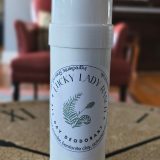
At Lucky Lady Ranch, our All Day Deodorant is aluminum free. It combines hard and soft oils with arrowroot, baking soda, bentonite clay, activated charcoal, and essential oils. It is not designed to stop sweat; it is designed to keep you comfortable and fresh while your body does what it naturally does. We think that is a reasonable choice for many people, and we would rather explain it honestly than sell it with fear.
From the ranch
Made in small batches, without the ingredients discussed above.
Questions people ask
Does antiperspirant cause breast cancer?
The National Cancer Institute and the American Cancer Society say there is no convincing evidence that antiperspirants cause breast cancer. Research continues, and people with concerns should talk with their doctor.
Is aluminum in deodorant linked to Alzheimer's?
The Alzheimer's Association says studies have failed to confirm any role for aluminum in causing Alzheimer's disease. The idea dates to older research that has not held up.
What is the difference between deodorant and antiperspirant?
Deodorant controls odor and is regulated as a cosmetic. Antiperspirant reduces sweat using aluminum salts and is regulated as an over the counter drug in the US.
Who should avoid aluminum antiperspirant?
The FDA requires antiperspirant labels to advise people with kidney disease to ask a doctor before use. People who find it irritating may also prefer aluminum free options.
Why can't you wear deodorant before a mammogram?
Aluminum and some other particles in antiperspirants and powders can show up on mammogram images and resemble calcium deposits, which can make results harder to read.
Sources and further reading
- National Cancer Institute (NCI), Antiperspirants/Deodorants and Breast Cancer
- American Cancer Society (ACS), Antiperspirants and Breast Cancer Risk
- Alzheimer's Association, Myths About Alzheimer's Disease
- US Food and Drug Administration (FDA), Antiperspirant Drug Products for Over-the-Counter Human Use, Final Monograph
- Flarend R et al., dermal absorption study of aluminum from antiperspirants using aluminum-26, Food and Chemical Toxicology (2001)
This guide is for general education and is not medical advice. If you have a skin condition, allergy, or are pregnant or nursing, talk with your doctor or a board certified dermatologist about the products that are right for you.


