Formaldehyde Releasers: DMDM Hydantoin, Quaternium-15 and More
Some preservatives work by slowly releasing tiny amounts of formaldehyde. Here is how to recognize them on a label and why many people prefer to skip them.

Key takeaways
- Formaldehyde releasers are preservatives that slowly give off small amounts of formaldehyde to keep products free of microbes.
- Formaldehyde is classified as a known human carcinogen by IARC and the US National Toxicology Program, mainly based on inhalation exposure.
- The best documented concern for cosmetics is skin allergy, since formaldehyde and its releasers are common contact allergens.
- Look for DMDM hydantoin, quaternium-15, imidazolidinyl urea, diazolidinyl urea, sodium hydroxymethylglycinate, and bronopol.
Most people would not knowingly rub formaldehyde into their scalp. Yet some shampoos, body washes, and baby products have used preservatives that are designed to release small amounts of it over time. The word formaldehyde rarely appears on these labels, because the ingredients that release it have different names. Once you know those names, they are easy to spot and avoid.
What are formaldehyde releasers?
Formaldehyde is a simple, naturally occurring chemical. It is also a very effective antimicrobial, which is why it has been used for a long time as a disinfectant and preservative. Adding formaldehyde directly to cosmetics has fallen out of favor, so manufacturers often use formaldehyde releasing preservatives instead. These compounds break down slowly in the product, especially in water based formulas, and release small amounts of formaldehyde that keep bacteria and fungi from growing.
The amount released depends on the specific preservative, its concentration, the product's pH, temperature, and how long the product sits on a shelf. In other words, a bottle can contain more free formaldehyde after months in a warm warehouse than on the day it was made.
Where they show up
- Shampoos, conditioners, and body washes
- Liquid hand soaps and bubble baths
- Lotions, creams, and some sunscreens
- Mascara, eyeliner, and other eye makeup
- Baby wipes and baby washes, historically
- Nail polish and nail hardeners, which may contain formaldehyde itself
- Some hair smoothing and straightening treatments, which can release formaldehyde gas when heated
Names to look for
- DMDM hydantoin
- Quaternium-15
- Imidazolidinyl urea
- Diazolidinyl urea
- Sodium hydroxymethylglycinate
- 2-bromo-2-nitropropane-1,3-diol, also called bronopol
- Methenamine and polyoxymethylene urea, less common
- In hair treatments: formalin, methylene glycol, or methanediol, which are forms of formaldehyde in water
Our guide on reading cosmetic ingredient labels explains why the same substance can appear under several names.
What research and regulators say
Cancer classification
The International Agency for Research on Cancer (IARC) classifies formaldehyde as carcinogenic to humans (Group 1), and the US National Toxicology Program lists it as a known human carcinogen. These conclusions are based largely on inhalation exposure, especially among workers, and the strongest evidence links it to nasopharyngeal cancer, with evidence for leukemia as well. Exposure from a rinse-off shampoo is very different from breathing formaldehyde at work every day, and that hazard versus risk distinction is important.
The exception is heated hair treatments. Some smoothing treatments have been found to release formaldehyde into the air when flat ironed, and the US Occupational Safety and Health Administration has issued hazard alerts for salon workers. Our article on chemical hair relaxers and straighteners covers that topic in more detail.
Skin allergy
For everyday cosmetics, the best established problem is allergic contact dermatitis. Formaldehyde and several releasers, especially quaternium-15, are common allergens on dermatology patch test panels. Someone allergic to formaldehyde may react to products containing releasers, and the rash may show up on the scalp, face, eyelids, neck, or hands. The American Contact Dermatitis Society has named formaldehyde a past Allergen of the Year.
Regulation
The FDA does not prohibit formaldehyde releasers in cosmetics, though it has warned about formaldehyde in hair smoothing products. The Cosmetic Ingredient Review panel has found many releasers safe at low concentrations, while noting that people allergic to formaldehyde may react.
The European Union prohibits formaldehyde itself in cosmetics and banned quaternium-15. It permits other releasers within limits and, under a regulation adopted in 2022, requires products to carry the warning "releases formaldehyde" when the total formaldehyde released reaches a very low threshold. In the US, California's Toxic-Free Cosmetics Act prohibits formaldehyde, paraformaldehyde, methylene glycol, and quaternium-15 in cosmetics sold in the state from 2025, and some other states have passed laws addressing formaldehyde releasers as well.
Some large manufacturers voluntarily removed formaldehyde releasers from their baby products in the 2010s after public pressure, which shows how consumer awareness can shift an entire product category.
Putting the numbers in perspective
Formaldehyde is not an exotic substance. The human body produces small amounts of it as part of normal metabolism, and it occurs naturally in some fruits and vegetables. It is also released indoors by pressed wood furniture, some fabrics, gas stoves, and tobacco smoke. Against that background, the amount released by a preservative in a rinse-off shampoo is small.
That context is useful, but it does not settle the question for everyone. For people who are allergic, even small amounts applied directly to the skin can be enough to trigger a reaction, and allergy thresholds vary from person to person. It is also true that exposure comes from many small sources at once. Choosing personal care products without releasers is one of the easier ways to trim the total, especially for products that stay on the skin all day, like lotions and makeup, rather than those rinsed away in seconds.
Releasers can also form other compounds
One releaser deserves a specific note. Bronopol (2-bromo-2-nitropropane-1,3-diol) can break down in a way that contributes to the formation of nitrosamines when it is combined with certain amine ingredients in the same formula. Nitrosamines are a separate group of contaminants, several of which are considered probable carcinogens. We explain how this happens in our article on nitrosamines in personal care products.
Who should be most careful
- Anyone with a formaldehyde allergy confirmed by patch testing. A dermatologist can provide a list of related ingredients to avoid.
- People with eczema or sensitive skin, for whom allergens are more likely to cause trouble. See our guide to sensitive skin irritants.
- Babies and young children. Our article on non toxic skin care for kids lists other ingredients worth skipping.
- Salon workers and people getting heated smoothing treatments, who face inhalation exposure.
How to spot and avoid formaldehyde releasers
- Memorize the short list. DMDM hydantoin and quaternium-15 are the most common in drugstore products.
- Be careful with "formaldehyde free" claims on hair treatments. Some contain methylene glycol, which is formaldehyde in water.
- Know the other preservative swaps. Products that drop releasers may use methylisothiazolinone, which has its own allergy issues, or parabens or phenoxyethanol.
- Favor low water formats. Bars, balms, and oils need far less preservation than liquids.
- Store products cool and do not keep liquid products for years, since formaldehyde release can increase with heat and time.
Preservation by design
At Lucky Lady Ranch we chose formats that do not need formaldehyde releasing preservatives at all. Our Shampoo and Conditioner Bar is a solid bar, so there is no water filled bottle for microbes to grow in, and our Body Bar is cold process soap made from plant oils. When you take the water out, you take away most of the reason for strong preservatives. That is a quiet, practical way to keep the formula short and the ingredients easy to recognize.
From the ranch
Made in small batches, without the ingredients discussed above.
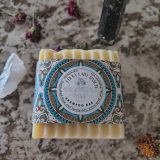 Shampoo and Conditioner BarPlastic free hair care with argan, castor and black seed oil.
 Body BarA true cold process soap for gentle, everyday cleansing.
Questions people ask
What is DMDM hydantoin and is it safe?
DMDM hydantoin is a preservative that slowly releases small amounts of formaldehyde. Regulators allow it at low levels, but it can cause allergic reactions in people sensitive to formaldehyde, and many people choose to avoid it.
Which preservatives release formaldehyde?
Common ones include DMDM hydantoin, quaternium-15, imidazolidinyl urea, diazolidinyl urea, sodium hydroxymethylglycinate, and 2-bromo-2-nitropropane-1,3-diol (bronopol).
Can formaldehyde in shampoo cause hair loss?
Some lawsuits have alleged hair loss linked to shampoos containing DMDM hydantoin, but this has not been established by scientific research. Scalp irritation or allergy can occur in sensitive people. See a dermatologist about unexplained hair loss.
Is formaldehyde banned in cosmetics?
The EU prohibits formaldehyde itself in cosmetics and bans quaternium-15. In the US there is no federal ban, but California prohibits formaldehyde and quaternium-15 in cosmetics from 2025.
How do I know if I am allergic to formaldehyde?
A dermatologist can perform patch testing to confirm a formaldehyde allergy. Symptoms often include itchy, red, or scaly patches where products are applied, such as the eyelids, neck, or scalp.
Sources and further reading
- National Cancer Institute (NCI), Formaldehyde and Cancer Risk
- International Agency for Research on Cancer (IARC), Monographs Volume 100F: Formaldehyde
- US National Toxicology Program (NTP), Report on Carcinogens: Formaldehyde
- US Food and Drug Administration (FDA), Hair Smoothing Products That Release Formaldehyde When Heated
- European Commission, Commission Regulation (EU) 2022/1181 on formaldehyde releasing substances in cosmetic products
- California Assembly Bill 2762, Toxic-Free Cosmetics Act (2020)
This guide is for general education and is not medical advice. If you have a skin condition, allergy, or are pregnant or nursing, talk with your doctor or a board certified dermatologist about the products that are right for you.


