Benzene Contamination in Aerosol Sprays and Dry Shampoo
Benzene is never supposed to be in personal care products, yet testing found it in some aerosol sprays. Here is how contamination happens and how to sidestep it.

Key takeaways
- Benzene is a known human carcinogen linked to leukemia, and it is not an intended ingredient in any cosmetic.
- Between 2021 and 2022, several major brands recalled aerosol sunscreens, antiperspirants and dry shampoos after benzene was detected.
- The likely source was contaminated propellants such as butane and propane, so benzene would never appear on a label.
- Non aerosol formats like sticks, creams, bars and powders avoid the propellant route entirely.
Benzene is not an ingredient you will ever find on a label. No one adds it to sunscreen or dry shampoo on purpose. Yet in 2021 and 2022, a string of recalls pulled well known aerosol products from store shelves after independent testing detected it. For many shoppers, it was the first time they had thought about what might be in a product beyond its ingredient list. This article explains what benzene is, how it ended up in sprays, and what you can do about it without worrying over every product in your cabinet.
What Is Benzene?
Benzene is a colorless, sweet smelling liquid that evaporates quickly. It is a natural component of crude oil and gasoline and is used to make plastics, resins, synthetic fibers, dyes and many other chemicals. People are exposed to small amounts every day through vehicle exhaust, gas stations, cigarette smoke and some industrial emissions.
Its hazards are well established. The International Agency for Research on Cancer (IARC), the US Environmental Protection Agency (EPA) and the National Toxicology Program all classify benzene as a known human carcinogen. Long term exposure is linked to leukemia, especially acute myeloid leukemia, and other blood disorders, because benzene damages bone marrow. Most of what is known comes from workers exposed to much higher levels over years.
How Benzene Got Into Personal Care Products
Most of the recalled products shared one feature: they were aerosols. Aerosol cans use propellants, commonly hydrocarbon gases such as butane, isobutane and propane, to push the product out as a spray. These gases are refined from petroleum and natural gas, and if they are not purified carefully, they can carry benzene along with them. Several manufacturers pointed to the propellant as the likely source of contamination in their recalls.
Because benzene is a contaminant rather than an ingredient, it will not appear on the label. You would see butane, isobutane or propane, which are normal propellants, with no indication of whether a given batch was clean.
The Recalls
The issue came to wide attention through an independent testing lab that filed citizen petitions with the US Food and Drug Administration (FDA) after detecting benzene in a range of products. What followed was a series of voluntary recalls:
- Aerosol sunscreens (2021). Several major brands recalled specific spray sunscreen products after internal testing found benzene in some samples.
- Aerosol antiperspirants and deodorants (2021). Some well known spray antiperspirant and body spray lines were recalled for the same reason.
- Dry shampoos (2021 and 2022). Multiple large manufacturers recalled aerosol dry shampoos sold under popular hair care brands.
- Spray antifungals and other aerosol drug products, which also saw recalls in the same period.
Each company stated that, based on its assessments, the levels detected would not be expected to cause adverse health effects. They recalled the products out of caution. That balance is worth keeping in mind: a recall reflects that benzene should not be there, not proof that any individual user was harmed.
What Regulators Say
For drug products, which in the US include sunscreens and antiperspirants, the FDA generally treats benzene as a solvent that should not be used, and allows up to 2 parts per million only when its presence is truly unavoidable. In late 2022, the FDA alerted drug manufacturers to the risk of benzene contamination in certain ingredients, including some thickening agents and propellants, and urged testing. For cosmetics such as dry shampoo, there is no specific benzene limit, but a cosmetic contaminated with a harmful substance can be considered adulterated. The 2022 MoCRA law strengthened FDA oversight of cosmetics, including mandatory recall authority.
A Related Issue: Benzoyl Peroxide
A separate question emerged in 2024, when the same independent lab reported that some benzoyl peroxide acne products could form benzene, particularly when stored in heat. This is a different mechanism from propellant contamination: the active ingredient itself can break down. The FDA conducted its own testing and in 2025 reported that most products it tested had low or undetectable benzene, while a small number had higher levels and were recalled. If you use benzoyl peroxide, follow the storage directions, keep it out of hot cars and bathrooms where possible, and ask a dermatologist if you have concerns.
What to Do With a Recalled Can
If you find a recalled lot at home, stop using it and follow the manufacturer's recall instructions, which often include a refund. Do not puncture or burn the can. Rules for aerosol disposal vary by community: empty cans are accepted in many curbside recycling programs, while partly full cans are often treated as household hazardous waste. Your local waste authority can tell you which applies where you live. It is also worth checking the lot number rather than the brand alone, since recalls usually covered specific batches, not every product a company made.
Who Should Be Most Careful
- Frequent users of spray products, especially when used in small, enclosed spaces like bathrooms, where you breathe in the mist.
- Children, who are often sprayed with sunscreen and insect repellent. Many pediatric groups already advise against spraying products directly on a child's face. See non toxic skin care for kids.
- People who are pregnant, who may prefer to limit inhaled exposures generally. Our guide to clean beauty during pregnancy has more.
- Hairstylists and salon workers, who use dry shampoo and hairspray all day.
How to Avoid Benzene in Personal Care
- Choose non aerosol formats. Lotions, sticks, balms, bars and loose powders do not use hydrocarbon propellants.
- Check recall lists on the FDA website if you have older aerosol products, and discard recalled lots.
- Ventilate when you do spray. Use aerosols outdoors or in a well ventilated room, and do not spray near your face.
- Try a powder dry shampoo. A simple non aerosol powder, such as arrowroot or a talc free blend, can absorb oil between washes. Our article on talc and asbestos contamination explains why talc free matters.
- Rethink spray sunscreen. Lotions and sticks are easier to apply evenly anyway. Our comparison of mineral vs chemical sunscreen covers the options.
Simpler Formats, Fewer Unknowns
The benzene recalls are a good illustration of a principle we hold at Lucky Lady Ranch: every extra component in a product is one more thing that can go wrong. An aerosol can involves a propellant, a pressurized container, valves and often added solvents. A balm involves a tin and what is inside it.
Our Mineral Sunblock is a rub on blend of zinc oxide, beeswax and carrot seed essential oil, with no propellant. Our All Day Deodorant is applied by hand, with arrowroot and clay to absorb moisture. And instead of reaching for dry shampoo every day, many people find that a gentle cleanser like our Shampoo and Conditioner Bar helps the scalp settle into a more balanced oil rhythm over time. Our guide to non toxic hair care has more ideas for stretching time between washes.
No one needs to panic over a can of hairspray. But when an easy swap removes a whole category of risk, it is a swap worth making.
From the ranch
Made in small batches, without the ingredients discussed above.
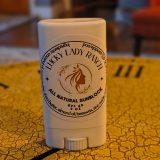 Mineral SunblockZinc oxide in a beeswax balm, without chemical UV filters.
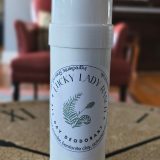 All Day DeodorantAluminum free deodorant that passed every sweaty test we gave it.
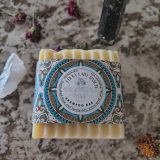 Shampoo and Conditioner BarPlastic free hair care with argan, castor and black seed oil.
Questions people ask
Does dry shampoo contain benzene?
Benzene is not an ingredient in dry shampoo, but testing found it as a contaminant in some aerosol dry shampoos, leading to recalls in 2021 and 2022. The likely source was the propellant. Non aerosol powder dry shampoos do not use those propellants.
Why is benzene in spray sunscreen?
Benzene is believed to have entered some aerosol sunscreens through contaminated hydrocarbon propellants such as butane and propane. Affected products were recalled. Lotion and stick sunscreens avoid this route.
How harmful is benzene exposure from a dry shampoo?
Companies that recalled products said the levels detected were not expected to cause health effects, and recalls were made out of caution. Benzene is a known carcinogen, though, so most experts agree exposure should be as low as possible.
Does benzoyl peroxide turn into benzene?
Research suggests benzoyl peroxide can break down into benzene, especially in heat. FDA testing in 2025 found most products had low or undetectable levels, with a few recalled. Store these products in a cool place and ask a dermatologist if you are concerned.
Sources and further reading
- US Food and Drug Administration (FDA), FDA Alerts Drug Manufacturers to the Risk of Benzene Contamination in Certain Drugs (2022)
- US Food and Drug Administration (FDA), Recalls, Market Withdrawals and Safety Alerts
- National Cancer Institute (NCI), Benzene
- International Agency for Research on Cancer (IARC), Monographs Volume 120: Benzene
- Centers for Disease Control and Prevention (CDC), Facts About Benzene
This guide is for general education and is not medical advice. If you have a skin condition, allergy, or are pregnant or nursing, talk with your doctor or a board certified dermatologist about the products that are right for you.


