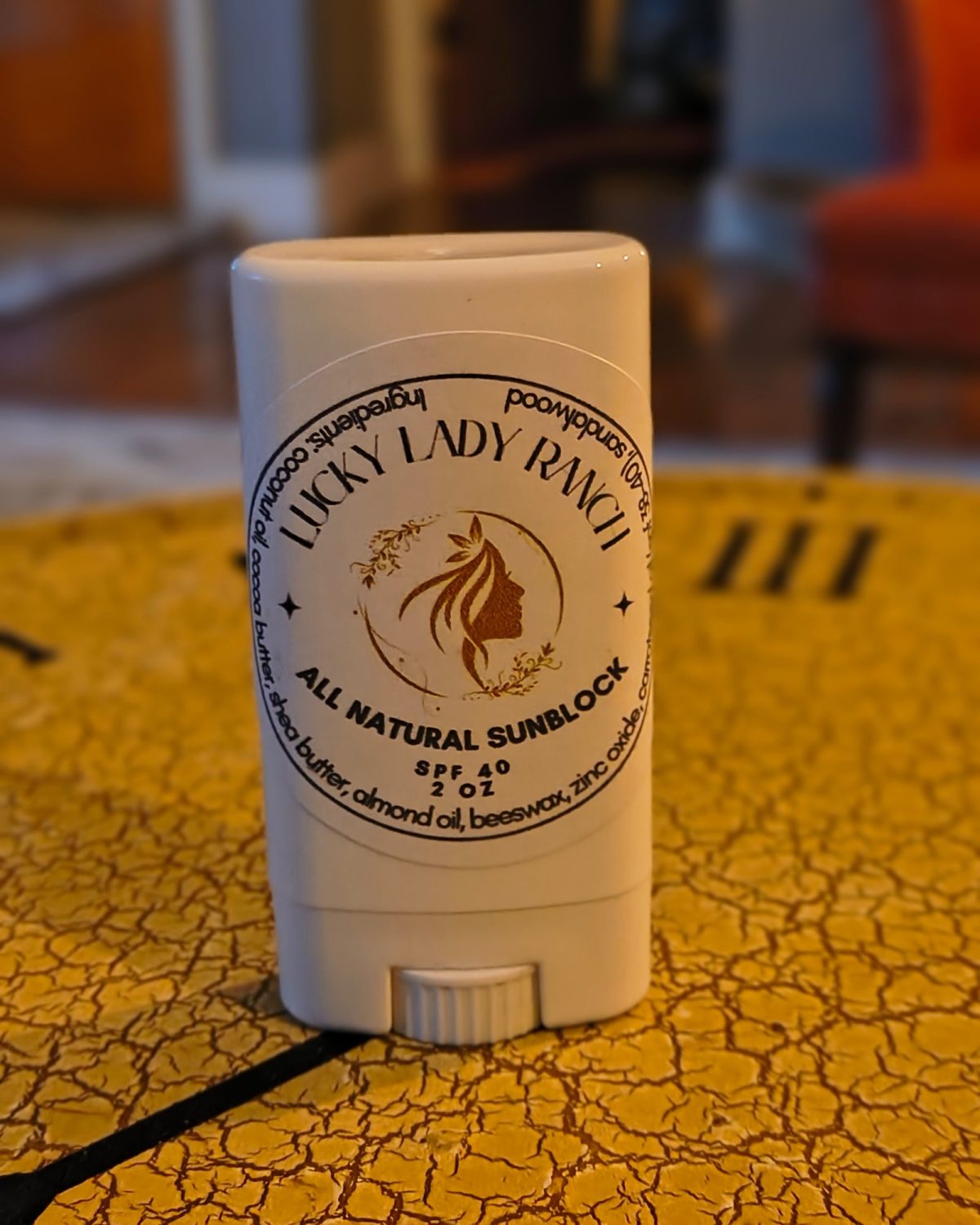
Zinc Oxide Sun Balm
Mineral Sunblock
Zinc oxide in a beeswax balm, without chemical UV filters.
$7.00
Buy nowSecure checkout through our ranch store.
Made without
Our Mineral Sunblock is built on zinc oxide, the mineral that sits on top of the skin and reflects and scatters UV light. Beeswax gives the balm staying power on active days, and carrot seed essential oil gives it a warm, earthy scent.
It contains no oxybenzone, octinoxate, octocrylene or homosalate. Reapply often, especially after swimming, sweating or toweling off, and pair it with shade, hats and protective clothing.
Ingredients
How to use
Good to know
Zinc oxide in a simple beeswax balm
Our Mineral Sunblock is a short, readable list: zinc oxide, beeswax, plant oils and carrot seed essential oil. It is a balm rather than a lotion, so it has no water and no need for synthetic preservatives. It contains no chemical UV filters at all. Think of it as one part of a sun plan that also includes shade, hats, protective clothing and regular reapplication.
A note on sunscreen rules
In the United States, sunscreen rules are set by the FDA, which regulates sunscreens as over the counter drugs and controls how protection is tested and labeled. We describe this balm only by its ingredients, and we do not make protection level or water resistance claims for it. If you need a product labeled for a specific level of protection, choose one that carries that FDA labeling.
What each ingredient does
Zinc oxide
Zinc oxide is a mineral that sits on top of the skin and reflects and scatters UV light. It is one of only two mineral filters, along with titanium dioxide, that the FDA has proposed as generally recognized as safe and effective. Our guide to mineral versus chemical sunscreen explains how the two types differ.
Beeswax
Beeswax gives the balm body and helps it stay where you put it during active days.
Plant oils
Plant oils make the zinc spreadable and keep the balm from feeling dry and chalky.
Carrot seed essential oil
Carrot seed oil gives the balm a warm, earthy scent. It is included for scent only.
What we leave out
- No oxybenzone or octinoxate, chemical filters under ongoing review.
- No octocrylene or homosalate.
- No synthetic fragrance and no parabens.
Who it is for
People who prefer mineral ingredients and want to avoid chemical UV filters: gardeners, ranchers, anglers, and anyone who likes a balm for the nose, ears, cheeks and the back of the neck. For babies under six months, keep them out of the sun and ask your pediatrician about sun care.
How to get the most from it
Apply generously to all exposed skin before going outside, and work it in until evenly spread. Reapply at least every two hours, and right away after swimming, sweating or toweling off. Seek shade during midday hours when the sun is strongest. A balm is one layer of protection, not a reason to stay out longer.
Questions about Mineral Sunblock
Is zinc oxide safe for sensitive skin?
Zinc oxide is generally well tolerated and is often suggested for sensitive skin because it sits on the surface rather than being a chemical filter. Any product can still bother someone, so patch test first. If you have a skin condition, a dermatologist can recommend sun care that suits you.
How often should I reapply mineral sunscreen?
Reapply at least every two hours, and immediately after swimming, sweating heavily or toweling off. Mineral products can rub off with activity, so reapplying matters just as much as with chemical sunscreens. Pair it with shade, a hat and protective clothing.
What is the difference between mineral and chemical sunscreen?
Mineral sunscreens use zinc oxide or titanium dioxide, which sit on top of the skin and reflect and scatter UV light. Chemical sunscreens use filters like oxybenzone and avobenzone that absorb UV light. In the US, the FDA regulates both and sets the rules for testing and labeling.
Why does mineral sunscreen leave a white cast?
Zinc oxide is a white mineral, and the same quality that lets it reflect light can leave a pale tint on skin. Rubbing it in well and applying in thin layers helps. Some people simply accept a little white on the nose and ears as a sign it is there.
Learn more
The story behind the ingredients

Mineral vs Chemical Sunscreen: Which Is Better for You
Mineral and chemical sunscreens both protect skin, but they differ in ingredients, absorption, and how they feel. Here is a fair comparison to help you choose.

Zinc Oxide: The Mineral Sun Filter Explained
Zinc oxide is one of only two sunscreen ingredients the FDA has proposed as safe and effective. Here is how it works, why it suits sensitive skin, and how to use it well.

Oxybenzone and Octinoxate: Chemical Sunscreen Filters Under Scrutiny
Two of the most familiar chemical sunscreen filters face questions about absorption, hormones, allergies, and coral reefs. Here is what the evidence shows.
You may also like