Mineral Oil and Petrolatum: Petroleum on Your Skin
Mineral oil and petrolatum are cheap, stable, and very good at sealing in moisture. They also come from petroleum. Here is a fair look at both sides.

Key takeaways
- Mineral oil and petrolatum are refined from petroleum and work by forming a seal that slows water loss from skin.
- Highly refined cosmetic grades are considered safe by dermatologists and regulators; poorly refined grades can contain carcinogenic PAHs.
- They sit on top of skin and do not supply the fatty acids, vitamins, or antioxidants found in plant oils and butters.
- Choosing plant based alternatives is often about values, sourcing, and skin feel as much as safety.
Petroleum jelly has been a medicine cabinet staple for well over a century. Mineral oil is the base of countless baby oils, lotions, and makeup removers. Both come from the same source as gasoline and plastics, which comes as news to many people. That origin alone does not make them dangerous, and it is worth being honest about that. But it does raise fair questions about refining, sourcing, and whether there are better options for your skin. This article walks through all of it without the scare tactics.
What are mineral oil and petrolatum?
Mineral oil is a clear, odorless liquid made of saturated hydrocarbons separated from crude oil during refining. Petrolatum, better known as petroleum jelly, is a semi solid mixture of hydrocarbons, also from petroleum, with a soft, greasy texture. Related ingredients include paraffin wax, microcrystalline wax, ceresin, and ozokerite.
Both work mainly as occlusives. They form a water resistant film on the skin that slows the evaporation of water from the skin's surface, which dermatologists call transepidermal water loss. Petrolatum is one of the most effective occlusives available, which is why it is widely used on very dry skin, chapped lips, and minor wounds.
Where they show up
- Petroleum jelly, ointments, and healing balms
- Baby oil, which is typically mineral oil with fragrance
- Body lotions, creams, and hand creams
- Lip balms and lipsticks
- Makeup removers and cold creams
- Foundations, mascaras, and hair products
Label names
Look for mineral oil, paraffinum liquidum (the INCI name used in Europe), liquid paraffin, white mineral oil, petrolatum, white petrolatum, petroleum jelly, paraffin, cera microcristallina or microcrystalline wax, ceresin, and ozokerite. Our guide to reading ingredient labels explains why European style names often appear on US products.
What research and regulators say
Refining makes the difference
Crude petroleum contains compounds called polycyclic aromatic hydrocarbons (PAHs), some of which are known carcinogens. The International Agency for Research on Cancer classifies untreated or mildly treated mineral oils as carcinogenic to humans (Group 1). Highly refined mineral oils, which have had these compounds removed, are classified as not classifiable as to carcinogenicity (Group 3). The cosmetic and pharmaceutical grades used in reputable personal care products are highly refined.
The European Union reflects this distinction directly. Petrolatum and many mineral oil derived ingredients are permitted in EU cosmetics only when the full refining history is known and the substance is shown not to be carcinogenic. In the US, the FDA permits mineral oil and petrolatum in cosmetics and also recognizes white petrolatum as a skin protectant in over the counter drug products.
The practical takeaway is that the quality of the source matters. Inexpensive, unregulated products or industrial grade petroleum jelly are a different matter from pharmaceutical grade white petrolatum.
What dermatologists say
To be fair, many dermatologists recommend petroleum jelly. The American Academy of Dermatology suggests it for dry, cracked skin, for chapped lips, and to help minor wounds heal by keeping them moist. It rarely causes allergic reactions, which makes it useful for people with very sensitive skin. Cosmetic grade mineral oil is also generally considered unlikely to clog pores, despite its reputation.
Remaining questions
Some open questions remain. Researchers in Europe have studied mineral oil hydrocarbons, called MOSH and MOAH, which can migrate into food from packaging and inks. The European Food Safety Authority has noted that some saturated mineral oil hydrocarbons can accumulate in body tissues, though their health effects are unclear. Most of this research concerns food, not skin care, and the portion absorbed through skin appears to be small, but it is part of why some people choose to reduce their overall exposure.
There is also a rare but real issue with use inside the nose. Repeated application of petroleum jelly or oil based products in or around the nostrils, especially at bedtime, has been linked to a rare lung condition called lipoid pneumonia when small amounts are inhaled over time. If you use nasal lubricants regularly, ask your doctor which kind is appropriate.
What petroleum ingredients do not do
Mineral oil and petrolatum are very good at one job: sealing. They do not contribute much else. Plant oils and butters, by contrast, contain fatty acids such as linoleic and oleic acid, naturally occurring vitamin E, phytosterols, and other compounds that support the skin's own lipid barrier. Shea butter, for example, contains a notable portion of unsaponifiable compounds that give it a rich, comforting feel. Learn more in our articles on shea butter and beeswax, which together make a natural balm with protective qualities similar to petrolatum.
A heavy petroleum film can also feel greasy, trap heat, and transfer to clothes and bedding. Some people love that feeling on a cracked heel; others find it suffocating on their face.
Environmental and sourcing considerations
Mineral oil and petrolatum are by-products of fossil fuel refining. They are not renewable, and they do not break down quickly in the environment. For many people, choosing plant based oils, butters, and waxes is a values decision about supporting agriculture and renewable materials rather than petroleum. That is a legitimate reason on its own, separate from the safety question.
Who should be most careful
- Anyone buying unbranded or industrial grade petroleum jelly, where refining standards may be unclear.
- People using oil based products inside the nose, who should talk with a doctor.
- People with acne prone skin who notice heavy occlusive products make breakouts worse, even though cosmetic grade mineral oil is not considered highly pore clogging.
- Parents choosing baby products, since baby oil often adds synthetic fragrance on top. See non toxic skin care for kids.
How to spot and swap
- Read for the names above, especially paraffinum liquidum, which many people do not recognize.
- If you use petroleum jelly, choose pharmaceutical grade white petrolatum from a reputable brand.
- Try plant based occlusives such as beeswax, shea butter, and cocoa butter for lips and dry patches.
- Use oils on damp skin. Plant oils applied right after a shower help hold in water much as mineral oil does. Our article on jojoba oil describes one of the most skin compatible choices.
- Check what else is in the formula. Products built on mineral oil often include synthetic fragrance and parabens as well.
Plant butters, beeswax, and oils instead
At Lucky Lady Ranch we make our moisturizers from plants and beeswax rather than petroleum. Our Body Balm combines unrefined shea butter, organic beeswax, and vitamin E, and our Lip Balm blends nourishing oils with shea, cocoa butter, and beeswax. They protect dry skin and lips in a way that feels familiar to anyone who has used petroleum jelly, while also bringing the fatty acids and natural compounds that plants offer. For us, it comes back to a simple idea: when there is a renewable, nourishing option that works, we would rather use it.
From the ranch
Made in small batches, without the ingredients discussed above.
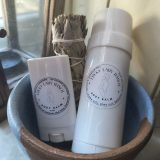 Body BalmUnrefined shea and organic beeswax for hard working skin.
 Lip BalmLip Love: our beauty oil blend with shea, cocoa butter and beeswax.
Questions people ask
Is mineral oil bad for your skin?
Highly refined cosmetic grade mineral oil is considered safe and is rarely irritating. It mainly seals in moisture and does not provide the fatty acids or antioxidants found in plant oils. Poorly refined grades are a different concern.
Is petroleum jelly carcinogenic?
Highly refined white petrolatum is not considered carcinogenic. Untreated or poorly refined petroleum products can contain polycyclic aromatic hydrocarbons, which is why refining quality matters.
What is paraffinum liquidum?
Paraffinum liquidum is the INCI name for mineral oil, the liquid hydrocarbon refined from petroleum. It is common on European and international labels.
Does mineral oil clog pores?
Cosmetic grade mineral oil is generally considered unlikely to clog pores, though some people with acne prone skin find heavy occlusive products worsen breakouts.
What can I use instead of petroleum jelly?
Balms made from beeswax and plant butters such as shea or cocoa butter offer similar protection for dry skin and lips while adding fatty acids and naturally occurring vitamin E.
Sources and further reading
- International Agency for Research on Cancer (IARC), Monographs Volume 100F: Mineral Oils, Untreated or Mildly Treated
- European Commission, Regulation (EC) No 1223/2009 on cosmetic products, Annex II
- American Academy of Dermatology (AAD), Dermatologists' Top Tips for Relieving Dry Skin
- European Food Safety Authority (EFSA), Scientific Opinion on Mineral Oil Hydrocarbons in Food
- US Food and Drug Administration (FDA), Skin Protectant Drug Products for Over-the-Counter Human Use, Final Monograph
This guide is for general education and is not medical advice. If you have a skin condition, allergy, or are pregnant or nursing, talk with your doctor or a board certified dermatologist about the products that are right for you.


