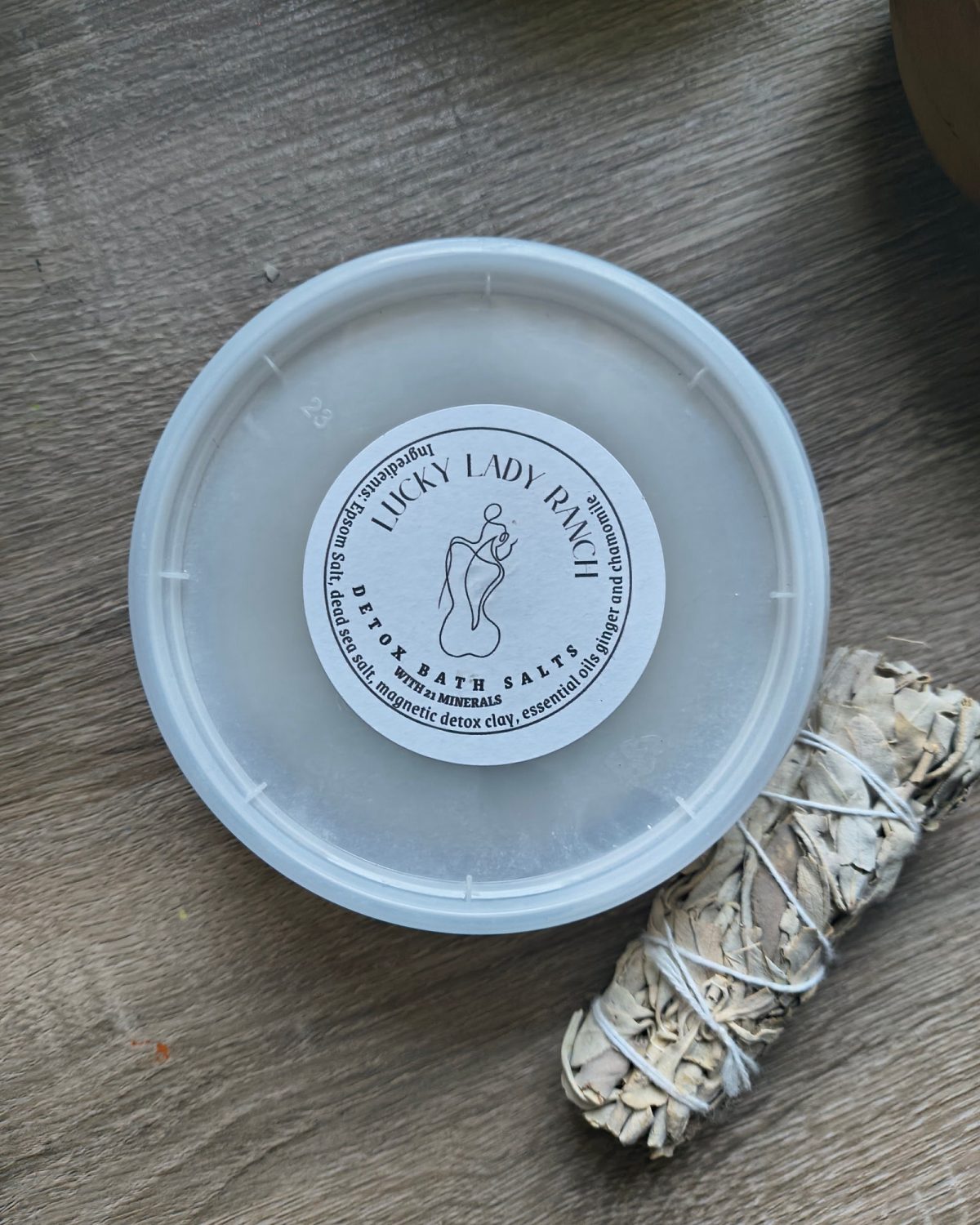
Bath Soak
Epsom Sea Salt Bath Soak
Epsom salt, sea salt and magnetic clay for a long, quiet soak.
$10.00
Buy nowSecure checkout through our ranch store.
Made without
Our Bath Soak blends Epsom salt, sea salt and magnetic clay, a combination that carries a wide range of trace minerals. Many people turn to a warm mineral soak to relax tired muscles and unwind after a long day.
No synthetic dyes, no artificial fragrance. Just salt, clay and warm water. Soak all your cares away.
Ingredients
How to use
Good to know
Salt, clay and warm water
A long, quiet soak is one of the oldest ways to unwind. Our Bath Soak keeps it simple with just three ingredients: Epsom salt, sea salt and magnetic clay. There are no synthetic dyes to tint the water, no artificial fragrance to fill the room, and nothing in the jar you cannot read. Just a mineral rich soak and some time to yourself.
What each ingredient does
Epsom salt
Epsom salt is magnesium sulfate, a mineral salt that has been added to baths for generations. Many people find a warm Epsom salt bath relaxing for tired muscles at the end of a long day. Research on how much magnesium passes through the skin is limited, so we keep our description to how it feels. Our guide to Epsom salt and sea salt baths looks at what is known.
Sea salt
Sea salt carries a range of naturally occurring trace minerals and gives the water a soft, mineral feel.
Magnetic clay
Magnetic clay is a fine natural clay that softens the bath water and leaves skin feeling smooth. Like other natural clays such as bentonite, it has a silky texture that many people enjoy in a bath.
What we leave out
- No synthetic dyes, often used to make bath salts look bright in the jar.
- No synthetic fragrance and no phthalates, which often travel with it.
- No microplastics or plastic glitter that rinse down the drain.
Who it is for
The Bath Soak is for anyone who wants a calm end to the day: after a long hike, a day of yard work or ranch chores, or a stretch at a desk. Because it is unscented, it suits people who find perfumed bath products overwhelming. Hot baths are not right for everyone. If you are pregnant, have heart or blood pressure concerns, diabetes, or broken skin, talk with your doctor before taking hot mineral baths.
How to get the most from it
Run a warm, not scalding, bath. Dissolve a generous handful of the soak under the running water and swirl to mix. Soak for 15 to 20 minutes. Dim the lights, put your phone in another room, and breathe. Drink a glass of water before and after, since warm baths can leave you thirsty. Afterward, rinse briefly, pat skin dry and apply a body oil or moisturizer while skin is still damp. Store the jar tightly closed in a dry spot, since salts pull moisture from the air and can clump.
Questions about Epsom Sea Salt Bath Soak
How much Epsom salt should I put in a bath?
A common guideline is about one to two cups of Epsom salt in a standard bathtub of warm water. For a blended soak, a generous handful or two dissolved under running water works well. Follow the directions on the product you are using.
How long should you soak in an Epsom salt bath?
Most people enjoy 15 to 20 minutes. That is long enough to relax without leaving skin overly dry or wrinkled. Keep the water warm rather than very hot, and get out sooner if you feel lightheaded.
Does magnesium from Epsom salt absorb through the skin?
Research on how much magnesium passes through the skin during a bath is limited and not conclusive. Many people still find Epsom salt baths soothing and relaxing. If you are thinking about magnesium for health reasons, talk with your doctor.
Who should not take an Epsom salt bath?
People with open wounds, severe skin conditions, heart or blood pressure concerns, kidney problems or diabetes, and anyone who is pregnant should check with a doctor first. Hot baths can also make some people dizzy, so stand up slowly when you get out.
Learn more
The story behind the ingredients

Epsom Salt and Sea Salt Baths: Minerals and Relaxation
A warm mineral bath is one of the oldest ways to unwind. Here is what Epsom salt and sea salt really do, where the claims go too far, and how to soak safely.

Bentonite Clay: How Natural Clay Absorbs and Cleanses
Bentonite is a volcanic clay that soaks up oil and moisture, which is why it shows up in masks, soaps, and natural deodorants. Here is how it works and how to use it well.

Synthetic Dyes and Coal Tar Colors in Cosmetics
Bright soaps, shampoos, and lipsticks often get their color from certified synthetic dyes. Here is how they are regulated and how to read them on a label.
You may also like