SLS and SLES: Why Harsh Sulfates Strip Your Skin and Hair
SLS and SLES make the rich foam in most shampoos and body washes. They clean well, sometimes too well. Here is what the research actually supports.

Key takeaways
- SLS and SLES are synthetic surfactants that create foam and remove oil from skin and hair.
- SLS is a well documented skin irritant, so much so that dermatology researchers use it to irritate skin on purpose in studies.
- Claims that SLS causes cancer are not supported by evidence; the real issues are dryness, irritation, and possible 1,4-dioxane in SLES.
- True cold process soap is a different kind of cleanser and contains no sulfates.
That thick, squeaky lather from a typical shampoo or body wash has a source, and most of the time it is a sulfate. Sodium lauryl sulfate and its close cousin sodium laureth sulfate are among the most common cleansing agents in the world. They are cheap, they foam beautifully, and they cut through oil. The trouble is that skin and hair need some of that oil. If your skin feels tight after a shower or your hair feels like straw no matter how much conditioner you use, sulfates are a reasonable place to look.
What are SLS and SLES?
Sodium lauryl sulfate (SLS) is a surfactant, short for surface active agent. Surfactant molecules have one end that is attracted to water and another that is attracted to oil. That lets them lift oil and dirt off a surface and carry it away when you rinse. SLS is typically made from lauryl alcohol, which can come from coconut or palm kernel oil or from petroleum, so a "derived from coconut" claim does not tell you much about how gentle it will be.
Sodium laureth sulfate (SLES) is SLS that has gone through a process called ethoxylation, which makes the molecule larger and noticeably milder. That process has a side effect we will come back to: it can leave behind traces of a contaminant called 1,4-dioxane.
Where sulfates show up
- Shampoos and two-in-one shampoo conditioners
- Body washes, bubble baths, and liquid hand soaps
- Facial cleansers and foaming face washes
- Toothpaste, where SLS creates the foam
- Many synthetic "beauty bars," which are often detergent bars rather than true soap
- Household cleaners and dish soap
Label names
Look for sodium lauryl sulfate, sodium laureth sulfate, ammonium lauryl sulfate, ammonium laureth sulfate, sodium coco-sulfate, and TEA-lauryl sulfate. The last one also brings in an ethanolamine, a separate issue we cover in our article on DEA, MEA, and TEA.
What the research says
Irritation is real and well documented
SLS is one of the most studied skin irritants there is. Dermatology researchers commonly use it as a standard irritant in patch testing, applying it on purpose to disrupt the skin barrier so they can measure how skin recovers or how well a moisturizer protects it. Studies show SLS can increase water loss through the skin and cause redness and dryness, especially with longer contact and higher concentrations.
The independent Cosmetic Ingredient Review panel concluded that SLS is safe in products designed for brief, discontinuous use followed by thorough rinsing, and that leave-on products should keep concentrations low. That conclusion is a fair summary: in a quick rinse, most people tolerate SLS fine. Problems tend to show up with frequent washing, long contact time, or skin that is already damaged.
Hair and scalp
Strong sulfates remove sebum, the natural oil that coats each strand. On oily hair that can feel great. On dry, curly, coarse, or color treated hair it can leave strands rough and frizzy and may speed up color fading. Some people also notice an itchy or tight scalp. Our guide to non toxic hair care covers sulfate free routines in detail.
Toothpaste and canker sores
Several small clinical studies have found that people who get recurrent canker sores had fewer or less painful sores when they switched to an SLS free toothpaste. The evidence is not conclusive, but if you are prone to mouth ulcers, an SLS free toothpaste is an easy thing to try and to discuss with your dentist.
The cancer myth
You may have read that SLS causes cancer. There is no good evidence for that, and it is not classified as a carcinogen by IARC or the US National Toxicology Program. The more legitimate concern with SLES is not the surfactant itself but possible contamination with 1,4-dioxane from manufacturing, which we explain in our article on PEG compounds and 1,4-dioxane.
Why the squeaky clean feeling misleads
Many of us grew up believing that skin or hair is only clean when it squeaks. That squeak is actually friction: the surface has been stripped of the thin layer of oils that normally keeps it smooth. The outer layer of skin relies on a mix of lipids, including ceramides, cholesterol, and fatty acids, to hold water in and keep irritants out. Strong detergents can loosen those lipids along with dirt. Skin then has to rebuild that barrier, and if you wash again before it does, dryness can build over days and weeks.
Concentration and contact time matter a great deal. A shampoo with SLS that sits on the scalp for thirty seconds is a very different exposure from a bubble bath a child soaks in for twenty minutes, or a cleanser left on during a long shower. This is also why people often tolerate a sulfate shampoo but react to the same ingredient in a face wash they use twice a day.
Who should be most careful
- People with eczema, dermatitis, or very dry skin, whose skin barrier is already struggling. See our guide to sensitive skin irritants.
- People with curly, coily, or color treated hair, which tends to lose moisture faster.
- Children, especially in long bubble baths where the skin soaks in surfactant for a while.
- Anyone with recurrent canker sores, who may want to check their toothpaste.
If you have a persistent rash or scalp problem, a dermatologist can help sort out whether a cleanser is the cause.
How to spot and avoid harsh sulfates
- Read the first few ingredients. Cleansing agents are usually listed right after water.
- Do not rely on foam as a signal of cleaning power. Gentle cleansers can clean well with less lather.
- Be thoughtful about "sulfate free" swaps. Some replacements, such as sodium lauroyl sarcosinate or certain betaines, are gentler, but cocamidopropyl betaine can still irritate some people.
- Shorten contact time and rinse well if you keep using a sulfate product.
- Consider true soap. Cold process soap is made by combining plant oils with lye, which transforms them into soap and glycerin. It is a completely different cleanser from a sulfate detergent. Learn more in our comparison of cold process soap and commercial beauty bars.
A gentler kind of clean
At Lucky Lady Ranch we make our cleansers the old way. Our Body Bar is cold process soap made from olive, coconut, shea, castor, and avocado oils, and it keeps the naturally formed glycerin that commercial processing often removes. For hair, our Shampoo and Conditioner Bar pairs those oils with argan and black seed oil and is pH adjusted for hair. Neither contains SLS or SLES.
Clean skin should feel comfortable, not squeaky. Leaving out harsh detergents is one of the simplest changes you can make, and many people notice the difference within a few washes.
From the ranch
Made in small batches, without the ingredients discussed above.
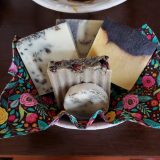 Body BarA true cold process soap for gentle, everyday cleansing.
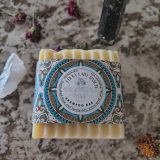 Shampoo and Conditioner BarPlastic free hair care with argan, castor and black seed oil.
 Man BarTea tree, cedarwood and bergamot mint in a clean, rugged bar.
Questions people ask
What is the difference between SLS and SLES?
SLES is SLS that has been ethoxylated, which makes it larger and generally milder on skin. The ethoxylation process can leave trace amounts of 1,4-dioxane, a contaminant that SLS does not carry.
Does sodium lauryl sulfate cause cancer?
There is no good evidence that SLS causes cancer, and major agencies do not classify it as a carcinogen. Its main drawbacks are skin and scalp irritation and dryness.
Is sulfate free shampoo better for your hair?
Many people with dry, curly, or color treated hair find sulfate free cleansers leave hair softer and help color last. People with very oily hair may prefer a stronger cleanser. It depends on your hair type.
Is there SLS in bar soap?
True cold process soap does not contain SLS. However, many commercial bars labeled as beauty or cleansing bars are synthetic detergent bars that may contain sulfates or similar surfactants, so check the label.
Can SLS in toothpaste cause canker sores?
Some small studies suggest that SLS free toothpaste may reduce canker sores in people prone to them. The evidence is limited, so it is worth discussing with your dentist.
Sources and further reading
- Cosmetic Ingredient Review (CIR), Final Report on the Safety Assessment of Sodium Lauryl Sulfate and Ammonium Lauryl Sulfate
- US Food and Drug Administration (FDA), 1,4-Dioxane in Cosmetics: A Manufacturing Byproduct
- American Academy of Dermatology (AAD), Eczema: Tips for Choosing Skin Care Products
- National Library of Medicine, PubChem: Sodium Dodecyl Sulfate
- International Agency for Research on Cancer (IARC), List of Classifications
This guide is for general education and is not medical advice. If you have a skin condition, allergy, or are pregnant or nursing, talk with your doctor or a board certified dermatologist about the products that are right for you.