Phthalates in Personal Care Products: The Hidden Plasticizers
Phthalates make plastics flexible and help fragrances linger. They rarely appear on cosmetic labels, which is exactly why they are worth understanding.

Key takeaways
- Phthalates are a family of chemicals used to soften plastics and, in personal care, mostly to help fragrance last.
- Diethyl phthalate (DEP) is the phthalate most often found in cosmetics today and is usually hidden inside "fragrance."
- Several phthalates have shown hormone disrupting effects in animal studies, and the EU bans some of them in cosmetics.
- Choosing fragrance free or transparently scented products is the most practical way to cut exposure.
Most people never see the word phthalate on a shampoo bottle, yet researchers routinely find phthalate breakdown products in the urine of the general population. That gap between what is on the label and what is in the body is the reason phthalates deserve a closer look. They are not exotic chemicals. They are among the most widely produced industrial chemicals in the world, and a few of them have a long history in personal care.
What are phthalates?
Phthalates (pronounced THAL-ates) are a group of chemicals made from phthalic acid. Their best known job is as plasticizers: they make rigid plastics like PVC soft and flexible. You find them in vinyl flooring, shower curtains, medical tubing, and food packaging materials.
In personal care, phthalates do a few different jobs. They can help a fragrance cling to skin and last longer, help nail polish stay flexible instead of chipping, and act as a solvent or denaturant. Because they are used in such small amounts and often as part of a larger fragrance mixture, they rarely appear by name.
Where phthalates show up
Different phthalates have been used in different products:
- Diethyl phthalate (DEP): the most common phthalate in cosmetics today, used mainly in fragrances, perfumes, colognes, and scented lotions, shampoos, and body washes.
- Dibutyl phthalate (DBP): historically used in nail polish to reduce brittleness. Many nail brands removed it after public pressure, and our article on the toxic trio in nail products covers that story.
- Dimethyl phthalate (DMP): used in some hair sprays to help them stay flexible.
- Di(2-ethylhexyl) phthalate (DEHP): mostly found in plastics, not cosmetic formulas, though it can migrate from packaging.
Why they are hard to find on the label
In the United States, fragrance ingredients can be listed simply as "fragrance" or "parfum" to protect trade secrets. A phthalate used as part of that fragrance blend does not have to be named separately. This is the heart of the fragrance loophole, and it is why DEP is so often invisible to shoppers. If you do see a phthalate listed directly, it will usually be spelled out as diethyl phthalate, dibutyl phthalate, or dimethyl phthalate, or abbreviated DEP, DBP, or DMP.
What research and regulators say
Health research
Phthalates have been studied extensively because exposure is so widespread. Some phthalates, especially DEHP and DBP, have shown anti-androgenic effects in animal studies, meaning they can interfere with male hormones during development. Human observational studies have looked for links between phthalate exposure and outcomes such as reproductive development, fertility, and pregnancy outcomes. Some of these studies have reported associations, but observational research cannot prove cause and effect, and results have not always been consistent.
It is also fair to say that phthalates are not all the same. DEP, the one most common in cosmetics, has generally shown weaker effects in animal studies than DEHP or DBP. For a deeper look at how scientists think about hormone active chemicals, see our explainer on endocrine disruptors in personal care.
United States
The FDA has said it is not clear what effect, if any, phthalates have on human health at the levels used in cosmetics. Its surveys found that DBP and DMP use in cosmetics declined significantly over the years, while DEP remained in use, mostly in fragrance. Separately, the Consumer Product Safety Commission permanently restricts several phthalates in children's toys and child care articles. California's Toxic-Free Cosmetics Act prohibits DBP and DEHP in cosmetics sold in the state beginning in 2025.
European Union
The EU prohibits DBP, DEHP, and benzyl butyl phthalate (BBP), among others, in cosmetics because they are classified as toxic to reproduction. DEP is not banned in EU cosmetics, and European safety committees have considered it acceptable at current levels of use.
The CDC's biomonitoring program has tracked phthalate metabolites in Americans for years. Those measurements reflect exposure from many sources, including food packaging, so personal care products are only one piece of the picture. Still, they are one of the easier pieces to change.
Why phthalates are hard to study
Phthalates pass through the body fairly quickly. Most are broken down and excreted within a day or so, which means a single urine sample is a snapshot of recent exposure rather than a long term record. That makes it tricky for researchers to link exposure at one point in time to health outcomes that develop over years. It also means something encouraging: when people reduce their exposure, levels in the body can drop relatively fast. Small studies in which participants switched to products without phthalates or certain other chemicals for a few days have reported measurable drops in the related metabolites in their urine.
Another challenge is that phthalates rarely travel alone. People are exposed to several at once, from diet, dust, plastics, and personal care, along with other substances that may act on similar hormone pathways. Scientists increasingly look at the combined effect of mixtures, which is one reason regulators in some countries have chosen to restrict whole groups of phthalates rather than evaluating each one in isolation.
Who should be most careful
- Pregnant people, because animal research points to fetal development as the most sensitive window for some phthalates. Our guide to clean beauty during pregnancy offers practical swaps.
- Infants and young children, who are still developing and may be exposed through lotions, baby washes, and toys. See our notes on non toxic skin care for babies and kids.
- People who use many scented products daily, since exposure adds up across perfume, body wash, lotion, hair spray, and laundry products.
Anyone with specific reproductive or developmental health concerns should talk with a doctor, who can look at their whole situation.
How to spot and limit phthalates
- Treat "fragrance" and "parfum" as a question mark. Unless the brand discloses its full fragrance formula or labels it phthalate free, you cannot know what is inside. Our article on synthetic fragrance explains what else that one word can hold.
- Prefer fragrance free or essential oil scented products that name each scent ingredient.
- Look for the abbreviations DEP, DBP, DMP, and DEHP on nail and hair products.
- Cut back on scented layers. You do not need to replace everything. Swapping the products you use most often, such as body wash, lotion, and deodorant, makes the biggest difference.
- Mind packaging and heat. Phthalates can migrate from some soft plastics, so storing products away from heat is a small, sensible habit.
Scent without the mystery
At Lucky Lady Ranch, every scent in our products comes from essential oils that we can name. Our Body Bar is a cold process soap of olive, coconut, shea, castor, and avocado oils, scented with essential oils rather than a proprietary fragrance blend. Our All Day Deodorant works the same way. There is no "fragrance" catchall on our labels because there is nothing to hide behind it.
Essential oils are not risk free either, and some people are sensitive to them, which is why we encourage reading our guide on essential oil safety. But we believe you deserve to know exactly what you are putting on your skin. Leaving out hidden plasticizers is one quiet way to keep a daily routine simple and honest.
From the ranch
Made in small batches, without the ingredients discussed above.
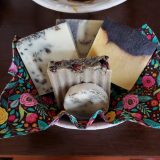 Body BarA true cold process soap for gentle, everyday cleansing.
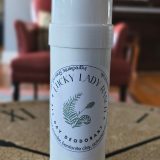 All Day DeodorantAluminum free deodorant that passed every sweaty test we gave it.
Questions people ask
What products contain phthalates?
In personal care, phthalates are most often found in scented products such as perfume, cologne, body wash, lotion, and hair spray, usually as part of the fragrance. Some older nail polishes contained dibutyl phthalate.
Are phthalates banned in the US?
Phthalates are not banned in cosmetics at the federal level. Several are restricted in children's toys, and California prohibits DBP and DEHP in cosmetics sold in the state from 2025. The EU bans DBP, DEHP, and BBP in cosmetics.
Why don't phthalates appear on ingredient labels?
When a phthalate is part of a fragrance mixture, US rules allow the whole mixture to be listed as "fragrance" or "parfum," so individual components do not have to be named.
Are phthalates endocrine disruptors?
Some phthalates, especially DEHP and DBP, have shown hormone disrupting effects in animal studies. DEP, the one most common in cosmetics, has generally shown weaker effects. Human research is ongoing.
How can I reduce my exposure to phthalates?
Choose fragrance free products or ones scented with named essential oils, look for brands that disclose their full fragrance formula, and focus first on the scented products you use every day.
Sources and further reading
- US Food and Drug Administration (FDA), Phthalates in Cosmetics
- US Centers for Disease Control and Prevention (CDC), Phthalates Factsheet, National Biomonitoring Program
- US Consumer Product Safety Commission (CPSC), Phthalates Business Guidance
- European Commission, Regulation (EC) No 1223/2009 on cosmetic products, Annex II
- California Assembly Bill 2762, Toxic-Free Cosmetics Act (2020)
- National Institute of Environmental Health Sciences (NIEHS), Endocrine Disruptors
This guide is for general education and is not medical advice. If you have a skin condition, allergy, or are pregnant or nursing, talk with your doctor or a board certified dermatologist about the products that are right for you.