Synthetic Fragrance: What "Parfum" Can Hide on a Label
One word on a label can stand for a blend of many chemicals. Here is what "fragrance" and "parfum" really mean, and why they matter for sensitive skin.

Key takeaways
- "Fragrance" or "parfum" on a label can represent a mixture of many individual ingredients that do not have to be listed.
- Fragrance is one of the most common causes of allergic contact dermatitis from cosmetics.
- Fragrance mixtures may include phthalates and synthetic musks, which have their own concerns.
- "Unscented" and "fragrance free" are not the same thing, so the ingredient list is the best guide.
Pick up almost any lotion, shampoo, or body wash and you will likely find one short word near the end of the ingredient list: fragrance, or its European equivalent, parfum. It looks like a single ingredient. In reality it is often a blend of many separate chemicals, and the people buying the product usually have no way to know what they are. For most shoppers this is a small mystery. For people with sensitive skin, allergies, or a desire to limit certain chemicals, it is a real problem.
What is synthetic fragrance?
A fragrance is a mixture of scent chemicals combined to create a particular smell, along with solvents, fixatives, and stabilizers that help the scent last and stay consistent. These components can be synthetic (made in a lab), naturally derived (isolated from plants), or a mix of both. Most mass market fragrances rely heavily on synthetic aroma chemicals because they are inexpensive, consistent from batch to batch, and allow scents that do not exist in nature, such as "clean linen" or "ocean breeze."
The fragrance industry draws from a palette of thousands of available materials. A single fragrance formula may contain dozens of them. The International Fragrance Association (IFRA), an industry body, publishes standards that restrict or prohibit certain materials, but these are self-regulatory rather than law in most countries.
Why the label can stay vague
In the United States, cosmetic ingredients must be listed on the label, but fragrance and flavor formulas are treated as trade secrets. Under the rules that implement the Fair Packaging and Labeling Act, a company can list the whole mixture as "fragrance" without naming each component. The FDA has acknowledged that this means consumers who are sensitive to particular fragrance ingredients may not be able to identify them on the label.
The Modernization of Cosmetics Regulation Act of 2022 (MoCRA) directed the FDA to issue rules requiring that fragrance allergens be identified on labels. That is a meaningful step, though the details depend on the final rules. We explain the broader law in our article on MoCRA and what it changed, and the history of this gap in our piece on the fragrance loophole.
The European Union already requires that specific fragrance allergens be named on the label when they exceed set thresholds in leave-on and rinse-off products. In 2023 the EU expanded that list considerably, with a transition period for companies to update their labels. That is why you may see names like limonene, linalool, citronellol, or geraniol at the end of European ingredient lists.
Where fragrance shows up
Almost everywhere. Perfume and cologne, of course, but also lotions, body washes, shampoos, conditioners, deodorants, facial moisturizers, sunscreens, baby wipes, and makeup. Fragrance is also common in laundry detergent, dryer sheets, candles, and air fresheners, so personal care is only part of your daily exposure.
Label words to watch
- Fragrance, parfum, or perfume
- Aroma or flavor (in lip and oral products)
- Masking fragrance, which is sometimes used in products marketed as unscented to cover the smell of other ingredients
What the research says
Skin allergy
The clearest and best established concern with fragrance is allergic contact dermatitis. Dermatologists consistently identify fragrance as one of the most common causes of allergic skin reactions to cosmetics, and fragrance mixes are part of standard patch test panels. Once someone becomes sensitized to a particular fragrance chemical, they may react every time they encounter it, which is very hard to manage when the ingredient is not named on the label.
This applies to natural fragrance chemicals too. Some of the most common allergens, such as limonene and linalool, occur naturally in essential oils and become more allergenic when they oxidize with age and air exposure. Being fair about that is important, and our guide to essential oil safety explains how to use them sensibly.
Hidden chemicals of concern
Beyond allergy, the concern with undisclosed fragrance is what it may carry. Fragrances have historically been a source of phthalates, particularly diethyl phthalate, used to help scents last. They may also contain synthetic musks such as galaxolide and tonalide, which are persistent in the environment and have been detected in human tissue and breast milk.
Respiratory and headache complaints
Some people report headaches, sneezing, or breathing difficulty around strongly scented products, and some people with asthma find that fragrances trigger symptoms. Research in this area relies largely on surveys, so it is harder to measure, but the experience is common enough that many workplaces and clinics have adopted fragrance free policies.
Why scent builds up without you noticing
Our noses adapt quickly to smells we encounter all the time, a process sometimes called olfactory fatigue. After a few minutes you may stop noticing the scent of your own lotion or shampoo, even though people around you still can. This is one reason heavily fragranced routines creep upward: the shower gel, conditioner, body spray, and laundry scent each seem mild on their own, but together they add up to a steady, all day exposure.
Who should be most careful
- People with eczema, rosacea, or sensitive skin, for whom fragrance is one of the first ingredients dermatologists usually suggest removing. Our guide to sensitive skin irritants covers others.
- Anyone with a known fragrance allergy diagnosed by patch testing.
- Babies and young children, whose skin is thinner and more reactive.
- People with asthma or scent sensitivity.
If you get a recurring rash and suspect a product, a dermatologist can arrange patch testing to identify the specific trigger.
How to spot and avoid undisclosed fragrance
- Read the whole ingredient list, not just the front label. Our guide on reading cosmetic ingredient labels can help.
- Understand the terms. "Fragrance free" generally means no fragrance ingredients were added to scent the product. "Unscented" may mean a masking fragrance was added to cancel out other odors. Neither term is strictly defined by the FDA, so check the list.
- Prefer named scent ingredients. A product scented with "lavender oil" and "cedarwood oil" tells you far more than one listing "parfum."
- Look for full fragrance disclosure. Some brands now publish every component of their fragrance on request or online.
- Reduce layering. If your body wash, lotion, deodorant, and laundry soap are all scented, choosing unscented versions for a few of them lowers your total exposure.
Scent you can name
At Lucky Lady Ranch we scent our products only with essential oils, and we name them. Our Man Bar, for example, uses tea tree, cedarwood, and bergamot mint essential oils on top of our cold process soap base, and our Body Oil is a simple blend of plant oils. There is no "fragrance" placeholder on our labels.
We think that is the respectful way to make body care. You should be able to read a label and know what you are putting on your skin, and if a particular essential oil does not agree with you, you should be able to see it and choose something else.
From the ranch
Made in small batches, without the ingredients discussed above.
 Man BarTea tree, cedarwood and bergamot mint in a clean, rugged bar.
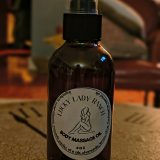 Body OilA silky blend of high quality oils for moisture and massage.
Questions people ask
What does parfum mean on an ingredient list?
Parfum is the international (INCI) term for fragrance. It refers to a mixture of scent ingredients, along with solvents and fixatives, that can be listed as one word rather than by each component.
Is synthetic fragrance bad for your skin?
Many people use fragranced products without trouble, but fragrance is one of the most common causes of allergic contact dermatitis from cosmetics. People with sensitive skin or eczema are often told to avoid it.
What is the difference between fragrance free and unscented?
Fragrance free generally means no fragrance ingredients were added. Unscented can mean that a masking fragrance was added to neutralize the smell of other ingredients. Neither term is strictly regulated, so check the ingredient list.
Are natural fragrances safer than synthetic ones?
Not automatically. Essential oils contain natural compounds such as linalool and limonene that can cause allergic reactions, especially when oxidized. The advantage of named essential oils is transparency, not guaranteed safety.
Do companies have to disclose fragrance ingredients?
In the US, fragrance formulas are protected as trade secrets. MoCRA directed the FDA to require labeling of fragrance allergens. The EU already requires specific fragrance allergens to be listed above set levels.
Sources and further reading
- US Food and Drug Administration (FDA), Fragrances in Cosmetics
- US Food and Drug Administration (FDA), Modernization of Cosmetics Regulation Act of 2022 (MoCRA)
- European Commission, Commission Regulation (EU) 2023/1545 on the labeling of fragrance allergens in cosmetic products
- International Fragrance Association (IFRA), IFRA Standards
- American Academy of Dermatology (AAD), Contact Dermatitis
- American Contact Dermatitis Society, Contact Allergen Management Program
This guide is for general education and is not medical advice. If you have a skin condition, allergy, or are pregnant or nursing, talk with your doctor or a board certified dermatologist about the products that are right for you.