Oxybenzone and Octinoxate: Chemical Sunscreen Filters Under Scrutiny
Two of the most familiar chemical sunscreen filters face questions about absorption, hormones, allergies, and coral reefs. Here is what the evidence shows.

Key takeaways
- Oxybenzone (benzophenone-3) and octinoxate (octyl methoxycinnamate) are chemical UV filters that absorb ultraviolet light.
- FDA studies found both are absorbed through the skin into the bloodstream at levels above the agency's threshold for further safety testing.
- Absorption does not prove harm, and the FDA says people should keep using sunscreen while research continues.
- Hawaii and several other places banned sunscreens with oxybenzone and octinoxate because of concerns about coral reefs.
Sun protection is one of the most worthwhile habits in skin care. Dermatologists agree on that, and so do we. What has changed in recent years is the conversation about which filters belong in sunscreen. Two of the most widely used chemical filters, oxybenzone and octinoxate, have drawn attention from the FDA, from scientists studying coral reefs, and from lawmakers. If you have ever wondered why "oxybenzone free" started appearing on sunscreen labels, this is the story.
What are oxybenzone and octinoxate?
Sunscreen filters fall into two broad groups. Mineral filters, zinc oxide and titanium dioxide, are inorganic particles that sit on the skin and block and scatter ultraviolet light, while also absorbing some of it. Chemical filters, also called organic filters, are carbon based molecules that absorb UV radiation and release the energy as a small amount of heat.
Oxybenzone, listed as benzophenone-3 in many countries, absorbs UVB and some shorter wavelength UVA light. It has been used in sunscreens since the 1980s and helped make lightweight, clear formulas possible. Octinoxate, also called octyl methoxycinnamate or ethylhexyl methoxycinnamate, is one of the most common UVB filters worldwide. Both are often combined with other filters to cover a broader range of wavelengths.
Where they show up
- Spray, lotion, and stick sunscreens labeled as chemical or "sheer"
- Daily facial moisturizers and foundations with sun protection
- Lip balms with sun protection
- Some hair products and nail polishes, where benzophenones protect the product from light
Label names
In the US, sunscreen is regulated as an over the counter drug, so active ingredients appear in the Drug Facts box. Look for oxybenzone, benzophenone-3, octinoxate, octyl methoxycinnamate, or ethylhexyl methoxycinnamate. In cosmetics that use benzophenones to protect the product itself, you may see benzophenone-4 or other numbered benzophenones in the regular ingredient list.
What the research and regulators say
The FDA's absorption studies
In 2019 the FDA proposed updating its rules for sunscreen active ingredients. It concluded that zinc oxide and titanium dioxide are generally recognized as safe and effective, and that it needed more data on most chemical filters, including oxybenzone and octinoxate, before it could reach the same conclusion. Much of the sunscreen monograph was written decades ago, when sunscreens were used far less often and less generously than dermatologists recommend today.
FDA researchers then ran two clinical studies, published in JAMA in 2019 and 2020. Volunteers applied sunscreen under maximal use conditions. Every chemical filter tested, including oxybenzone and octinoxate, was absorbed into the bloodstream at levels above the threshold at which the FDA says a drug should undergo further toxicology testing. Oxybenzone was absorbed at notably higher levels than the others and stayed detectable for days.
The FDA was careful to say that absorption does not mean an ingredient is unsafe. It means more research is needed. The agency continues to encourage people to use sunscreen along with other sun protective measures.
Hormone activity
Oxybenzone has shown weak hormone activity in laboratory and animal studies, and some human observational studies have looked for associations with health outcomes. The evidence in people is limited and not conclusive. The CDC's biomonitoring has found oxybenzone in the urine of the vast majority of Americans tested, which reflects how widely it has been used. Our explainer on endocrine disruptors describes why these questions are hard to resolve.
Skin allergy
Oxybenzone is one of the more common causes of photoallergic contact dermatitis among sunscreen ingredients, meaning a rash that develops when the ingredient on skin is exposed to sunlight. The American Contact Dermatitis Society named benzophenones its Allergen of the Year in 2014. Overall rates are still low, but it matters for people who react.
Europe
The EU's Scientific Committee on Consumer Safety reviewed oxybenzone and concluded that the previously allowed level was not safe for all uses. The EU lowered its maximum concentration in 2022, permitting up to 6 percent in sunscreen products and much less in other cosmetics where it is used only to protect the formula. Octinoxate remains permitted in the EU within limits.
Coral reefs
Laboratory studies have found that oxybenzone can harm coral larvae and contribute to coral bleaching, particularly in combination with warm water. Scientists debate how much sunscreen contributes compared with the much larger threats of climate change, warming oceans, and pollution, and field concentrations vary a great deal. Still, the concern was strong enough that Hawaii passed a law, effective in 2021, banning the sale of sunscreens containing oxybenzone or octinoxate without a prescription. Key West, the US Virgin Islands, and the Pacific nation of Palau have taken similar steps.
Who should be most careful
- Babies and young children. The American Academy of Pediatrics recommends keeping infants under six months out of direct sun, and many pediatricians suggest mineral sunscreens for young children. See non toxic skin care for kids.
- Pregnant and breastfeeding people who want to limit absorbed chemicals. Our guide to clean beauty during pregnancy discusses sun care.
- People with sensitive skin or past sunscreen reactions, since oxybenzone is a known photoallergen.
- Swimmers and snorkelers in reef areas, where local laws may already apply.
If you have a history of skin cancer, photosensitivity, or a skin condition, ask a dermatologist which sun protection is right for you.
How to spot and choose alternatives
- Check the Drug Facts box for oxybenzone and octinoxate, and note what other chemical filters are listed alongside them.
- Do not rely on "reef safe" claims. The term is not regulated. Read the active ingredients instead.
- Consider mineral filters. Zinc oxide protects across both UVA and UVB wavelengths. Our article on zinc oxide explains how it works, and our comparison of mineral and chemical sunscreen weighs the tradeoffs honestly.
- Watch for the replacements. Many oxybenzone free formulas use other chemical filters such as octocrylene and homosalate, which face their own questions.
- Use shade and clothing too. Hats, long sleeves, and midday shade reduce how much sunscreen you need in the first place.
Whatever you choose, use enough
One detail gets lost in debates about filters: most people apply far less sunscreen than the amount used in testing. The American Academy of Dermatology suggests about one ounce, roughly a shot glass full, to cover the exposed skin of an adult body, reapplied about every two hours outdoors and after swimming or sweating. A thin layer of any sunscreen, mineral or chemical, will protect less than the label suggests.
Sun care, kept simple
At Lucky Lady Ranch our Mineral Sunblock relies on zinc oxide in a base of beeswax and carrot seed essential oil, with no chemical UV filters. Mineral formulas can feel a little richer and may leave a slight white cast, and like any sun product they need to be applied generously and reapplied, especially after swimming, sweating, or towel drying.
We are not here to frighten anyone away from sun protection. Sunburn and UV damage are real, and protecting your skin matters. We simply believe the gentlest approach is a short list of ingredients you can understand, paired with shade, clothing, and good sense.
From the ranch
Made in small batches, without the ingredients discussed above.
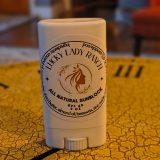 Mineral SunblockZinc oxide in a beeswax balm, without chemical UV filters.
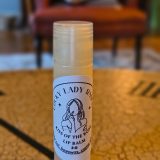 Lip BalmLip Love: our beauty oil blend with shea, cocoa butter and beeswax.
Questions people ask
Is oxybenzone safe in sunscreen?
The FDA has said it needs more data to determine whether oxybenzone is safe and effective, after studies showed it is absorbed into the bloodstream. Absorption alone does not prove harm, and the FDA encourages people to keep using sunscreen.
Why did Hawaii ban oxybenzone and octinoxate?
Hawaii banned the sale of sunscreens containing oxybenzone and octinoxate, effective in 2021, because of laboratory research suggesting these chemicals can harm coral reefs.
Does oxybenzone get absorbed into the body?
Yes. FDA clinical studies published in 2019 and 2020 found oxybenzone in the bloodstream at levels above the agency's threshold for further safety testing, and it remained detectable for days after use.
What is octinoxate called on a label?
Octinoxate may also be listed as octyl methoxycinnamate or ethylhexyl methoxycinnamate. In US sunscreens it appears in the Drug Facts box as an active ingredient.
What is a good alternative to oxybenzone sunscreen?
Mineral sunscreens with zinc oxide or titanium dioxide are the main alternatives. The FDA has proposed that both are generally recognized as safe and effective.
Sources and further reading
- US Food and Drug Administration (FDA), Sunscreen Drug Products for Over-the-Counter Human Use, Proposed Rule (2019)
- Matta MK et al., Effect of Sunscreen Application on Plasma Concentration of Sunscreen Active Ingredients, JAMA (2020)
- Scientific Committee on Consumer Safety (SCCS), Opinion on Benzophenone-3 (2021)
- Hawaii State Legislature, Act 104 (2018), relating to water pollution and sunscreens
- US Centers for Disease Control and Prevention (CDC), Benzophenone-3 Factsheet, National Biomonitoring Program
- American Academy of Dermatology (AAD), Sunscreen FAQs
This guide is for general education and is not medical advice. If you have a skin condition, allergy, or are pregnant or nursing, talk with your doctor or a board certified dermatologist about the products that are right for you.