Cold Process Soap vs Commercial "Beauty Bars"
A handmade bar and a drugstore beauty bar can look alike, but they are made differently and often are not even the same kind of product. Here is how they compare.

Key takeaways
- Cold process soap is made by mixing oils with lye at low heat and letting the bars cure for several weeks; properly made, no lye remains in the finished soap.
- Glycerin forms naturally during soapmaking and stays in cold process bars.
- Many commercial beauty bars are syndet bars made from synthetic detergents rather than true soap, which is why they avoid the word soap.
- True soap is alkaline, while syndet bars can be closer to skin's pH; each has trade-offs for different skin types.
- Read the label: saponified oils like sodium olivate signal true soap, while ingredients like sodium cocoyl isethionate signal a syndet.
Pick up a drugstore bar and a handmade bar from a farmers market and they might look similar: both rectangles, both lather, both clean. But they are often made in very different ways, from very different ingredients, and in many cases they are not even legally the same product. If you have ever wondered why a homemade bar feels different on your skin, or why some big brands carefully avoid calling their bars soap, this guide explains it.
What Is Cold Process Soap?
All true soap is made the same basic way: fats or oils react with a strong alkali in a chemical reaction called saponification. For bar soap, that alkali is sodium hydroxide, also known as lye. The reaction turns the oils and lye into two new things: soap molecules and glycerin.
In the cold process method, the soapmaker blends oils with a lye solution at relatively low temperatures, pours the mixture into molds, and lets it harden. The bars are then cut and left to cure, typically for about four to six weeks. During curing, saponification finishes and excess water evaporates, which makes a harder, longer-lasting, milder bar.
Does handmade soap still contain lye?
This is one of the most common questions. You cannot make true soap without lye, but in properly formulated and cured soap, the lye is fully used up in the reaction. Soapmakers usually add a small excess of oil, called a superfat, so there is extra oil left over rather than extra lye. That leftover oil is one reason a good cold process bar feels gentle and conditioning.
Why the oils matter
Each oil brings different qualities to the finished bar. Olive oil makes a mild bar. Coconut oil creates big, bubbly lather and strong cleansing. Shea butter adds hardness and creaminess. Castor oil helps stabilize lather. Because cold process soap keeps the character of the oils, the recipe makes a noticeable difference in how the bar feels.
Hot process and melt and pour
Handmade soap is not all cold process. Hot process soap is cooked during saponification, so it can be used sooner and has a more rustic texture. Melt and pour soap starts from a premade base that crafters melt, scent, and mold. Those bases vary widely, and some include synthetic detergents, propylene glycol, or other additives, so "handmade" alone does not tell you how a bar was made. Ask, or read the label.
What Is a Commercial "Beauty Bar"?
Mass-produced bars fall into a few groups.
Commercial true soap
Some are true soap, usually made in large continuous processes from beef tallow or palm oil and coconut oil. On labels you may see sodium tallowate, sodium palmate, or sodium palm kernelate. These bars are often milled and pressed into smooth, uniform shapes and may include added fragrance, colorants, and chelating agents such as tetrasodium EDTA. In some large-scale soap production, glycerin has historically been separated out and sold for other uses, which can leave a bar that feels more drying.
Syndet bars
Many bars sold as "beauty bars," "cleansing bars," or "moisturizing bars" are not soap at all. They are syndet bars, short for synthetic detergent. Instead of saponified oils, they use surfactants such as sodium cocoyl isethionate, sodium lauroyl isethionate, or sometimes harsher detergents. They are formulated to be close to neutral pH.
Combination bars
Some bars blend true soap with synthetic detergents to balance cost, lather, and feel.
Why Some Brands Avoid the Word Soap
The FDA explains that a product counts as true soap, in the regulatory sense, only if most of its cleaning action comes from alkali salts of fatty acids (the result of saponification) and it is marketed only for cleaning. Those products are regulated by the Consumer Product Safety Commission. A bar made mostly from synthetic detergents is not legally soap, and a bar that claims to moisturize or deodorize is regulated as a cosmetic. That is why many large brands say "beauty bar" or "cleansing bar." It is an accurate description, not a trick, but it is good to know what it means.
How They Compare on Your Skin
| Cold process soap | Syndet beauty bar | |
|---|---|---|
| Cleansing agents | Saponified plant or animal oils | Synthetic surfactants |
| pH | Alkaline, roughly 9 to 10 | Often near neutral |
| Glycerin | Retained naturally | Varies; may be added |
| Extra oil | Superfat leaves free oils in the bar | Added emollients vary |
| Typical additives | Essential oils, clays, botanicals | Fragrance, preservatives, colorants, EDTA |
The pH question
Healthy skin's surface is mildly acidic. True soap is alkaline, which is the main argument made in favor of syndet bars, and some dermatologists recommend syndets for people with very dry skin or eczema. That is a fair point. On the other hand, skin generally returns to its normal pH fairly soon after rinsing, and many people with normal skin find a well made, superfatted cold process bar comfortable. People with sensitive or eczema-prone skin should pay attention to how their own skin responds and talk with a dermatologist if a cleanser causes dryness or stinging. Our guide to sensitive skin irritants covers other triggers.
Harsh detergents
Not all syndets are equal. Gentle isethionates are quite mild. Bars and body washes built on sodium lauryl sulfate can be more stripping, especially with daily use.
What else is in the bar
The cleansing agent is only part of the story. Many commercial bars contain synthetic fragrance, synthetic dyes, and in the past some contained antibacterial agents like triclosan, which the FDA removed from consumer antibacterial soaps in 2016.
How to Tell What You Are Buying
- Look for saponified oils. Names like sodium olivate, sodium cocoate, sodium shea butterate, or "saponified olive oil" mean true soap.
- Look for synthetic surfactants. Sodium cocoyl isethionate, sodium lauroyl isethionate, or sodium lauryl sulfate near the top of the list mean a syndet or combination bar.
- Check for fragrance and colors. "Fragrance" hides components; FD&C or D&C color names indicate synthetic dyes.
- Ask about cure time. A small maker should be glad to tell you how long the bars cure.
Our guide to reading ingredient labels can help with the rest.
Caring for a Handmade Bar
Cold process soap usually has no added hardeners, so it lasts longest when it can dry between uses. Keep it on a draining soap dish out of the shower stream. Store spare bars in a cool, dry place. Over many months, the oils in any natural soap can slowly oxidize; our article on natural product shelf life explains what to watch for.
How We Make Ours
Every bar at Lucky Lady Ranch is made by the cold process method in small batches and cured before it leaves the ranch. Our Body Bar uses olive, coconut, shea, castor, and avocado oils with essential oils. Our Beauty Bar adds vitamin E, rosehip seed oil, and prickly pear seed oil for the face. The glycerin stays in, the harsh detergents and synthetic fragrance stay out, and the ingredient list reads like a recipe.
From the ranch
Made in small batches, without the ingredients discussed above.
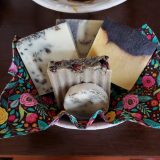 Body BarA true cold process soap for gentle, everyday cleansing.
 Beauty BarA gentle facial bar with rosehip, prickly pear and vitamin E.
 Man BarTea tree, cedarwood and bergamot mint in a clean, rugged bar.
Questions people ask
Does cold process soap contain lye?
Lye is required to make all true soap, but in properly formulated and cured cold process soap, the lye is fully consumed in the reaction with the oils. Soapmakers add extra oil so no free lye remains.
Why isn't Dove called soap?
Many beauty bars, including well known brands, are made mainly from synthetic detergents rather than saponified oils, so they do not meet the regulatory definition of soap. They are sold as beauty bars or cleansing bars instead.
Is handmade soap better for your skin?
Many people find well made cold process soap gentle because it keeps natural glycerin and extra oils. However, true soap is alkaline, and some people with very dry or eczema-prone skin do better with a mild syndet cleanser. Skin responses vary.
How long does cold process soap need to cure?
Most cold process soap cures for about four to six weeks. Curing lets saponification finish and water evaporate, producing a harder, milder, longer-lasting bar.
What is a syndet bar?
A syndet bar is a cleansing bar made from synthetic detergents, such as sodium cocoyl isethionate, rather than from saponified oils. Syndet bars are usually formulated to be close to neutral pH.
Sources and further reading
- US Food and Drug Administration (FDA), Soaps
- US Food and Drug Administration (FDA), Safety and Effectiveness of Consumer Antiseptics; Topical Antimicrobial Drug Products for Over-the-Counter Human Use, Final Rule, 2016
- Ananthapadmanabhan KP et al., Cleansing without compromise: the impact of cleansers on the skin barrier and the technology of mild cleansing, Dermatologic Therapy, 2004
This guide is for general education and is not medical advice. If you have a skin condition, allergy, or are pregnant or nursing, talk with your doctor or a board certified dermatologist about the products that are right for you.


