How to Read a Cosmetic Ingredient Label (INCI Decoded)
Cosmetic ingredient lists follow rules. Once you know the order, the naming system, and a few shortcuts, you can read any label in under a minute.

Key takeaways
- In the US, cosmetic ingredients must be listed in descending order of amount, except that ingredients at 1% or less can appear in any order.
- INCI names are a standardized naming system, which is why water may appear as aqua and shea butter as Butyrospermum Parkii.
- Fragrance or parfum can stand in for many undisclosed components.
- Drugs like sunscreen and antiperspirant use a separate Drug Facts panel with active ingredients listed first.
- The front of the package is marketing; the ingredient list is where the facts are.
Turn over almost any bottle of lotion and you will find a block of tiny print full of words like tocopherol, cetearyl alcohol, and Simmondsia Chinensis. It can feel like a test you did not study for. The good news is that ingredient lists follow a small set of rules, and once you know them, the label starts to make sense. This guide explains how cosmetic ingredient labels are built and how to read one quickly and with confidence.
What Is INCI?
INCI stands for International Nomenclature of Cosmetic Ingredients. It is a standardized naming system maintained by the Personal Care Products Council, an industry trade group, and used on labels in the United States, the European Union, and many other countries. The goal is consistency: the same ingredient should carry the same name no matter which company made the product or where it was sold.
That consistency is useful, but it also explains why labels look technical. Plant ingredients are often listed by their Latin botanical name followed by the common name in parentheses, such as Simmondsia Chinensis (Jojoba) Seed Oil. Chemical ingredients use systematic names. Vitamin E appears as tocopherol or tocopheryl acetate.
Why water is sometimes "aqua"
US labels typically say water, while EU labels use aqua. Many international brands print "Water (Aqua)" or "Aqua/Water/Eau" so one package works in several markets. It is the same ingredient.
The Rules Behind the List
Descending order of amount
Under FDA labeling regulations, cosmetic ingredients must be listed in descending order of predominance. The first ingredient is the one present in the largest amount, the second is next, and so on. In a typical lotion, water is first because lotions are mostly water. In an oil or balm with no water, a plant oil or butter will lead the list.
The 1% line
There is an important exception. Ingredients present at 1% or less can be listed in any order after the ingredients above 1%. That means the last third of a label is not necessarily in order. A plant extract that a brand features on the front might be sitting at a tiny fraction of a percent.
The label does not mark where the 1% line falls, but you can often estimate it. Preservatives such as phenoxyethanol are usually used at 1% or less, and many essential oils and botanical extracts are used at low levels too. Once you see those, everything after them is likely a minor ingredient.
Colors come last
Color additives may be listed at the end, in any order. In the US they appear with names such as FD&C Red No. 40 or iron oxides. EU labels use Color Index numbers, such as CI 77491 for a red iron oxide. Products sold in several shades may list every possible color after "may contain" or a plus-minus symbol.
Fragrance and flavor
US regulations allow fragrance and flavor to be listed as a single word, "fragrance" or "parfum," without naming the individual components. This is the source of what many people call the fragrance loophole. One word can stand for a blend of many chemicals, and you cannot tell from the label what they are. Our article on synthetic fragrance explains what can sit behind that word.
Trade secrets
A company can ask the FDA to treat an ingredient as a trade secret. If granted, the label may say "and other ingredients" instead of naming it. This is uncommon, but it exists.
Drug Facts Labels Work Differently
Some products sold in the beauty aisle are legally over-the-counter drugs in the US. Sunscreens, antiperspirants, anti-dandruff shampoos, and acne treatments all fall into this group. They carry a Drug Facts panel, with active ingredients listed first along with their percentage and purpose, followed by a separate list of inactive ingredients. When you are comparing mineral and chemical sunscreens, the active ingredients line tells you which filters you are getting.
What About True Soap?
Here is a detail most people never hear. Under FDA rules, a product that is true soap (made mostly of fats and an alkali, and marketed only for cleansing) is not regulated as a cosmetic. It falls under the Consumer Product Safety Commission, which does not require an ingredient list. Many handmade soaps list ingredients anyway. On soap labels you might see saponified oils written as sodium olivate (from olive oil) or sodium cocoate (from coconut oil). Those are the soap molecules formed when oils react with lye. Our article on cold process soap vs commercial bars goes deeper.
A One Minute Method for Reading Any Label
- Read the first five ingredients. They usually make up most of the product. Ask whether they match what the front of the package claims.
- Find the likely 1% line. Look for the preservative. Anything after it is a minor player, no matter how large it is printed on the front.
- Scan for ingredients you want to skip. Common examples include parabens (methylparaben, propylparaben, butylparaben), formaldehyde releasers like DMDM hydantoin, and sulfates like sodium lauryl sulfate.
- Check for fragrance. "Fragrance" or "parfum" means undisclosed components. Named essential oils are more transparent, though they can still bother sensitive skin.
- Notice the length. A long list is not automatically bad, but a short, readable list leaves fewer unknowns.
Common Words That Sound Scarier Than They Are
Not every long chemical name is a problem. A few that often worry people unnecessarily:
- Cetearyl alcohol and cetyl alcohol are fatty alcohols, waxy ingredients used to thicken and soften. They are not drying like rubbing alcohol.
- Tocopherol is vitamin E, often added as an antioxidant to slow oils from going rancid.
- Butyrospermum Parkii is shea butter. You may also see Vitellaria Paradoxa, its newer botanical name.
- Sodium hydroxide on a soap label is lye, which is consumed during saponification in properly made soap.
- Glycerin is a humectant that draws water into the skin.
And a few that are easy to miss:
- Alcohol denat. is denatured alcohol, which can be drying in high amounts.
- PEG compounds, which can carry trace contamination from manufacturing. See our guide to PEG compounds and 1,4-dioxane.
- Methylisothiazolinone, a preservative that is a frequent cause of allergic reactions.
Front of Package Claims
The ingredient list is regulated. Most of what appears on the front of the package is not. Words like natural, clean, gentle, dermatologist tested, and hypoallergenic have no federal standard for cosmetics. Use them as a reason to look closer, not as an answer. Our guide to greenwashing and natural labels covers the most common tricks.
Labels You Can Read at a Glance
At Lucky Lady Ranch we try to make labels that do not need decoding. Our Beauty Oil is a blend of jojoba, sweet almond, avocado, castor, rosehip seed, and prickly pear seed oils with vitamin E. Our Lip Balm is plant oils, shea and cocoa butters, and beeswax. When the list is short and every item is something you recognize, reading the label becomes a quick, calm habit instead of a chore.
From the ranch
Made in small batches, without the ingredients discussed above.
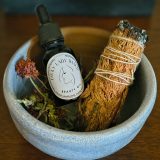 Beauty OilSeven plant oils for a soft, dewy, healthy looking face.
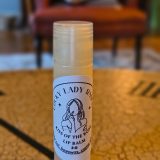 Lip BalmLip Love: our beauty oil blend with shea, cocoa butter and beeswax.
Questions people ask
Are cosmetic ingredients listed in order of concentration?
Yes, mostly. In the US, ingredients must be listed in descending order of amount, but ingredients present at 1% or less may be listed in any order after the rest, and color additives may be listed at the end.
What does INCI stand for?
INCI stands for International Nomenclature of Cosmetic Ingredients. It is a standardized naming system so the same ingredient carries the same name on labels across brands and countries.
What does parfum mean on an ingredient list?
Parfum is the INCI term for fragrance. It can represent a blend of many individual chemicals that do not have to be named on the label in the US.
Why does my skincare list Latin names?
Plant ingredients are listed by their botanical Latin name, often with the common name in parentheses, so the exact species is clear. For example, Simmondsia Chinensis is jojoba.
Does handmade soap have to list ingredients?
True soap that is marketed only for cleansing is regulated by the Consumer Product Safety Commission rather than the FDA and is not required to list ingredients, though many makers do so voluntarily.
Sources and further reading
- US Food and Drug Administration (FDA), Cosmetics Labeling Guide
- Code of Federal Regulations, 21 CFR 701.3, Designation of Ingredients
- US Food and Drug Administration (FDA), Soaps
- Personal Care Products Council, International Cosmetic Ingredient Dictionary and Handbook
- European Commission, Regulation (EC) No 1223/2009 on Cosmetic Products
This guide is for general education and is not medical advice. If you have a skin condition, allergy, or are pregnant or nursing, talk with your doctor or a board certified dermatologist about the products that are right for you.