MoCRA: What the 2022 US Cosmetics Law Changed
In December 2022 Congress passed the biggest update to US cosmetics law since 1938. Here is what MoCRA changed, what it did not, and what it means when you shop.

Key takeaways
- MoCRA, signed in December 2022, was the first major update to federal cosmetics law since the Federal Food, Drug, and Cosmetic Act of 1938.
- It gave the FDA mandatory recall authority and required facility registration, product listing, safety substantiation, and serious adverse event reporting.
- It directed the FDA to write rules on fragrance allergen labeling, good manufacturing practices, and testing talc products for asbestos.
- MoCRA does not require premarket approval of cosmetics and did not ban specific ingredients.
- Very small businesses have some exemptions, but not from adverse event reporting.
For more than 80 years, the rules for cosmetics in the United States barely changed. A company could make a lotion, put it on a shelf, and never tell the FDA it existed. In December 2022, that started to change. The Modernization of Cosmetics Regulation Act, known as MoCRA, became law as part of a larger federal spending bill. It is the most significant expansion of the FDA's authority over cosmetics since 1938. Here is what it does, what it leaves out, and what it means for you as a shopper.
What Is MoCRA?
MoCRA is an amendment to the Federal Food, Drug, and Cosmetic Act. It was signed into law on December 29, 2022, as part of the Consolidated Appropriations Act, 2023. It applies to cosmetics as the law defines them: products intended to cleanse, beautify, or change the appearance of the body, such as makeup, lotion, shampoo, and deodorant. It does not change the rules for products that are also over-the-counter drugs, such as sunscreen and antiperspirant, which already had their own drug requirements.
What the FDA Could Not Do Before
To understand MoCRA, it helps to know how limited the old system was. Before the law:
- Companies did not have to register their facilities or list their products with the FDA. A voluntary program existed, but participation was optional.
- Companies did not have to report injuries or adverse reactions to the FDA.
- The FDA could not order a recall. It could only ask a company to recall a product voluntarily, or go to court.
- There were no binding good manufacturing practice regulations specific to cosmetics.
- Only about a dozen substances were prohibited or restricted in cosmetics by FDA regulation.
- Information about product safety rested almost entirely with manufacturers, and the agency often learned of problems only through consumer complaints or news reports.
What MoCRA Changed
Mandatory recall authority
If the FDA determines there is a reasonable probability that a cosmetic is adulterated or misbranded and that its use could cause serious health consequences, it can now order a recall if the company will not act voluntarily.
Serious adverse event reporting
Companies responsible for a cosmetic must report serious adverse events to the FDA within 15 business days of learning about them. Serious events include things like significant disfigurement, persistent rashes or burns, infections, hospitalization, or death. Labels must now include a domestic address, phone number, or website where consumers can report problems.
Facility registration and product listing
Facilities that manufacture or process cosmetics for the US market must register with the FDA, and each product must be listed along with its ingredients. The FDA delayed enforcement of these requirements to July 1, 2024 to give companies time to comply.
Safety substantiation
The company responsible for a cosmetic must ensure and keep records supporting that the product is safe. This is a meaningful step, but the records are kept by the company. They are not submitted to the FDA for approval before the product is sold.
Records access
The FDA can access certain safety records when it reasonably believes a product presents a threat of serious harm.
Rules MoCRA Told the FDA to Write
Several parts of MoCRA are instructions to the FDA to create new regulations. Some have run behind the deadlines the law set, so it is worth checking the FDA's MoCRA page for current status.
- Fragrance allergen labeling. The FDA is to identify fragrance allergens that must be named on labels. This would narrow, though not close, the fragrance loophole.
- Good manufacturing practices. Binding manufacturing standards for cosmetics facilities.
- Talc and asbestos testing. Standardized testing methods for detecting asbestos in talc-containing cosmetics. See our guide to talc and asbestos contamination.
- PFAS assessment. The FDA was asked to assess the use and safety of PFAS in cosmetics and publish a report.
- Professional use labeling. Products intended for use only by licensed professionals must say so on the label.
What MoCRA Did Not Do
MoCRA is a real step forward, but it is easy to overestimate it.
- No premarket approval. Cosmetics still do not need FDA approval before being sold, with the exception of color additives.
- No new ingredient bans. The law did not prohibit parabens, phthalates, formaldehyde releasers, or any other ingredient by name.
- No definition of clean or natural. Marketing terms remain unregulated. Our guide to greenwashing on natural labels covers this.
- No federal animal testing ban. Several states have their own bans, but MoCRA does not address it.
This is a large part of why the gap between the US and Europe remains. Our article on US vs EU cosmetic rules compares the two systems.
What About Small Businesses?
MoCRA includes exemptions for small businesses, generally those with average gross annual US sales of cosmetics under $1 million over the previous three years. These businesses are exempt from facility registration, product listing, and the future good manufacturing practice rules.
The exemption does not apply to certain higher-risk products, including those that regularly contact the eye, are injected, are intended for internal use, or are meant to alter appearance for more than 24 hours under customary use. And small businesses are still required to report serious adverse events, keep safety substantiation records, and label products with contact information for reports.
Where States Fit In
Some states have gone further than federal law. California's Toxic-Free Cosmetics Act bans a list of intentionally added ingredients, including several parabens, certain phthalates, formaldehyde, mercury, and some PFAS, with the ban taking effect in 2025. Washington and other states have passed their own restrictions. MoCRA generally preempts state rules on registration, listing, and manufacturing practices, but it generally leaves states free to prohibit or limit specific ingredients.
What MoCRA Means When You Shop
- You now have a clearer path to report a bad reaction: use the contact information on the label, and you can also report to the FDA through MedWatch.
- Products on shelves should come from registered facilities, unless the maker qualifies as a small business.
- Expect gradual change. Several of the rules MoCRA called for are still being written, so its full effect will unfold over years, not months.
- The ingredient list is still your best tool. Our guide to reading cosmetic ingredient labels helps.
Our View From the Ranch
We welcome stronger cosmetics oversight. A small maker like Lucky Lady Ranch has always had to earn trust the old-fashioned way: by telling you exactly what is in each jar and bar and standing behind it. Laws set the floor. We would rather aim higher, which is why products like our Body Balm and aluminum-free All Day Deodorant are made with short, plainly named ingredient lists and no harsh chemicals.
From the ranch
Made in small batches, without the ingredients discussed above.
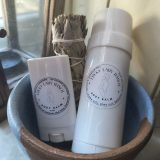 Body BalmUnrefined shea and organic beeswax for hard working skin.
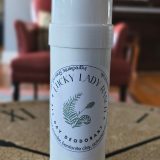 All Day DeodorantAluminum free deodorant that passed every sweaty test we gave it.
Questions people ask
What is MoCRA?
MoCRA is the Modernization of Cosmetics Regulation Act of 2022, a federal law that expanded the FDA's authority over cosmetics. It was signed on December 29, 2022 and is the biggest update to US cosmetics law since 1938.
Does MoCRA require FDA approval of cosmetics?
No. Cosmetics still do not need FDA approval before they are sold, except for color additives. Companies must keep records supporting product safety, but those are not submitted for premarket review.
Did MoCRA ban any ingredients?
No. MoCRA did not ban specific ingredients. It directed the FDA to study PFAS and to set rules for talc testing and fragrance allergen labeling, among other things.
Are small businesses exempt from MoCRA?
Businesses with average annual US cosmetic sales under $1 million are exempt from registration, product listing, and future manufacturing rules, unless they make certain higher-risk products. They must still report serious adverse events and keep safety records.
Can the FDA recall cosmetics now?
Yes. Under MoCRA, the FDA can order a mandatory recall if a company refuses to recall a product voluntarily and the FDA finds a reasonable probability of serious health consequences.
Sources and further reading
- US Food and Drug Administration (FDA), Modernization of Cosmetics Regulation Act of 2022 (MoCRA)
- Consolidated Appropriations Act, 2023, Division FF, Title III, Subtitle E (Modernization of Cosmetics Regulation Act of 2022)
- US Food and Drug Administration (FDA), Registration and Listing of Cosmetic Product Facilities and Products
- US Food and Drug Administration (FDA), Prohibited and Restricted Ingredients in Cosmetics
- California Legislature, Toxic-Free Cosmetics Act (AB 2762, 2020)
This guide is for general education and is not medical advice. If you have a skin condition, allergy, or are pregnant or nursing, talk with your doctor or a board certified dermatologist about the products that are right for you.