Does Your Skin Absorb What You Put on It? The Real Science
Your skin is a strong barrier, but not a wall. Here is what science says about how much really gets through, why the popular 60 percent figure is a myth, and what changes the odds.

Key takeaways
- Skin is a strong barrier, mainly because of its outermost layer, the stratum corneum, but some substances do pass through.
- The popular claim that skin absorbs 60 percent of what you apply is not supported by research; absorption varies enormously by ingredient.
- Small, fat-soluble molecules pass through more easily than large or water-soluble ones.
- FDA studies found several chemical sunscreen filters in the bloodstream after normal use, which does not prove harm but prompted calls for more safety data.
- Damaged skin, thin skin, heat, occlusion, and penetration enhancers can all increase absorption.
You have probably seen the claim that your skin absorbs 60 percent of everything you put on it. It gets repeated on wellness blogs and product pages as if it were settled fact. It is not. The truth is more interesting and more useful: your skin is a remarkably good barrier, but some ingredients do get through, and the amount depends on the molecule, the formula, and the condition of your skin. Here is what the science actually says.
What Your Skin Is Built to Do
Skin's main job is to keep water in and the outside world out. Most of that work is done by the stratum corneum, the outermost layer of the epidermis. It is made of flattened, dead skin cells surrounded by fats such as ceramides, cholesterol, and fatty acids. Scientists often compare it to a brick wall, with the cells as bricks and the fats as mortar.
For a substance to pass through, it generally has to work its way through that fatty mortar, or travel down hair follicles and sweat ducts. Below the stratum corneum are living layers of skin, and below those is the dermis, which contains blood vessels. Once a substance reaches the dermis, it can enter the bloodstream. This process is called percutaneous or dermal absorption.
Where the 60 Percent Myth Comes From
No one has traced the 60 percent figure to a solid scientific source, and it does not match the research. Absorption is not one number. Some substances barely get through at all, while others pass through readily. Water, for example, does not soak into your body when you bathe in meaningful amounts. On the other hand, nicotine and certain hormones absorb well enough that they are delivered through skin patches as medicine.
The honest answer to "how much does skin absorb" is: it depends on the ingredient, and it can range from almost nothing to a significant fraction. Measurements for a single ingredient can also shift with the formula and the test conditions, which is why safety assessors look for ingredient-specific absorption data rather than leaning on one general figure.
What Determines How Much Gets Through
Size of the molecule
Smaller molecules pass through more easily. Dermatology researchers have proposed a rough guideline known as the 500 Dalton rule: molecules with a molecular weight above about 500 Daltons tend to have trouble crossing healthy skin. It is a rule of thumb, not a hard limit, but most drugs designed for skin patches are smaller than that.
Fat or water solubility
Because the barrier is made of fats, ingredients that dissolve moderately well in oil tend to pass through better than ones that dissolve only in water. Highly water-soluble salts and large plant oil molecules (triglycerides) mostly stay in the upper layers.
The formula around it
Some ingredients are added specifically to help others penetrate. These penetration enhancers include certain alcohols, propylene glycol, and some solvents. They loosen the barrier's structure. A product with enhancers can carry other ingredients deeper than they would go alone.
How long it stays on
A leave-on lotion has hours to absorb. A face wash that you rinse off after 30 seconds has very little time. This is why clean beauty advice usually starts with leave-on products.
Where on the body
Skin thickness varies. Studies have shown that absorption differs by body site, with thinner skin such as the eyelids, face, and genital area generally absorbing more than the palms or soles.
The condition of your skin
Cuts, scrapes, sunburn, eczema, and over-exfoliation all weaken the barrier. Heat and covering the skin (occlusion) can increase absorption too. That is part of why people with sensitive skin or eczema often react more strongly to irritants.
What the FDA Sunscreen Studies Found
Some of the most cited research on skin absorption comes from the FDA itself. In two randomized clinical trials published in the Journal of the American Medical Association in 2019 and 2020, FDA researchers had volunteers apply chemical sunscreens at the amounts recommended on the label, several times a day for several days. Blood tests showed that avobenzone, oxybenzone, octocrylene, homosalate, octisalate, and octinoxate were absorbed into the bloodstream at levels above the threshold at which the FDA says further safety testing is warranted. Oxybenzone levels were notably higher than the others.
It is important to read these results carefully. The researchers and the FDA stated clearly that the findings do not mean the ingredients are unsafe, and that people should keep using sunscreen. What the studies did show is that "it just sits on your skin" was not true for these filters, and more safety data is needed. Our comparison of mineral vs chemical sunscreen covers what this means for your choices.
What Usually Stays on the Surface
Many common natural ingredients are large molecules that work mostly in the top layers of skin:
- Plant oils and butters such as shea, jojoba, and olive mainly soften the surface and help slow water loss.
- Beeswax forms a protective film.
- Zinc oxide particles in mineral sunscreen. Research generally suggests zinc oxide, including nano-sized particles, does not meaningfully penetrate healthy, intact skin, though very small amounts of zinc may be absorbed.
- Clays sit on the surface and absorb oil.
Some smaller components of natural products, such as certain essential oil compounds, can absorb. Natural does not mean inert.
Who Should Pay More Attention
- Babies and young children have a higher ratio of skin surface area to body weight, so the same amount of product represents a larger dose. See non toxic skin care for kids.
- People who are pregnant, since some absorbed substances can cross the placenta. Our guide to clean beauty during pregnancy goes further.
- Anyone with damaged or inflamed skin.
If you have concerns about a specific product or medication applied to the skin, a doctor or pharmacist can give personal advice.
A Practical Way to Use This Science
- Pay the most attention to products you leave on large areas of skin every day.
- Be choosy about what goes on thin or broken skin.
- Be cautious with formulas built around penetration enhancers if you are trying to limit exposure.
- Do not fear rinse-off products as much as leave-ons, but still read their labels.
- Keep using sun protection. The benefits of preventing sunburn are well established.
Why We Keep It Simple
Since some of what you apply does get through, we think it makes sense to choose what you leave on your skin thoughtfully. At Lucky Lady Ranch, our leave-on products are built from ingredients like unrefined shea butter, beeswax, and plant oils that mostly do their work at the surface. Our Body Balm and Body Oil are good examples: simple, readable, and free of harsh chemicals.
From the ranch
Made in small batches, without the ingredients discussed above.
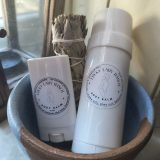 Body BalmUnrefined shea and organic beeswax for hard working skin.
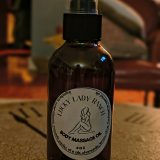 Body OilA silky blend of high quality oils for moisture and massage.
Questions people ask
Does skin absorb 60 percent of what you put on it?
No. That figure is not supported by scientific research. Absorption varies widely by ingredient, from almost nothing for large or water-soluble molecules to significant amounts for small, fat-soluble ones.
Can lotion get into your bloodstream?
Some ingredients in lotions can be absorbed into the bloodstream, depending on their size, solubility, and the formula. Large molecules like plant oils mostly stay in the upper layers of the skin.
Do sunscreen chemicals get absorbed into the body?
FDA studies published in 2019 and 2020 found several chemical sunscreen filters in the blood after typical use. The FDA said this does not mean they are unsafe and recommended continued sunscreen use while more data is gathered.
What makes skin absorb more?
Damaged or inflamed skin, thin skin areas like eyelids, heat, covering the skin, longer contact time, and penetration enhancers such as certain alcohols and propylene glycol can all increase absorption.
Is zinc oxide absorbed through the skin?
Research generally suggests zinc oxide particles, including nanoparticles, do not meaningfully penetrate healthy, intact skin, although very small amounts of zinc may be absorbed.
Sources and further reading
- Matta MK et al., Effect of Sunscreen Application on Plasma Concentration of Sunscreen Active Ingredients, JAMA, 2020
- Matta MK et al., Effect of Sunscreen Application Under Maximal Use Conditions on Plasma Concentration of Sunscreen Active Ingredients, JAMA, 2019
- Bos JD and Meinardi MM, The 500 Dalton Rule for the Skin Penetration of Chemical Compounds and Drugs, Experimental Dermatology, 2000
- US Food and Drug Administration (FDA), Sunscreen: How to Help Protect Your Skin from the Sun
- OECD, Guidance Document for the Conduct of Skin Absorption Studies
This guide is for general education and is not medical advice. If you have a skin condition, allergy, or are pregnant or nursing, talk with your doctor or a board certified dermatologist about the products that are right for you.