US vs EU Cosmetic Rules: Why Europe Restricts More Ingredients
Europe bans or restricts far more cosmetic ingredients than the US. The real story is about two different philosophies of regulation, and the headline numbers only tell part of it.

Key takeaways
- The EU regulates cosmetics under Regulation (EC) No 1223/2009, which prohibits well over a thousand substances and keeps approved lists for preservatives, colorants, and UV filters.
- The FDA prohibits or restricts only about a dozen substances by regulation, though selling a harmful cosmetic is illegal in both places.
- The EU requires a documented safety assessment by a qualified professional before a product is sold; the US does not require premarket review.
- Many substances on the EU list were never used in cosmetics, so the gap is real but smaller than the raw numbers suggest.
- Sunscreens are cosmetics in the EU and drugs in the US, which is why Europe has more UV filters available.
It is one of the most repeated facts in clean beauty: the European Union bans more than a thousand ingredients from cosmetics, while the United States bans about a dozen. Both numbers are roughly right, and the comparison is striking. But behind it are two different ways of thinking about safety, and understanding them will make you a sharper shopper than any single statistic. Here is how the two systems work, where they differ, and where the gap is smaller than it looks.
How the EU Regulates Cosmetics
Cosmetics sold in the EU are governed by Regulation (EC) No 1223/2009, which took full effect in 2013. Its main features:
- A responsible person. Every product must have a named person or company in the EU legally responsible for its safety and compliance.
- A safety report before sale. A qualified safety assessor must evaluate the product and write a Cosmetic Product Safety Report. This sits in a Product Information File that authorities can inspect.
- Notification. Products are registered in a central EU portal before they go on the market.
- Annexes of ingredients. Annex II lists prohibited substances, now well over a thousand. Annex III lists restricted substances, allowed only under conditions such as maximum concentration or warning labels. Annexes IV, V, and VI are approved lists of colorants, preservatives, and UV filters. If a preservative is not on Annex V, it cannot be used as a preservative.
- A default ban on certain hazards. Substances classified as carcinogenic, mutagenic, or toxic to reproduction are banned in cosmetics by default, with narrow exceptions that require a positive safety opinion.
- An animal testing ban. Since 2013, the EU has banned the sale of cosmetics tested on animals, or containing ingredients tested on animals, for cosmetic purposes.
Ingredient safety questions are reviewed by the Scientific Committee on Consumer Safety (SCCS), an independent expert panel that gives scientific opinions to the European Commission.
How the US Regulates Cosmetics
In the US, cosmetics fall under the Federal Food, Drug, and Cosmetic Act of 1938, as updated by the Modernization of Cosmetics Regulation Act of 2022. Key features:
- No premarket approval, except for color additives, which must be approved by the FDA.
- A short prohibited list. FDA regulations prohibit or restrict roughly a dozen substances, including mercury compounds (with narrow exceptions), chloroform, hexachlorophene, methylene chloride, vinyl chloride, and certain cattle materials.
- A general safety duty. It is illegal to sell an adulterated cosmetic, meaning one that contains a substance that could make it harmful under normal use. The burden is mostly on the FDA to show a product is unsafe after it is on the market.
- Industry ingredient review. The Cosmetic Ingredient Review, an expert panel funded by the industry trade association, assesses ingredient safety and publishes its findings. Its conclusions are influential but not legally binding.
- New duties under MoCRA, including facility registration, product listing, adverse event reporting, safety substantiation records, and FDA recall authority. Our guide to MoCRA covers the details.
Why the Two Systems Differ
The simplest way to describe the difference is precaution versus proof. The EU leans toward acting when a substance shows a hazard, even before harm is proven in people. The US system has historically required stronger evidence of risk before restricting an ingredient, and it relies more on companies and after-the-fact enforcement.
Neither approach is perfect. A precautionary system can restrict ingredients that would be safe at the levels actually used. A proof-based system can leave questionable ingredients on shelves for years while evidence accumulates.
Is the Gap as Big as It Sounds?
Here is where fairness matters. The EU's prohibited list includes many substances that were never realistic cosmetic ingredients, such as certain pharmaceuticals, toxic industrial chemicals, and radioactive substances. Banning them is good policy, but it does not mean American products are full of them. Selling a cosmetic containing a clearly harmful substance is already illegal in the US under the adulteration rules.
So the meaningful comparison is narrower: ingredients that are actually used in products and that the EU has restricted while the US has not. That list is shorter, but it is real.
Examples Where the Rules Differ
| Ingredient | EU | US |
|---|---|---|
| Isopropyl-, isobutyl-, phenyl-, benzyl-, and pentylparaben | Banned since 2014 | Not restricted by FDA |
| Propylparaben and butylparaben | Concentration limits; not allowed in leave-on products for the diaper area of children under 3 | Not restricted by FDA |
| Butylphenyl methylpropional (lilial), a fragrance ingredient | Banned since 2022 as a reproductive toxicant | Not restricted by FDA |
| Fragrance allergens | Many must be named on the label above set levels | Allergen labeling required by MoCRA, rule pending |
| Hydroquinone | Banned in cosmetics (narrow professional nail exception) | Not allowed in OTC skin lighteners since 2020; prescription only |
| Triclosan | Restricted to specific product types and limits | Removed from OTC antibacterial hand washes in 2016 |
Read more about parabens, hydroquinone, and triclosan in our ingredient guides.
The US is not always behind. The Microbead-Free Waters Act of 2015 banned plastic microbeads in rinse-off cosmetics in the US before the EU adopted its broader restriction on intentionally added microplastics in 2023. See our article on microplastics in cosmetics.
The Sunscreen Twist
Sunscreen is regulated very differently on each side of the Atlantic. In the EU, sunscreens are cosmetics, and the list of approved UV filters is longer, including several newer filters. In the US, sunscreens are over-the-counter drugs, and adding a new filter requires a lengthy drug review. In 2019 the FDA proposed that only two filters, zinc oxide and titanium dioxide, had enough data to be considered generally recognized as safe and effective, and asked for more information on most of the others. Our guide to mineral vs chemical sunscreen explains what that means.
State Laws Are Narrowing the Gap
Several US states have passed their own restrictions. California's Toxic-Free Cosmetics Act banned a list of intentionally added ingredients, including several parabens, certain phthalates, formaldehyde, and some PFAS, with the ban taking effect in 2025. Other states, including Washington, have passed similar laws. Since large brands rarely make separate formulas for one state, these laws can change products nationwide.
What This Means for You
- Do not assume a product is safe or unsafe based on where it is sold. Read the label.
- If you want to follow the more precautionary standard, use the EU restrictions as a guide when choosing products.
- Pay attention to fragrance, since the US still allows full concealment. See the fragrance loophole.
- Remember that EU rules can change too. Restrictions there are updated regularly as new scientific opinions come out.
Our Approach
At Lucky Lady Ranch, we do not wait for a law to tell us what to leave out. Our products are made from ingredients with long histories of use, like the olive, coconut, and shea in our Body Bar and the zinc oxide and beeswax in our Mineral Sunblock. When you keep the formula simple, you do not have to wonder which side of the ocean would approve of it.
From the ranch
Made in small batches, without the ingredients discussed above.
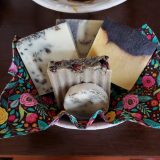 Body BarA true cold process soap for gentle, everyday cleansing.
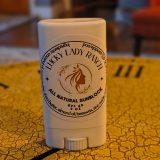 Mineral SunblockZinc oxide in a beeswax balm, without chemical UV filters.
Questions people ask
How many cosmetic ingredients are banned in the EU?
The EU's prohibited list, Annex II of Regulation (EC) No 1223/2009, contains well over a thousand substances, and it is updated regularly. Many of those substances were never commonly used in cosmetics.
How many cosmetic ingredients are banned in the US?
FDA regulations prohibit or restrict about a dozen substances in cosmetics. However, it is illegal in the US to sell any cosmetic that is harmful under normal use, and some states have added their own bans.
Why does Europe ban more cosmetic ingredients than the US?
The EU takes a more precautionary approach, restricting substances based on hazard and requiring safety assessments before sale. The US historically requires stronger evidence of risk and relies more on post-market enforcement.
Are European skincare products safer?
Not automatically. EU rules restrict more ingredients and require premarket safety assessments, but product quality varies on both continents. Reading the ingredient list is the most reliable way to judge a specific product.
Why does Europe have better sunscreens?
In the EU, sunscreens are cosmetics with a longer list of approved UV filters. In the US they are over-the-counter drugs, and adding new filters requires a slower drug approval process.
Sources and further reading
- European Commission, Regulation (EC) No 1223/2009 on Cosmetic Products
- European Commission, Scientific Committee on Consumer Safety (SCCS) opinions
- US Food and Drug Administration (FDA), Prohibited and Restricted Ingredients in Cosmetics
- US Food and Drug Administration (FDA), Modernization of Cosmetics Regulation Act of 2022 (MoCRA)
- US Food and Drug Administration (FDA), Proposed Rule on Sunscreen Drug Products for Over-the-Counter Human Use, 2019
- Microbead-Free Waters Act of 2015
This guide is for general education and is not medical advice. If you have a skin condition, allergy, or are pregnant or nursing, talk with your doctor or a board certified dermatologist about the products that are right for you.