Greenwashing: When "Natural" on the Label Means Nothing
Green leaves, earthy colors, and the word natural sell products, but few of these signals are regulated. Here is how to tell real substance from greenwashing on beauty labels.

Key takeaways
- Natural, clean, non toxic, and green have no legal definition for cosmetics in the US.
- Hypoallergenic and dermatologist tested also lack federal standards; the FDA has said so for hypoallergenic directly.
- Organic is regulated for agricultural ingredients through the USDA National Organic Program, and third-party seals like COSMOS have published standards.
- The FTC can act against deceptive claims and has settled cases over all natural labels on products with synthetic ingredients.
- The ingredient list, not the front of the package, is where to check any claim.
A bottle with a sketch of a leaf, a soft green cap, and the words "pure" and "botanical" on the front can feel like a promise. Often it is just design. Greenwashing is the practice of making a product look more natural, safe, or eco-friendly than it really is, and the beauty aisle is one of its favorite places. The good news is that once you know which words are regulated and which are not, the tricks become easy to see.
What Is Greenwashing?
The term originally described companies exaggerating their environmental credentials. In beauty, it has grown to cover any marketing that implies a product is natural, gentle, or safer than it actually is. It can be outright false, but more often it is technically true and still misleading. A shampoo can contain a few drops of aloe and call itself "made with aloe" while being mostly synthetic detergents. A lotion can say "free from parabens" while using a different preservative with its own problems.
Words That Have No Legal Meaning
The FDA does not define these terms for cosmetics, and there is no federal approval process for using them:
- Natural and all natural. No minimum percentage of natural ingredients is required.
- Clean. Each brand and retailer writes its own rules. Our guide to what clean beauty means explains the range.
- Non toxic. Nearly anything can be toxic at a high enough dose, so the phrase means little on its own.
- Green, eco, and earth friendly. These are covered by general FTC rules against deceptive marketing, but there is no specific standard for cosmetics.
- Chemical free. Water is a chemical, and so is shea butter. A product cannot be chemical free.
- Botanical, pure, and plant powered. Pleasant words with no defined threshold.
Hypoallergenic and dermatologist tested
These sound medical, so people trust them. The FDA has stated that there are no federal standards or definitions governing the use of "hypoallergenic," and manufacturers are not required to submit proof to the agency. "Dermatologist tested" or "dermatologist recommended" tells you nothing about how many people were tested, under what conditions, or what the results were. If you have sensitive skin, the ingredient list is more useful than either phrase.
Common Greenwashing Tactics
The hero ingredient
The front of the package features one appealing plant ingredient. The back reveals it sits near the end of the list, below the preservative, which usually means 1% or less. Our guide to reading ingredient labels explains how to find the 1% line.
"Free from" without context
"Paraben free" is the classic. It may be accurate and meaningful, or the parabens may have been replaced by a preservative that is more irritating for some people, such as methylisothiazolinone. A "free from" claim is only as good as what replaced the missing ingredient.
Hidden fragrance
A product can be labeled natural while containing "fragrance," a single word that can stand for many undisclosed synthetic chemicals. See the fragrance loophole for why that matters.
Nature imagery
Leaves, flowers, kraft paper, earthy colors, and handwritten fonts communicate "natural" without saying anything that can be checked. Design is not a claim, which is exactly why it is used.
Made with organic
"Made with organic lavender" may mean one ingredient is organic while the rest of the formula is not. That is different from a certified organic product.
"Percent natural origin"
Claims like "97% natural origin" often rely on ISO 16128, an international guideline for calculating natural and organic content. It is a real method, but it is generous. Water counts as natural, and an ingredient can count as "natural derived" even after significant chemical processing, as long as more than half of its molecular structure comes from a natural source. In a product that is mostly water, a high percentage is easy to reach. The number is not false, but it does not tell you much about the ingredients that remain, so look at what makes up the rest of the list.
Irrelevant claims
Saying a product is "CFC free" sounds responsible, but CFC propellants have been banned in US consumer aerosols for decades. A claim that is true of every product in the category does not set anything apart.
Labels That Do Have Standards
Not every badge is empty. These have published standards and some form of verification:
- USDA Organic. If a cosmetic contains agricultural ingredients and meets the USDA National Organic Program standards, it may carry the USDA Organic seal. Products labeled "organic" generally must contain at least 95% organic agricultural ingredients, excluding water and salt.
- COSMOS. A European standard used by certifiers such as Ecocert and the Soil Association, with COSMOS Organic and COSMOS Natural levels.
- NSF/ANSI 305. A US standard for personal care products that contain organic ingredients, requiring at least 70% organic content for its "contains organic ingredients" claim.
- Leaping Bunny. Certifies that no new animal testing was used for the product or its ingredients, with supplier monitoring. It is about animal testing, not ingredient safety.
Certifications cost money, so many small makers who use excellent ingredients do not carry them. A missing seal is not a red flag on its own. A vague, unverifiable claim is.
What Regulators Do About It
The Federal Trade Commission enforces federal law against deceptive marketing. Its Green Guides give advice on environmental marketing claims, and the agency has been working on an update. In 2016, the FTC settled with several companies that marketed personal care products as "all natural" or "100% natural" when they contained synthetic ingredients. Those cases sent a clear message: if you say all natural, it should be true. Still, enforcement is case by case, and most vague claims never draw attention. MoCRA, the 2022 cosmetics law, did not define natural either. See our overview of what MoCRA changed.
A Five Question Greenwashing Check
- Where is the hero ingredient on the list? Near the top, or near the end?
- Does the list include fragrance or parfum? If so, the scent is undisclosed.
- What replaced what is "free"? Look at the preservative and detergent.
- Is there a real certification, or just a leaf? Look for a named standard.
- Would the claim hold up if you asked the company to explain it? Good brands answer plainly.
Natural Should Be Checkable
We call our products natural at Lucky Lady Ranch, and we know that word has been worn thin. So we try to make it checkable. Our Body Balm lists unrefined shea butter, vitamin E, organic beeswax, and essential oils, and that is the whole jar. Our Shampoo and Conditioner Bar lists every oil we use. If a label needs a leaf drawing to feel natural, the ingredients are probably not doing the talking.
From the ranch
Made in small batches, without the ingredients discussed above.
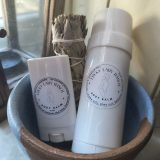 Body BalmUnrefined shea and organic beeswax for hard working skin.
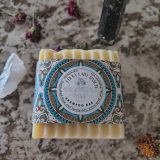 Shampoo and Conditioner BarPlastic free hair care with argan, castor and black seed oil.
Questions people ask
Is natural a regulated term on cosmetics?
No. The FDA does not define natural for cosmetics, and there is no minimum percentage of natural ingredients required. The FTC can act against claims that are deceptive, but most products using the word are never reviewed.
What does hypoallergenic mean on skincare?
There is no federal standard for hypoallergenic. The FDA has said manufacturers can use the term without submitting proof, so it does not guarantee a product will not cause a reaction.
Which beauty certifications actually mean something?
USDA Organic, COSMOS Organic and COSMOS Natural, NSF/ANSI 305, and Leaping Bunny all have published standards and verification. Each covers something specific, such as organic content or animal testing, not overall safety.
How can I tell if a product is greenwashed?
Check where the featured natural ingredient appears on the ingredient list, look for fragrance or parfum, see what replaced any ingredient listed as free, and look for named certifications instead of design cues.
Is chemical free skincare real?
No. Everything, including water and plant oils, is made of chemicals. Chemical free is a marketing phrase; what matters is which specific ingredients a product contains.
Sources and further reading
- US Food and Drug Administration (FDA), Hypoallergenic Cosmetics
- US Food and Drug Administration (FDA), Cosmetics Labeling Claims
- Federal Trade Commission (FTC), Green Guides (Guides for the Use of Environmental Marketing Claims)
- Federal Trade Commission (FTC), 2016 enforcement actions on all natural claims for personal care products
- USDA National Organic Program, Cosmetics, Body Care Products, and Personal Care Products
- COSMOS-standard AISBL, COSMOS Cosmetics Organic and Natural Standard
This guide is for general education and is not medical advice. If you have a skin condition, allergy, or are pregnant or nursing, talk with your doctor or a board certified dermatologist about the products that are right for you.