Nitrosamines: Contaminants That Form Inside Your Products
Nitrosamines are never listed on a label because no one adds them. They form inside some products when amines meet nitrosating agents. Here is how to keep the odds low.

Key takeaways
- Nitrosamines form when amine ingredients react with nitrosating agents such as nitrites, often during storage.
- NDELA, the most common nitrosamine found in cosmetics, is classified by IARC as possibly carcinogenic to humans.
- Because they are contaminants, nitrosamines never appear on an ingredient list, so you have to watch for their ingredients of origin.
- The EU sets strict rules for amine ingredients, and nitrosamine impurities have driven major drug recalls since 2018.
- Simple formulas without amines or nitrosating preservatives have little opportunity to form them.
Most ingredients you worry about are ones you can find on a label. Nitrosamines are different. Nobody puts them in a shampoo or lotion on purpose. Instead, they can form inside a product after it is made, as certain ingredients slowly react with one another in the bottle. That makes them one of the more unusual topics in cosmetic safety, and one where understanding the chemistry is the most useful tool you have.
What Are Nitrosamines?
Nitrosamines, more precisely N-nitrosamines, are a family of chemical compounds that contain a nitrogen atom bonded to a nitroso group. They form when two kinds of ingredients meet:
- Amines, nitrogen containing compounds found in many cosmetic ingredients, particularly secondary amines.
- Nitrosating agents, such as nitrites, nitrogen oxides, or certain preservatives that can release them.
The reaction tends to go faster with heat, time and particular pH conditions. That is why a product that tests clean when it is made could contain measurable nitrosamines months later, especially if it has been stored somewhere warm.
Nitrosamines are not unique to cosmetics. They occur in cured and smoked meats, beer, tobacco smoke and some industrial settings, and they have been found as impurities in several medicines. The concern with all of them is the same: many nitrosamines cause cancer in laboratory animals, and some are considered probable or possible human carcinogens.
Where Nitrosamines Show Up
In personal care, the most frequently detected nitrosamine is N-nitrosodiethanolamine, usually shortened to NDELA. It has been found in products such as:
- Shampoos, body washes and bubble baths
- Lotions and creams
- Makeup, including foundations and mascaras
- Hair conditioners and styling products
Ingredients That Can Lead to Nitrosamines
Since nitrosamines never appear on a label, the practical approach is to look for their precursors. On the amine side, the main group is the ethanolamines and their derivatives, covered in depth in our article on DEA, MEA and TEA:
- Diethanolamine (DEA) and triethanolamine (TEA)
- Cocamide DEA, lauramide DEA and similar foam boosters
- TEA lauryl sulfate and other TEA salts
On the nitrosating side, ingredients that can supply the nitroso group include:
- 2-bromo-2-nitropropane-1,3-diol, also called bronopol
- 5-bromo-5-nitro-1,3-dioxane
- Trace nitrites in raw materials or water
Bronopol and related preservatives are also known as formaldehyde releasers, so a product combining them with amines brings up two separate questions at once.
What Research and Regulators Say
Cancer Classifications
The International Agency for Research on Cancer (IARC) classifies NDELA as possibly carcinogenic to humans (Group 2B), based mainly on animal studies. N-nitrosodimethylamine (NDMA), a nitrosamine more often discussed in food and drug contexts, is classified as probably carcinogenic to humans (Group 2A). Human data specific to cosmetic exposure are limited, and skin absorption of NDELA varies with the product and conditions. Regulators treat these compounds as substances whose exposure should be kept as low as reasonably possible rather than as something with a clearly safe threshold.
United States
The US Food and Drug Administration (FDA) has been aware of nitrosamines in cosmetics since the 1970s. In 1979, it announced that cosmetics containing nitrosamines may be considered adulterated and subject to enforcement action, and it has encouraged manufacturers to avoid ingredient combinations that lead to their formation. The FDA has also tested cosmetics for NDELA and found that levels declined over the years as manufacturers changed formulas.
Nitrosamines became headline news in a different setting starting in 2018, when NDMA and related impurities were found in some blood pressure medicines, followed by the heartburn drug ranitidine, which was withdrawn from the US market in 2020. The FDA now sets daily intake limits for nitrosamine impurities in drugs. Those cases had nothing to do with cosmetics, but they showed how easily these compounds can form in finished products.
European Union
The European Union bans nitrosamines as cosmetic ingredients and places detailed restrictions on secondary amines and alkanolamines. These include limits on secondary amine content, a maximum nitrosamine content in raw materials, a prohibition on combining them with nitrosating systems, and requirements to store them in nitrite free containers. It is one of the clearer examples of the precautionary approach described in our article on US vs EU cosmetic rules.
Lessons From Food and Rubber
Cosmetics are not the first place regulators have had to manage nitrosamines. Food makers learned decades ago that adding vitamin C compounds such as sodium ascorbate to nitrite cured meats helps block nitrosamine formation, which is why they appear on many bacon and ham labels. In the 1980s, the FDA also set limits on nitrosamines in rubber baby bottle nipples and pacifiers after they were found to leach from certain rubber formulations. Both examples point to the same lesson that applies to personal care: once you know which ingredients react, you can design products and processes that keep them apart.
Who Should Be Most Careful
- Daily users of foaming products, since shampoos and body washes are the classic home for DEA and TEA based foam boosters.
- People who are pregnant, who may want to reduce exposure to possible carcinogens where it is easy to do so. See clean beauty during pregnancy.
- Anyone who stores products in hot places, such as cars, sunny windowsills or steamy bathrooms, since heat speeds the reaction.
- People who buy in bulk and keep products for years, since time gives the reaction a chance to happen.
How to Spot and Avoid Nitrosamines
- Read for the precursors. Skip products listing DEA, TEA or "-amide DEA" ingredients, especially in combination with bronopol or 5-bromo-5-nitro-1,3-dioxane. Our guide to reading ingredient labels can help.
- Store products cool and dry, and away from direct sun.
- Use products within a reasonable time after opening. Our article on natural products and shelf life covers storage habits.
- Favor shorter ingredient lists. Fewer ingredients mean fewer possible reactions.
- Be skeptical of "rich lather" claims in liquid cleansers, which sometimes rely on amide foam boosters.
Why Simple Formulas Matter
Nitrosamines are a good illustration of why we think the whole formula matters, not just each ingredient on its own. Two ingredients that each seem acceptable can create a third, unlisted one when they sit together in a warm bottle for months.
At Lucky Lady Ranch, our cold process soaps get their lather from saponified plant oils, not from DEA or TEA foam boosters, and we do not use nitro based preservatives. Our Body Bar is made from olive, coconut, shea, castor and avocado oils, and our Shampoo and Conditioner Bar gives hair a gentle cleanse with argan and black seed oil in the mix. Our article comparing cold process soap and commercial beauty bars explains the difference in how they are made. A short list of familiar ingredients does not leave much room for the unexpected, and that is how we like it.
From the ranch
Made in small batches, without the ingredients discussed above.
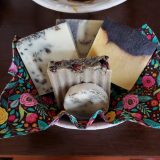 Body BarA true cold process soap for gentle, everyday cleansing.
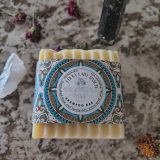 Shampoo and Conditioner BarPlastic free hair care with argan, castor and black seed oil.
Questions people ask
How do nitrosamines form in cosmetics?
They form when amine ingredients, such as DEA or TEA, react with nitrosating agents like nitrites or certain preservatives. Heat, time and storage conditions can speed up the reaction, so levels can increase after a product is made.
What is NDELA in cosmetics?
NDELA, or N-nitrosodiethanolamine, is the nitrosamine most often found in cosmetics. It typically forms from diethanolamine related ingredients. IARC classifies it as possibly carcinogenic to humans.
Can I see nitrosamines on an ingredient label?
No. Because nitrosamines are contaminants that form on their own, they are never listed. The practical approach is to avoid the ingredients that can lead to them, such as DEA, TEA and nitro based preservatives like bronopol.
Are nitrosamines banned in cosmetics?
The EU bans nitrosamines as cosmetic ingredients and strictly limits ingredients that can form them. In the US, the FDA has said cosmetics containing nitrosamines may be considered adulterated and has urged manufacturers to avoid forming them.
Sources and further reading
- US Food and Drug Administration (FDA), Nitrosamines in Cosmetics
- US Food and Drug Administration (FDA), Control of Nitrosamine Impurities in Human Drugs
- International Agency for Research on Cancer (IARC), Monographs Volume 77: N-Nitrosodiethanolamine
- European Commission, Cosmetics Regulation (EC) No 1223/2009, Annex II and Annex III
- European Commission Scientific Committee on Consumer Safety (SCCS), Opinion on Nitrosamines and Secondary Amines in Cosmetic Products
This guide is for general education and is not medical advice. If you have a skin condition, allergy, or are pregnant or nursing, talk with your doctor or a board certified dermatologist about the products that are right for you.