PEG Compounds and 1,4-Dioxane Contamination
1,4-dioxane never appears on a label, because no one adds it on purpose. It forms during a common manufacturing step. Here is how to read between the lines.

Key takeaways
- PEGs and other ethoxylated ingredients are made using ethylene oxide, a process that can leave behind traces of 1,4-dioxane.
- 1,4-dioxane is classified as possibly carcinogenic by IARC and likely carcinogenic by the US EPA.
- It is a contaminant, so it never appears on ingredient lists; New York now limits how much products may contain.
- Clues on the label include PEG, polysorbate, ceteareth, laureth, and other names ending in -eth.
Some of the ingredients people worry about most are ones they can read on the label. 1,4-dioxane is different. You will never see it listed, because no manufacturer adds it on purpose. It is a by-product that can form when certain common ingredients are made, and it can end up in shampoos, body washes, and lotions in trace amounts. The good news is that once you understand where it comes from, the label offers plenty of clues.
What are PEG compounds?
PEG stands for polyethylene glycol, a family of synthetic compounds made by linking together units of ethylene oxide. The number after PEG, as in PEG-40 or PEG-100, roughly reflects the length of the chain. PEGs and related ingredients are extremely versatile. Depending on their structure, they act as thickeners, solvents, softeners, moisture carriers, and emulsifiers that keep oil and water from separating.
PEGs are part of a broader group called ethoxylated ingredients. Ethoxylation is a chemical process that reacts a starting material, such as a fatty alcohol, with ethylene oxide to make it more water friendly. It is how sodium lauryl sulfate becomes the milder sodium laureth sulfate, and how many emulsifiers are made.
Where 1,4-dioxane comes from
During ethoxylation, a small amount of 1,4-dioxane can form as an unwanted by-product. Manufacturers can remove much of it through a purification step called vacuum stripping, and the FDA has said that it encourages manufacturers to do so and that levels in products it has tested have declined over time. But because removal is not required everywhere and practices vary, traces can remain in finished products.
There is a second, related concern. Ethylene oxide itself, the starting material, is classified as a known human carcinogen. Residual ethylene oxide in finished products is expected to be very low, but it is another reason some people prefer to avoid ethoxylated ingredients.
Where it shows up
Ethoxylated ingredients are most common in products that foam or blend oil and water:
- Shampoos, body washes, and bubble baths, especially those with sodium laureth sulfate
- Liquid hand soaps and baby washes
- Lotions and creams that use PEG based emulsifiers
- Hair conditioners and styling products
- Laundry and dish detergents
Clues on the label
- PEG followed by a number, such as PEG-100 stearate or PEG-7 glyceryl cocoate
- Polysorbate 20, 60, or 80
- Names ending in -eth, such as sodium laureth sulfate, ceteareth-20, steareth-21, and laureth-4
- Polyethylene, polyoxyethylene, and names containing oxynol
- PPG combined with PEG, such as PEG/PPG-18/18 dimethicone
Not every ethoxylated ingredient will contain meaningful 1,4-dioxane, but these are the ingredients where it can occur. Our guide to reading cosmetic labels covers other naming patterns.
What research and regulators say
Classification
The International Agency for Research on Cancer classifies 1,4-dioxane as possibly carcinogenic to humans (Group 2B), based on evidence in animals. The US Environmental Protection Agency considers it likely to be carcinogenic to humans, and the National Toxicology Program lists it as reasonably anticipated to be a human carcinogen. In animal studies, high doses in drinking water caused liver and nasal tumors. 1,4-dioxane is also a significant groundwater contaminant in parts of the US, which is part of why it has received regulatory attention.
Cosmetics
The FDA has said that the levels of 1,4-dioxane it has found in cosmetics do not present a hazard to consumers, while continuing to monitor them. The EU lists 1,4-dioxane as prohibited in cosmetics, while recognizing that unavoidable trace amounts may be present if the product is still safe.
New York took the most direct step in the US. A state law limits 1,4-dioxane in personal care products, cosmetics, and household cleaning products, with limits that began phasing in at the end of 2022 and tightened for personal care products the following year. Because many national brands sell in New York, the law has encouraged reformulation and better purification across the market.
PEGs and damaged skin
PEGs themselves are generally considered low in toxicity, and the Cosmetic Ingredient Review panel has found them safe in cosmetics. The panel did advise caution about using PEG containing products on damaged skin, after reports involving burn patients treated with a PEG based cream. PEGs can also act as penetration enhancers, helping other ingredients move into the skin, which matters if the rest of the formula contains ingredients you would rather not absorb.
Keeping it in proportion
It is worth being clear about what the label can and cannot tell you. Seeing a PEG or an -eth ingredient does not mean a product contains a meaningful amount of 1,4-dioxane. Well run suppliers purify their ethoxylated ingredients, and independent testing over the years has found a wide range, from undetectable levels to amounts that prompted regulators to act. The problem is that shoppers cannot tell which is which from the bottle. Unless a brand publishes testing results, the presence of ethoxylated ingredients is a signal of possibility rather than proof. For people who want certainty, choosing products without them is the most straightforward option.
Who should be most careful
- Parents choosing baby washes and bubble baths, where children may soak in diluted product for a while. See non toxic skin care for kids.
- People with broken or irritated skin, given the CIR caution on damaged skin.
- Pregnant people who are reducing avoidable exposures. Our guide to clean beauty during pregnancy has more.
- People who use many foaming products daily, since exposure adds up.
How to reduce exposure
- Scan for PEG, polysorbate, and -eth names. Sodium laureth sulfate is the most common one in shampoos and body washes. Our article on SLS and SLES explains that ingredient in depth.
- Look for brands that test for 1,4-dioxane or state compliance with New York's limits.
- Choose true soap over synthetic detergent washes. Soap is made by saponifying oils and does not need ethoxylated surfactants. Our comparison of cold process soap and commercial bars explains the difference.
- Choose anhydrous products such as balms and oils, which do not need emulsifiers to hold oil and water together.
- Watch for related contaminants. Some ingredients can also form nitrosamines, another group of contaminants that never appear on labels. And if you are drawn to PEG free products, our article on DEA, MEA, and TEA covers another family of foaming helpers.
Formulas that do not need ethoxylation
At Lucky Lady Ranch our cleansers are made by cold process saponification, the traditional reaction between plant oils and lye. Our Body Bar and Shampoo and Conditioner Bar foam because they are soap, not because of ethoxylated detergents. Our balms and oils contain no water, so they do not need PEG emulsifiers either. Leaving out these ingredients means leaving out the contaminants that can come with them. It is a simple way to avoid an ingredient you can never find on a label.
From the ranch
Made in small batches, without the ingredients discussed above.
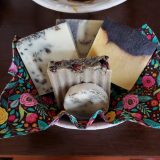 Body BarA true cold process soap for gentle, everyday cleansing.
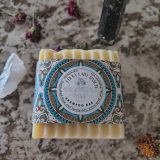 Shampoo and Conditioner BarPlastic free hair care with argan, castor and black seed oil.
Questions people ask
Why isn't 1,4-dioxane listed on ingredient labels?
1,4-dioxane is not added on purpose. It is a by-product that can form during ethoxylation, so it is a contaminant rather than an ingredient and does not have to be listed.
Which ingredients may contain 1,4-dioxane?
Ethoxylated ingredients may carry it, including PEG compounds, polysorbates, and names ending in -eth such as sodium laureth sulfate and ceteareth-20.
Is 1,4-dioxane a carcinogen?
IARC classifies it as possibly carcinogenic to humans, the EPA considers it likely carcinogenic, and the National Toxicology Program lists it as reasonably anticipated to be a human carcinogen, mainly based on animal studies.
Are PEGs safe in skin care?
PEGs themselves are generally considered low in toxicity and are permitted in cosmetics. The main concerns are 1,4-dioxane contamination and the CIR advice to use caution on damaged skin.
What is the New York 1,4-dioxane law?
New York limits the amount of 1,4-dioxane allowed in personal care products, cosmetics, and household cleaners, with limits that began phasing in at the end of 2022.
Sources and further reading
- US Food and Drug Administration (FDA), 1,4-Dioxane in Cosmetics: A Manufacturing Byproduct
- US Environmental Protection Agency (EPA), Technical Fact Sheet: 1,4-Dioxane
- International Agency for Research on Cancer (IARC), Monographs Volume 71: 1,4-Dioxane
- US National Toxicology Program (NTP), Report on Carcinogens: 1,4-Dioxane
- New York State Department of Environmental Conservation, 1,4-Dioxane Limits in Household Cleansing, Personal Care, and Cosmetic Products
- Cosmetic Ingredient Review (CIR), Safety Assessment of PEGs (Polyethylene Glycols)
This guide is for general education and is not medical advice. If you have a skin condition, allergy, or are pregnant or nursing, talk with your doctor or a board certified dermatologist about the products that are right for you.