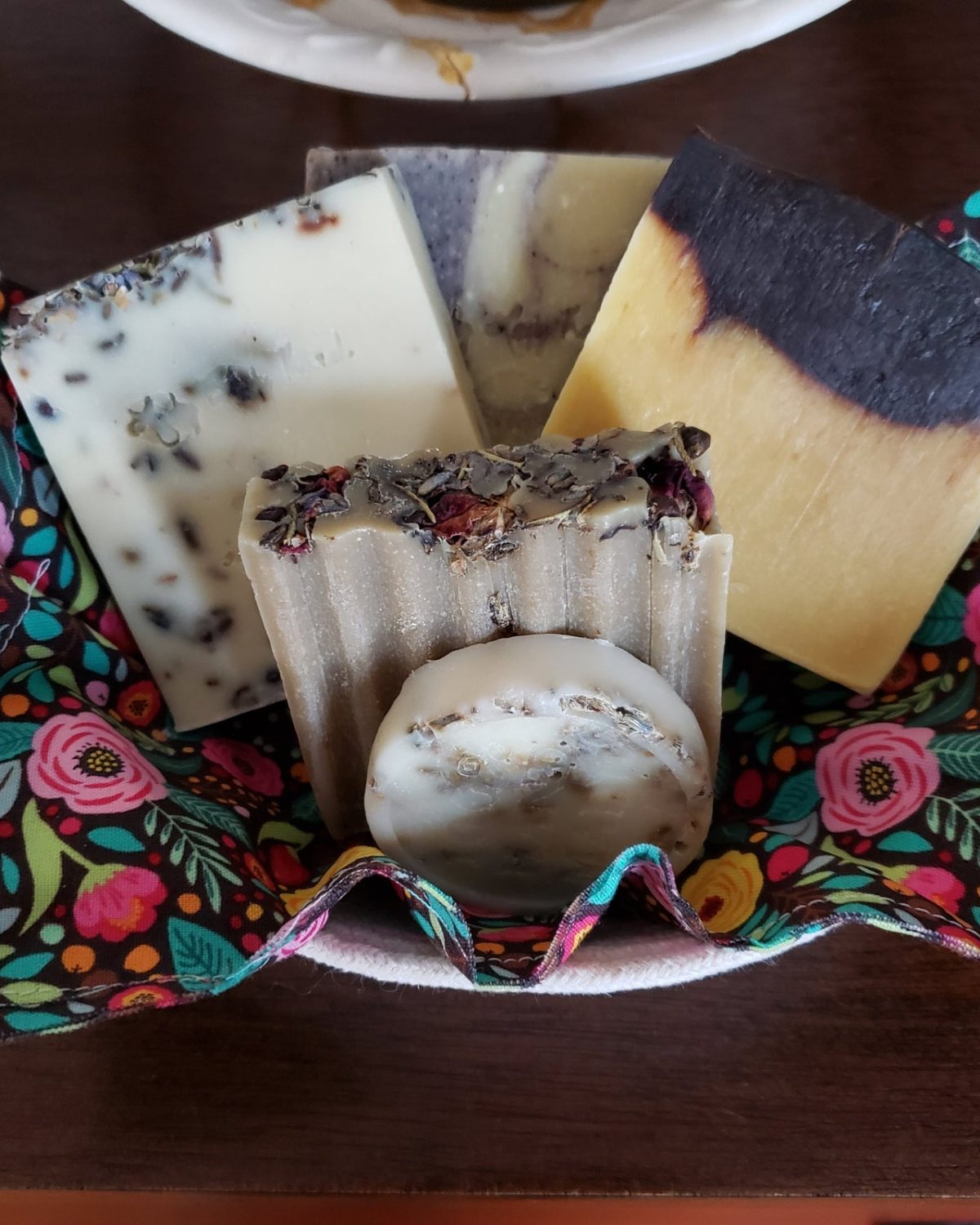
Cold Process Soap
Body Bar
A true cold process soap for gentle, everyday cleansing.
$5.00
Buy nowSecure checkout through our ranch store.
Made without
Our Body Bar is real soap, made the slow way. We blend olive, coconut, shea, castor and avocado oils and let them saponify through the cold process method, then cure each bar for weeks so it becomes firm, mild and long lasting.
Because cold process soap keeps its naturally occurring glycerin, the lather feels creamy and your skin feels comfortable after rinsing, not tight. Pure essential oils give each batch a soft, natural scent.
Ingredients
How to use
Good to know
Real soap, made the slow way
Most bars sold as soap in the grocery aisle are actually synthetic detergent bars. Our Body Bar is true soap. We combine plant oils and butters through the cold process method, then give each bar several weeks to rest and harden before it goes out the door. The result is a firm, mild bar that keeps its naturally occurring glycerin, so skin feels comfortable after rinsing instead of tight. If you are curious about the difference, our guide to cold process soap versus commercial beauty bars walks through it.
A closer look at the oils
Olive oil
Olive oil gives the bar its gentle, conditioning character and a soft, lotion like lather.
Coconut oil
Coconut oil brings big, fluffy bubbles and real cleansing power, balanced by the richer oils around it.
Shea butter
Shea butter adds creaminess and helps the bar feel nourishing on dry skin.
Castor and avocado oils
Castor oil helps stabilize the lather so it stays dense and creamy. Avocado oil rounds out the blend with a soft, cushioned feel.
Essential oils
A light touch of essential oils gives each batch a natural scent that fades gently after rinsing.
What we leave out, and why
- Harsh sulfates: no SLS or SLES, the detergents behind that squeaky, stripped feeling.
- Synthetic fragrance: no parfum that can hide dozens of undisclosed chemicals.
- Preservatives and additives: no parabens, no triclosan, no synthetic dyes and no phthalates.
Who it is for
The Body Bar is an everyday soap for the whole household. It suits people who want a simple ingredient list they can actually read, and anyone moving away from liquid body wash in plastic bottles. If your skin is very reactive, try it on a small area first, since even natural essential oils can bother some people.
How to get the most from it
Lather between wet hands or on a washcloth, cleanse, and rinse. The single biggest factor in how long a bar lasts is how it dries. Keep it on a draining soap dish, out of the direct stream of the shower, and it will stay firm for weeks of daily use. Follow with a moisturizer if your skin runs dry, especially in winter.
Questions about Body Bar
Is cold process soap good for sensitive skin?
Many people with sensitive skin find cold process soap more comfortable than detergent bars because it keeps its natural glycerin and skips harsh sulfates and synthetic fragrance. Everyone's skin is different, though, and essential oils can bother some people. Patch test on a small area first, and talk with a dermatologist if you have a skin condition.
What is the difference between cold process soap and regular soap?
Cold process soap is made by combining oils with lye at low temperatures, then letting the bars rest for several weeks. The finished bar contains no lye, keeps its glycerin, and is true soap. Many mass market bars are synthetic detergent bars made with surfactants, fragrance and preservatives instead.
How do I make a bar of soap last longer?
Let it dry completely between uses. Store the bar on a draining soap dish away from standing water and out of the direct shower spray. Cutting a large bar in half and using one piece at a time also helps, since a smaller surface stays firmer.
Does handmade soap contain lye?
All true soap is made with lye, but no lye remains in a properly made bar. During saponification, lye reacts with the oils and turns them into soap and glycerin. That is why the ingredient list reads as saponified oils rather than listing lye on its own.
Learn more
The story behind the ingredients

Cold Process Soap vs Commercial "Beauty Bars"
A handmade bar and a drugstore beauty bar can look alike, but they are made differently and often are not even the same kind of product. Here is how they compare.

Shea Butter: Benefits for Skin, Lips and Hair
Shea butter is a rich, plant based fat from West Africa that helps soften dry skin, lips and hair. Here is how it works, how to use it, and how to pick a good one.

Castor Oil for Skin, Lashes and Hair
Castor oil is thick, glossy, and unusually rich in one fatty acid. Here is what it can and cannot do for skin, lashes, and hair, and how to use it with care.
You may also like