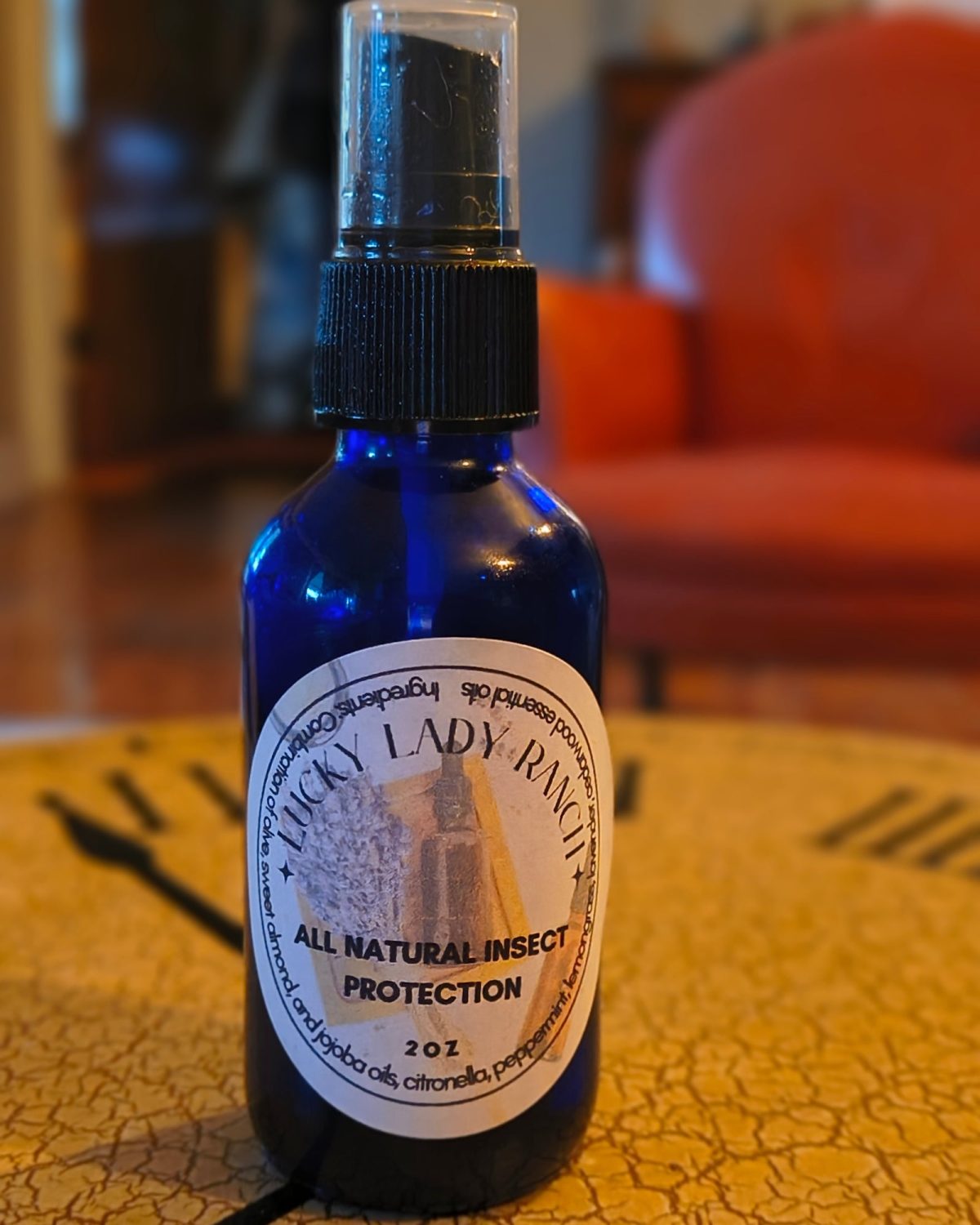
Botanical Bug Spray
Natural Insect Protection
Citronella, lemongrass, peppermint, lavender and sandalwood for the outdoors.
$20.00
Buy nowSecure checkout through our ranch store.
Made without
Our Natural Insect Protection blends citronella, peppermint, lemongrass, lavender and sandalwood essential oils, plants traditionally used to keep flies, mosquitoes and ticks at a distance.
It smells like a summer garden instead of a chemical plant. Use it before hiking, gardening, barn chores or an evening on the porch, and reapply often.
Ingredients
How to use
Good to know
A garden scented blend for time outside
Our Natural Insect Protection is a blend of citronella, peppermint, lemongrass, lavender and sandalwood essential oils in a carrier oil base. These plants have traditionally been used to help keep flies, mosquitoes and other biting insects at a distance. It smells like a summer garden rather than a chemical plant, which makes it pleasant to wear on the porch, in the barn or on the trail.
Be clear about what it is
Essential oil repellents are not a match for DEET or other EPA registered repellents, and their effect fades much faster. Plan to reapply often, about every hour or two, and more often if you are sweating. Where insect borne illness such as West Nile virus, Lyme disease or dengue is a concern, follow CDC guidance on repellents, which recommends EPA registered products. Long sleeves, long pants and tick checks remain important no matter what you wear.
What each oil brings
Citronella
Citronella is the classic outdoor oil, with a bright, lemony grass scent.
Lemongrass
Lemongrass is a close cousin of citronella with a fresh, citrus edge.
Peppermint
Peppermint adds a cool, sharp note.
Lavender and sandalwood
Lavender softens the blend with a floral note, and sandalwood gives it a warm, woody base.
Carrier oil blend
The carrier oils dilute the essential oils so they are comfortable on skin. Our guide to essential oil safety and dilution explains why dilution matters.
What we leave out
- No synthetic fragrance and no phthalates.
- No aerosol propellants, which have been linked to benzene contamination in some sprays.
- No parabens.
Who it is for
Gardeners, hikers, anglers, ranch hands and porch sitters who prefer a botanical option for everyday outdoor time where insect borne illness is not a major concern. Essential oils are potent. Many are not recommended for young children, so read our guide to skin care for babies and kids and ask your pediatrician first. If you are pregnant or have sensitive skin, check with your doctor.
How to get the most from it
Shake well before each use, since oils can separate. Apply to exposed skin before heading outdoors and spread evenly; missed spots are where bites happen. Reapply every hour or two, and after swimming or heavy sweating. Keep it away from eyes, mouth and broken skin, and wash your hands after applying. Patch test on your inner arm first, and stop using it if irritation appears. Some citrus scented oils can make skin more sensitive to sun, so pair it with shade and clothing on bright days.
Questions about Natural Insect Protection
Do natural insect repellents really work?
Some essential oils, like citronella and lemongrass, can help keep insects away for a short time, but their effect fades faster than DEET or other EPA registered repellents. Reapply often. Where insect borne illness is a concern, follow CDC guidance and choose an EPA registered repellent.
How often should I reapply an essential oil bug spray?
Plan on about every hour or two, and sooner after sweating, swimming or toweling off. Essential oils evaporate quickly, so protection fades faster than with conventional repellents. If you start noticing bites, it is time to reapply.
Is citronella safe to use on kids?
Essential oils are concentrated, and many are not recommended for babies and young children. Ask your pediatrician before using any essential oil product on a child. The CDC also offers guidance on choosing repellents for children, especially where insect borne illness is a concern.
What is a good alternative to DEET?
The CDC lists several EPA registered alternatives to DEET, including picaridin, IR3535 and oil of lemon eucalyptus. Botanical blends of essential oils are another option for casual outdoor time, but they need frequent reapplication and are not a substitute where insect borne illness is a concern.
Learn more
The story behind the ingredients

Essential Oils: Benefits, Dilution and Safety
Essential oils bring scent and character to natural body care, but they are concentrated plant chemicals. Here is how to dilute them, which ones need extra care, and how they compare to synthetic fragrance.

Synthetic Fragrance: What "Parfum" Can Hide on a Label
One word on a label can stand for a blend of many chemicals. Here is what "fragrance" and "parfum" really mean, and why they matter for sensitive skin.

Non Toxic Skin Care for Babies and Kids
Babies and kids need fewer products than marketing suggests. Here is why their skin is different, which ingredients pediatric experts flag, and how to keep their routine simple.
You may also like