Talc and Asbestos Contamination: What Shoppers Should Know
Talc is a soft mineral used in powders and makeup. The main concern is asbestos contamination during mining, plus questions about inhalation and long term use.
Key takeaways
- Talc is a naturally occurring mineral that gives powders their silky feel and absorbs moisture.
- Talc and asbestos can form near each other in the earth, so talc must be carefully sourced and tested.
- FDA testing has found asbestos in some talc based cosmetics, and IARC classified talc as probably carcinogenic in 2024.
- Arrowroot and other plant starches are common talc free alternatives in body powders and deodorants.
Few things feel as harmless as a puff of powder. Talc has dusted babies, set makeup and kept feet dry for well over a century. Yet over the past few decades, this soft white mineral has been at the center of lawsuits, product recalls and scientific debate. The question at the heart of it is not really about talc itself, but about what can come along with it.
What Is Talc?
Talc is a naturally occurring mineral made of magnesium, silicon and oxygen, technically a hydrated magnesium silicate. It is the softest mineral on the hardness scale, which is why it crushes into a fine, silky powder. In cosmetics it absorbs oil and moisture, reduces friction, helps pressed powders hold together, and gives makeup a smooth, matte finish. It is also inexpensive and widely available, which explains why it shows up in so many formulas.
The complication is geology. Talc deposits sometimes form near asbestos minerals, and the two can be mined together. Asbestos is a group of fibrous minerals that the International Agency for Research on Cancer (IARC) classifies as a known human carcinogen, linked to mesothelioma and cancers of the lung, larynx and ovary. There is no known safe level of asbestos exposure. That is why the source and testing of cosmetic talc matter so much.
Where Talc Shows Up
Talc is most common in products that are, or start as, powders:
- Body and baby powders
- Loose and pressed face powders, blush, bronzer and eyeshadow
- Dry shampoo and some powder deodorants
- Foundations and primers, where it helps control shine
- Some bar soaps and creams, as a filler or texturizer
On a label, talc is usually listed simply as "Talc." You may also see "Magnesium Silicate" or the color index number CI 77718. Because it is a mineral rather than a synthetic chemical, it can appear in products marketed as "natural," which is one more reason to read the ingredient list instead of the front of the package. Our article on greenwashing and "natural" labels covers how that marketing gap works.
What Research and Regulators Say
Asbestos Contamination
The US Food and Drug Administration (FDA) ran testing on talc containing cosmetics in 2019 and 2020 and found asbestos in a number of samples, including some children's makeup products, which led to recalls. A widely known brand of talc based baby powder was voluntarily recalled in 2019 after FDA testing found asbestos in one lot, and the company later stopped selling talc based baby powder altogether. The company has disputed that its talc contained asbestos.
The Modernization of Cosmetics Regulation Act of 2022 (MoCRA) directed the FDA to establish standardized testing methods for detecting asbestos in talc containing cosmetics, and the FDA published a proposed rule in late 2024. Because rulemaking can shift, it is worth checking the FDA's current guidance for the latest status.
Why Testing Is Tricky
Detecting asbestos in talc is harder than it sounds. Asbestos fibers can be microscopic and present in small, unevenly distributed amounts, so one sample from a batch may test clean while another does not. Some common screening methods, such as X-ray diffraction, can miss low levels. The FDA's own testing has relied on more sensitive microscopy, including polarized light microscopy and transmission electron microscopy, which can identify individual fibers. Experts have argued for years over which methods should be required and how many samples are enough, and that debate is one reason a national testing standard took so long to propose. For shoppers, the practical takeaway is simple: "asbestos free" on a label is only as meaningful as the testing behind it, and most brands do not publish those details.
Talc Itself
In 2024, IARC classified talc as "probably carcinogenic to humans" (Group 2A). The agency based this on limited evidence in humans, mainly studies linking perineal use of talc powder with ovarian cancer, along with sufficient evidence in animals. IARC noted that it could not fully rule out contamination with asbestos in the human studies. Other large studies have reached mixed conclusions. A pooled analysis published in 2020 found no statistically significant association between genital powder use and ovarian cancer overall, though the authors noted the study may have been too small to detect a modest increase. In short, the science is genuinely unsettled, and reasonable experts disagree.
Inhalation
Separate from cancer questions, breathing in fine powders of any kind can irritate the lungs. Pediatricians have long urged caution with baby powder because infants can inhale it during diaper changes, and there are case reports of serious breathing problems after accidental inhalation of large amounts.
Who Should Be Most Careful
- Parents of babies and toddlers. The inhalation risk is greatest for small children. Our guide to non toxic skin care for babies and kids covers gentler diaper area care.
- Anyone who uses powder in the genital area, given the ongoing research into ovarian cancer.
- People with asthma or other lung conditions, who may be more sensitive to any airborne powder.
- Makeup artists and frequent users of loose powder, who have more chances to breathe it in.
If you have used talc products for years and are worried, a conversation with your doctor is the right next step. Most people who used talc will never develop a related illness, and your doctor can help put your personal risk in context.
How to Spot and Avoid Talc
- Read the ingredient list for "Talc," "Magnesium Silicate" or CI 77718. Our guide to reading cosmetic ingredient labels can help.
- Choose talc free body powders made with arrowroot, tapioca or other plant starches. Cornstarch is another common swap, though like any fine powder it should not be shaken near a baby's face.
- Favor pressed over loose when you do use powder makeup, since pressed products release less airborne dust.
- Look at your deodorant. Some powder and "dry" formulas use talc to absorb moisture. Our article on switching to natural deodorant explains what plant based options use instead.
- Think about dry shampoo, too. Many aerosol versions contain talc, and some have faced separate recalls over benzene contamination from propellants.
Talc free does not automatically mean better, so keep reading past the claim. Some talc free powders lean on other minerals or synthetic fillers, and loose powders of any kind are best used gently.
A Gentler Way to Stay Dry
At Lucky Lady Ranch, we keep talc out of our formulas entirely. Our All Day Deodorant absorbs moisture with arrowroot powder, baking soda and bentonite clay in a base of plant oils, so there is nothing to puff into the air. For skin that feels chafed or dry, a smoothing layer of Body Balm with unrefined shea butter and beeswax can reduce friction without any powder at all.
Natural minerals deserve the same scrutiny as anything else, and that includes clays. We think the honest approach is to know where ingredients come from, keep formulas short, and leave out what does not need to be there.
From the ranch
Made in small batches, without the ingredients discussed above.
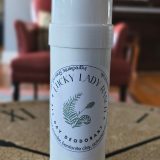 All Day DeodorantAluminum free deodorant that passed every sweaty test we gave it.
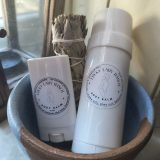 Body BalmUnrefined shea and organic beeswax for hard working skin.
Questions people ask
Is talc in makeup safe?
Talc that is free of asbestos is permitted in cosmetics in the US, and regulators have not banned it. The main concern is asbestos contamination, along with ongoing research into long term genital use and inhalation. Many people choose talc free products to avoid the uncertainty.
How do I know if my talc product contains asbestos?
You cannot tell by looking at it. Only laboratory testing can detect asbestos. Check FDA recall notices, choose brands that disclose their talc testing, or avoid talc altogether if you want certainty.
What can I use instead of talc body powder?
Arrowroot powder, tapioca starch and cornstarch are common talc free options. Use any powder sparingly and away from the face, especially around babies, to avoid inhaling it.
Why did IARC classify talc as probably carcinogenic?
In 2024, IARC placed talc in Group 2A based on limited human evidence, mostly linking genital powder use to ovarian cancer, and sufficient evidence from animal studies. The agency noted that asbestos contamination could not be fully ruled out in the human studies.
Sources and further reading
- US Food and Drug Administration (FDA), Talc
- International Agency for Research on Cancer (IARC), Monographs Volume 136: Talc and Acrylonitrile
- National Cancer Institute (NCI), Asbestos Exposure and Cancer Risk
- O'Brien et al., Association of Powder Use in the Genital Area With Risk of Ovarian Cancer, JAMA (2020)
- American Academy of Pediatrics, HealthyChildren.org guidance on diaper rash and baby powder
This guide is for general education and is not medical advice. If you have a skin condition, allergy, or are pregnant or nursing, talk with your doctor or a board certified dermatologist about the products that are right for you.