Cyclic Silicones D4, D5 and D6: Smooth Feel, Lasting Footprint
Cyclic silicones give products their silky, quick drying feel. The main concern is not your skin but where they go afterward. Here is the full picture.

Key takeaways
- Cyclic silicones D4, D5, and D6 are volatile ingredients that give products a light, silky, fast drying feel.
- Their main concerns are environmental: European regulators have identified them as persistent and bioaccumulative.
- The EU restricts D4 and D5 in wash-off cosmetics and has adopted wider restrictions on D4, D5, and D6, including leave-on products.
- Look for cyclotetrasiloxane, cyclopentasiloxane, cyclohexasiloxane, and cyclomethicone on labels.
That smooth, almost weightless slip when you apply a primer, a hair serum, or an antiperspirant often comes from a silicone. Silicones are some of the most widely used ingredients in modern cosmetics, prized for the elegant finish they give. One group, called cyclic silicones, has drawn particular attention from regulators. The story here is a little different from many ingredients to avoid. The strongest concerns are less about what happens on your skin and more about what happens after these ingredients evaporate or wash down the drain.
What are cyclic silicones?
Silicones are synthetic polymers built on a backbone of silicon and oxygen atoms. They can be arranged in a straight chain, like dimethicone, or in a closed ring. The ring shaped ones are called cyclic silicones or cyclosiloxanes. The three most common are:
- D4: octamethylcyclotetrasiloxane, with four silicon atoms in the ring
- D5: decamethylcyclopentasiloxane, with five
- D6: dodecamethylcyclohexasiloxane, with six
Cyclic silicones are volatile, meaning they evaporate at room temperature. That property is exactly why formulators like them. They help a product spread smoothly, then disappear, leaving behind a dry, silky feel rather than a greasy film. They also help carry other ingredients and make heavier silicones easier to apply.
Their volatility also creates a slight cooling sensation as they evaporate, and it lets a product deliver heavier ingredients in a thin, even layer. In a clear antiperspirant gel, for example, cyclopentasiloxane often serves as the carrier that spreads the active ingredient smoothly and then vanishes so the underarm feels dry. In a hair serum it lets a few drops coat a whole head of hair. It is easy to see why these ingredients became so popular: they make products feel refined with very little effort.
Where they show up
- Antiperspirants and deodorants, especially clear gels and dry sprays
- Hair serums, heat protectants, and leave-in conditioners
- Makeup primers, foundations, and long wear products
- Moisturizers and sunscreens with a light, dry finish
- Some shampoos and conditioners
Names on the label
Look for cyclotetrasiloxane (D4), cyclopentasiloxane (D5), cyclohexasiloxane (D6), and cyclomethicone, a general term for a blend of cyclic silicones. Any ingredient with "cyclo" and "siloxane" in the name belongs to this family. Linear silicones such as dimethicone are a separate group, though they can contain small amounts of cyclic silicones as residues from manufacturing. Our guide on reading ingredient labels can help you sort out the rest.
What research and regulators say
Environmental persistence
Because cyclic silicones are used so widely, large amounts enter the environment through air and wastewater. The European Chemicals Agency (ECHA) has identified D4 as persistent, bioaccumulative, and toxic (PBT), and D4, D5, and D6 as very persistent and very bioaccumulative (vPvB). In 2018 all three were added to the EU's Candidate List of Substances of Very High Concern on that basis. In plain terms, regulators concluded they break down slowly in water and sediment and can build up in aquatic organisms.
Not every regulator reached the same level of concern. Health Canada and Environment Canada assessed D5 and, after review, concluded that it was not entering the environment in amounts that posed a danger, while still monitoring it. Much of what evaporates into the air also breaks down there over a period of days. The scientific debate is genuine, but the EU has chosen a precautionary approach.
Human health
For people, the evidence is less concerning than the environmental picture. D4 is classified in the EU as suspected of damaging fertility, based on animal studies showing effects on reproduction at high inhaled doses. Some studies have also explored whether D4 has weak estrogen-like activity. D5 has been studied extensively; at high doses in rats it produced some effects, and regulators have debated their relevance to humans. Because these ingredients are volatile, much of what you apply evaporates rather than being absorbed, though some is inhaled.
Cyclic silicones are not known as common skin irritants or allergens, and most people tolerate them well. Weak hormone activity seen in a lab is not the same as a demonstrated effect in people, and research on these ingredients is ongoing.
EU restrictions
Since January 2020, the EU has restricted D4 and D5 in wash-off cosmetic products, such as shampoos and shower gels, to very low concentrations, because those products send cyclic silicones straight into wastewater. In 2024 the EU adopted a broader restriction covering D4, D5, and D6 in leave-on cosmetics and many other consumer and professional products, phasing in over the following years, with some product categories given longer transition periods. That makes cyclic silicones one of the clearer examples of a cosmetic ingredient being phased down mainly for environmental reasons. For more on why rules differ between regions, see US vs EU cosmetic rules.
What about hair and skin?
Silicones in hair products coat the strand, reducing friction and frizz and adding shine. Volatile cyclic silicones mostly evaporate, while heavier silicones can build up over time, sometimes leaving hair limp or making it harder for conditioners and oils to do their work. Many people who move to non toxic hair care notice a short adjustment period as that buildup washes away.
On skin, silicones mainly change texture and feel. They do not supply the fatty acids, vitamins, and other compounds that plant oils offer. That is not a safety issue so much as a difference in what the product actually gives your skin.
Who should be most careful
- People who care about environmental impact, since that is where the strongest evidence lies.
- Heavy users of aerosol and spray products, where cyclic silicones may be inhaled. Our article on benzene contamination in aerosol sprays covers another reason to think twice about sprays.
- Pregnant people who prefer to limit substances with reproductive toxicity classifications. See clean beauty during pregnancy.
How to spot and avoid cyclic silicones
- Look for "cyclo" plus "siloxane" or "methicone" in the ingredient list.
- Check your antiperspirant. Clear and invisible formulas often rely on cyclopentasiloxane. Our article on aluminum in antiperspirants covers what else is in those sticks.
- Choose plant oils for slip and shine. Lightweight oils like jojoba and argan give hair and skin a smooth finish. Learn more in our article on argan oil.
- Be aware of microplastic debates. Silicones are sometimes grouped with other synthetic polymers; our article on microplastics and liquid polymers explains that wider conversation.
Smooth without the footprint
At Lucky Lady Ranch we use plant oils and butters to give hair and skin their softness. Our Hair Pomade uses shea, hemp seed, avocado, and vitamin E oils to tame and shape hair, and our Body Oil leaves skin smooth without silicones. Natural oils may feel a little richer than a silicone serum, but they absorb into skin and hair and leave a gentler mark on the world downstream. To us, that tradeoff is worth it.
From the ranch
Made in small batches, without the ingredients discussed above.
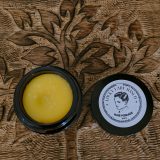 Hair PomadeA soft hold pomade made from shea, hemp seed and avocado oils.
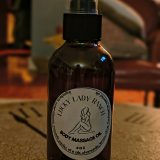 Body OilA silky blend of high quality oils for moisture and massage.
Questions people ask
Is cyclopentasiloxane safe for skin?
Cyclopentasiloxane (D5) is generally well tolerated on skin and is not a common irritant. The main concerns about it are environmental persistence and bioaccumulation, which have led the EU to restrict it.
What is cyclomethicone?
Cyclomethicone is a general name for a mixture of cyclic silicones, usually including D4, D5, and D6. It gives products a light, quick drying, silky feel.
Are D4, D5, and D6 banned in the EU?
The EU has restricted D4 and D5 in wash-off cosmetics since 2020 and adopted a broader restriction in 2024 covering D4, D5, and D6 in leave-on cosmetics and many other products, phased in over several years.
What is the difference between dimethicone and cyclopentasiloxane?
Dimethicone is a linear silicone that stays on the skin or hair, while cyclopentasiloxane is a ring shaped silicone that evaporates. Dimethicone is not part of the EU cyclic silicone restrictions, though it can contain small cyclic residues.
Why do people avoid silicones in hair care?
Some silicones can build up on hair over time and leave it feeling heavy or limp. Others avoid cyclic silicones because of their environmental persistence.
Sources and further reading
- European Chemicals Agency (ECHA), Candidate List of Substances of Very High Concern: D4, D5 and D6
- European Commission, Commission Regulation (EU) 2018/35 restricting D4 and D5 in wash-off cosmetic products
- European Commission, Commission Regulation (EU) 2024/1328 restricting D4, D5 and D6
- Environment Canada, Report of the Board of Review for Decamethylcyclopentasiloxane (Siloxane D5) (2011)
- Scientific Committee on Consumer Safety (SCCS), Opinion on Decamethylcyclopentasiloxane (D5) in Cosmetic Products
This guide is for general education and is not medical advice. If you have a skin condition, allergy, or are pregnant or nursing, talk with your doctor or a board certified dermatologist about the products that are right for you.