Activated Charcoal in Deodorant and Soap
Activated charcoal is a porous form of carbon that can trap odor molecules on its surface. Here is what it really does in deodorant and soap, and what it does not do.

Key takeaways
- Activated charcoal is carbon treated at high heat to create an enormous network of tiny pores.
- It works by adsorption, holding certain molecules on its surface, which may help with odor in deodorant.
- Claims that it pulls toxins out through the skin are not backed by good evidence.
- It is a gentler odor approach than antibacterial agents like triclosan, which the FDA removed from consumer antiseptic washes.
- Avoid harsh charcoal peel off masks, and expect a little dark residue with charcoal soap.
Few ingredients have had a bigger moment than activated charcoal. In just a few years it went from hospital supply closets to black soaps, face masks, toothpaste, and even lemonade. Some of that popularity rests on real chemistry. Some rests on the word "detox," which has never meant much in skin care. Here is a clear explanation of what activated charcoal is, why it is useful in deodorant and soap, and how to use it sensibly.
What is activated charcoal?
Activated charcoal (also called activated carbon) starts as a carbon rich material such as coconut shells, hardwood, or bamboo. The material is first heated with little oxygen to make charcoal. It is then "activated," usually by treating it at very high temperatures with steam or other gases. Activation opens up a dense maze of microscopic pores and channels inside each particle.
The result is a fine black powder with an astonishing amount of internal surface area. A single gram can have hundreds to well over a thousand square meters of surface, depending on how it was made. That surface is what makes it work.
On ingredient labels, you may see Charcoal Powder, Activated Charcoal, or Carbon. It is different from the charcoal briquettes used for grilling, which often contain additives and should never be used on skin.
Adsorption, not absorption
Activated charcoal works by adsorption, with a "d." That means certain molecules stick to its surface, rather than being soaked up inside the way a sponge absorbs water. Because activated charcoal has so much surface, it can hold onto a lot of those molecules.
This is why activated carbon is used in water filters, air purifiers, and in hospital settings, where doctors sometimes give it by mouth to bind certain swallowed poisons before they are absorbed by the gut. That emergency use is real and important, but it should only happen under medical guidance. It is also a very different situation from rubbing charcoal on skin.
About the "detox" claims
Charcoal products often promise to "draw out toxins" or "detox pores." There is no good evidence that charcoal on the skin removes toxins from the body. What it can reasonably do is help cleanse the skin's surface: its particles can hold onto some oil and grime, and the gentle grit can add a little mechanical cleansing in a soap or scrub. That is useful, but it is ordinary cleansing, not detoxification. Your liver and kidneys handle that job.
Activated charcoal in deodorant
Underarm odor does not come from sweat itself, which is nearly odorless. It comes from skin bacteria breaking down compounds in sweat into smelly molecules. Deodorants manage odor in a few ways: by making the skin less friendly to odor causing bacteria, by absorbing moisture, by masking smell with fragrance, or by holding onto odor molecules.
Activated charcoal fits that last category. Because it adsorbs many kinds of organic molecules, it is included in natural deodorants to help trap odor compounds. Direct clinical studies on charcoal deodorants are limited, so it is best thought of as one helper in a team rather than a stand alone solution. In our All Day Deodorant, it works alongside bentonite clay and arrowroot to absorb moisture, baking soda to help neutralize odor, and essential oils for a fresh scent.
If you are new to natural deodorant, our guide to switching to natural deodorant explains the adjustment period many people notice.
Activated charcoal in soap
In soap, charcoal adds a dramatic black or gray color, a slightly silky feel, and a gentle polish. Charcoal bars are popular with people who have oily skin or who like a deep clean feel, and they are a common choice for face and body bars and for shaving soaps.
Keep expectations simple: a charcoal soap is still soap. Its cleansing power comes mainly from the soap itself, which lifts oil and dirt so water can rinse them away. The charcoal is a pleasant extra rather than a powerful active. For more on how handmade soap differs from commercial bars, see cold process soap vs commercial beauty bars.
A gentler alternative to antibacterial agents like triclosan
For years, the go to answer for odor and "germ fighting" in soaps and some deodorants was to add strong antibacterial chemicals. The best known was triclosan, along with its cousin triclocarban.
In 2016, the FDA issued a final rule that removed triclosan, triclocarban, and 17 other antibacterial ingredients from consumer antiseptic washes such as antibacterial hand and body soaps. The agency's reason was that manufacturers had not shown these ingredients were safe for long term daily use or that they worked better than plain soap and water at preventing illness. Researchers have also asked questions about antibacterial resistance and about hormone effects seen in some animal studies. You can read the full background in our article on triclosan and antibacterial soap.
Some antibacterial soaps and wipes now use other agents, especially benzalkonium chloride and other quats, which come with their own questions.
Activated charcoal offers a different philosophy. It does not try to wipe out skin bacteria wholesale. Instead, it helps hold onto odor molecules while other gentle ingredients absorb moisture. Combined with plain soap and water, which the CDC considers effective for everyday handwashing, that approach covers odor and cleanliness without leaning on harsh antimicrobials.
How to use charcoal products
- Deodorant: apply a small amount to clean, dry underarms. Let it settle for a moment before dressing to reduce the chance of marks on clothing.
- Soap: lather in your hands or on a washcloth, wash, and rinse well. Rinse the sink and tub afterward, since charcoal can leave a gray film until it is washed away.
- Towels: charcoal can leave faint gray marks on light colored towels if not fully rinsed from skin. Darker towels are a practical choice.
Who should be careful
- Dry or sensitive skin. Charcoal soaps and masks can feel drying. If your skin feels tight or itchy, use them less often. Our guide to sensitive skin irritants may help.
- Peel off charcoal masks. Dermatologists have cautioned that the glue like peel off masks popular on social media can pull away skin cells and fine hairs and cause irritation. Gentle wash off products are a safer choice.
- Swallowing charcoal. Taking activated charcoal by mouth can interfere with medications and nutrients. Do not use it internally unless directed by a doctor or poison control.
- Underarm irritation. If a natural deodorant causes redness, the culprit is more often baking soda than charcoal. Stop using it and let the skin calm down.
Quality tips
- Look for cosmetic or food grade activated charcoal, often made from coconut shells or bamboo.
- Read the full label. A black colored product is not necessarily made with much charcoal, and some "charcoal" products also include synthetic fragrance and harsh detergents. Our guide to reading ingredient labels can help.
- Keep products dry between uses. A soap dish that drains helps bars last longer.
Clean without the overkill
Activated charcoal is a good example of an ingredient that is genuinely useful once you strip away the hype. It traps odor molecules, adds a gentle polish to soap, and does it all without trying to sterilize your skin. At Lucky Lady Ranch, we use it as part of a simple deodorant formula because it lets us leave out aluminum, synthetic antibacterials, and the harshness that so often comes with them.
From the ranch
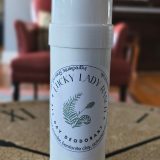
Made in small batches, without the ingredients discussed above.
Questions people ask
Does activated charcoal deodorant work?
Activated charcoal can hold certain odor molecules on its surface, and it works best alongside other ingredients that absorb moisture and neutralize odor. Results vary from person to person, and there are few direct studies on charcoal deodorants.
Does activated charcoal detox your skin?
No good evidence shows that charcoal removes toxins from the body through the skin. It can help cleanse the skin's surface by holding onto oil and grime, which is useful but is ordinary cleansing.
Is charcoal soap good for acne?
Charcoal soap can help skin feel less oily, and some people with oily skin enjoy it. It is not an acne treatment. If you have persistent acne, a dermatologist can recommend proven options.
Will charcoal deodorant stain my clothes?
It can leave faint gray marks if applied heavily or before it settles. Use a thin layer and let it set for a moment before dressing. Marks usually wash out.
Why was triclosan banned from soap?
In 2016 the FDA removed triclosan and other antibacterial ingredients from consumer antiseptic washes because manufacturers had not shown they were safe for long term use or more effective than plain soap and water.
Sources and further reading
- US Food and Drug Administration (FDA), Safety and Effectiveness of Consumer Antiseptics; Topical Antimicrobial Drug Products for Over-the-Counter Human Use, Final Rule (2016)
- US Food and Drug Administration (FDA), Antibacterial Soap? You Can Skip It, Use Plain Soap and Water
- Centers for Disease Control and Prevention (CDC), Handwashing: Clean Hands Save Lives
- National Library of Medicine, MedlinePlus: Activated Charcoal
This guide is for general education and is not medical advice. If you have a skin condition, allergy, or are pregnant or nursing, talk with your doctor or a board certified dermatologist about the products that are right for you.